
Cybersecurity Breaches in U.S. Tech: 3 Preventative Measures to Implement Before January 2026 to Reduce Risk by 15%
The U.S. tech sector stands as both a beacon of innovation and a prime target for cyber adversaries. With an ever-increasing reliance on digital infrastructure, cloud computing, and vast repositories of sensitive data, the risk of cybersecurity breaches has never been higher. The financial, reputational, and operational fallout from a single breach can be catastrophic, impacting not just the affected company but also its customers, partners, and the broader economy. As we approach January 2026, the imperative for robust tech cybersecurity prevention strategies becomes even more critical. This article delves into three essential preventative measures that U.S. tech companies must implement or significantly bolster to reduce their breach risk by a substantial 15%.
The landscape of cyber threats is dynamic and sophisticated. Nation-state actors, organized crime syndicates, and even individual hackers are constantly evolving their tactics, exploiting new vulnerabilities, and leveraging advanced technologies like AI to bypass traditional defenses. For U.S. tech firms, which often possess intellectual property, consumer data, and critical infrastructure components, the stakes are exceptionally high. The average cost of a data breach in the U.S. reached a staggering $9.44 million in 2022, according to IBM’s Cost of a Data Breach Report, highlighting the urgent need for proactive and comprehensive tech cybersecurity prevention strategies. Furthermore, regulatory bodies are increasing their scrutiny, imposing stricter compliance requirements and heavier penalties for security failures.
This article aims to provide actionable insights and strategic imperatives for tech leaders and security professionals. By focusing on these three core preventative measures – enhancing Zero Trust Architecture, fortifying Supply Chain Security, and leveraging Advanced AI-Powered Threat Intelligence – companies can not only meet impending deadlines but also establish a resilient and future-proof security posture. The goal is not merely to react to threats but to anticipate, prevent, and mitigate them effectively, thereby safeguarding assets, maintaining trust, and ensuring business continuity in an increasingly hostile digital environment.
Measure 1: Implementing and Maturing Zero Trust Architecture (ZTA)
The traditional perimeter-based security model is no longer adequate in today’s distributed and cloud-centric environments. The concept of "trust but verify" has given way to "never trust, always verify." This fundamental shift is encapsulated in Zero Trust Architecture (ZTA), a security framework that requires strict identity verification for every person and device attempting to access resources on a private network, regardless of whether they are inside or outside the network perimeter. For U.S. tech companies, embracing and maturing ZTA is not just a best practice; it’s a critical component of effective tech cybersecurity prevention.
Advertisements
Understanding Zero Trust Principles
At its core, ZTA operates on several key principles:
- Verify Explicitly: Always authenticate and authorize based on all available data points, including user identity, location, device health, service or workload, data classification, and anomalies.
- Use Least Privilege Access: Limit user access to only what is absolutely necessary for their role and for the shortest possible duration.
- Assume Breach: Design security controls and incident response plans with the assumption that a breach will eventually occur, focusing on minimizing its impact.
Key Components of a Robust ZTA Implementation
Implementing ZTA is a journey, not a destination, and requires a comprehensive approach covering various aspects of an organization’s IT infrastructure. Tech companies should prioritize the following by January 2026:
1. Identity and Access Management (IAM) Modernization:
Strengthening IAM is the cornerstone of ZTA. This involves:
- Multi-Factor Authentication (MFA) Everywhere: Mandating MFA for all users, administrators, and external partners accessing any corporate resource, including cloud applications, VPNs, and internal systems. Advanced MFA methods like FIDO2-compliant hardware tokens or biometrics should be prioritized over less secure options like SMS OTPs.
- Privileged Access Management (PAM): Implementing PAM solutions to manage, monitor, and audit privileged accounts. This ensures that administrative credentials are never exposed, and all privileged sessions are isolated and recorded.
- Continuous Authentication and Authorization: Moving beyond one-time authentication to continuous monitoring of user and device behavior. Contextual factors (e.g., location changes, unusual access patterns) should trigger re-authentication or additional security checks.
- Centralized Identity Provider (IdP): Consolidating identity management under a robust IdP that integrates with all applications and services, providing a single source of truth for user identities and access policies.
2. Micro-segmentation and Network Security:
ZTA fundamentally redefines network security by segmenting networks into smaller, isolated zones. This limits the lateral movement of attackers within the network.
- Granular Network Segmentation: Breaking down monolithic networks into micro-segments, often down to individual workloads or applications. This ensures that even if one segment is compromised, the breach cannot easily spread to other parts of the network.
- Software-Defined Perimeters (SDP) / Zero Trust Network Access (ZTNA): Replacing traditional VPNs with ZTNA solutions that create an individualized, encrypted tunnel for each user to specific applications, rather than granting access to the entire network.
- Next-Generation Firewalls (NGFW) and Intrusion Prevention Systems (IPS): Deploying advanced network security solutions that offer deep packet inspection, application-level control, and threat intelligence integration to enforce policies at the micro-segment level.
3. Device and Endpoint Security:
Every device, whether corporate-owned or personal (BYOD), must be treated as a potential attack vector.
- Endpoint Detection and Response (EDR) / Extended Detection and Response (XDR): Implementing EDR/XDR solutions to continuously monitor endpoints for malicious activity, detect anomalies, and enable rapid response.
- Device Posture Checks: Ensuring that all devices attempting to access resources meet specific security criteria (e.g., up-to-date patches, antivirus software installed, no known vulnerabilities) before granting access.
- Mobile Device Management (MDM) / Unified Endpoint Management (UEM): For managing and securing mobile devices and other endpoints, ensuring configuration compliance and data protection.
By January 2026, U.S. tech companies should have made significant progress in implementing these ZTA components. This proactive stance on tech cybersecurity prevention will drastically reduce the attack surface and enhance the ability to contain breaches, thereby contributing significantly to the 15% risk reduction target.
Measure 2: Fortifying Supply Chain Security
The interconnected nature of the tech industry means that a company’s security posture is only as strong as its weakest link. Supply chain attacks, where adversaries compromise a trusted vendor or software component to gain access to target organizations, have become increasingly prevalent and devastating. High-profile incidents like SolarWinds have underscored the critical need for robust supply chain security. For U.S. tech companies, fortifying the supply chain is an indispensable element of effective tech cybersecurity prevention.
Understanding the Supply Chain Threat Landscape
Supply chain attacks can manifest in various forms:
- Software Supply Chain Attacks: Injecting malicious code into legitimate software updates, open-source libraries, or development tools.
- Hardware Supply Chain Attacks: Tampering with hardware components during manufacturing or transit.
- Third-Party Vendor Exploits: Compromising a vendor’s network to access their customers’ systems or data.
- Cloud Provider Vulnerabilities: Exploiting misconfigurations or vulnerabilities in cloud services used by the organization.
Key Initiatives for Enhanced Supply Chain Security
To mitigate these risks, U.S. tech firms must implement a multi-faceted approach to supply chain security by January 2026:
1. Comprehensive Vendor Risk Management (VRM):
Establishing a rigorous VRM program is paramount. This includes:
- Thorough Due Diligence: Before onboarding any new vendor or partner, conduct extensive security assessments. This should include reviewing their security certifications (e.g., ISO 27001, SOC 2), auditing their security policies and controls, and assessing their incident response capabilities.
- Contractual Security Requirements: Incorporating stringent security clauses into all vendor contracts, mandating specific security controls, regular audits, breach notification protocols, and liability provisions.
- Continuous Monitoring and Re-assessment: Vendor risk is not static. Implement continuous monitoring of critical vendors for security vulnerabilities, compliance deviations, and potential breaches. Regular re-assessments should be conducted to ensure ongoing adherence to security standards.
- Supply Chain Mapping: Understanding the entire ecosystem of third-party dependencies, including sub-contractors and nested relationships, to identify hidden risks.
2. Software Bill of Materials (SBOM) and Software Integrity:
For software-driven tech companies, understanding the components of their software is critical.
- Mandatory SBOM Generation and Consumption: Requiring all software vendors to provide a Software Bill of Materials (SBOM) for their products. An SBOM is a formal, machine-readable inventory of software components and their dependencies. Organizations should also generate SBOMs for their own internally developed software.
- Automated Software Composition Analysis (SCA): Utilizing SCA tools to automatically scan SBOMs and software for known vulnerabilities, open-source license compliance issues, and outdated components.
- Code Signing and Integrity Verification: Implementing robust code signing practices to ensure the authenticity and integrity of software. This includes digital signatures for all executables, libraries, and updates.
- Secure Software Development Lifecycle (SSDLC): Integrating security into every phase of the software development lifecycle, from design and coding to testing and deployment. This includes practices like threat modeling, static and dynamic application security testing (SAST/DAST), and penetration testing.
3. Operational Technology (OT) and Internet of Things (IoT) Security:
For tech companies involved in manufacturing, critical infrastructure, or IoT product development, securing OT/IoT supply chains is crucial.
- Device Hardening and Patch Management: Ensuring that all IoT and OT devices are configured securely, with default credentials changed, unnecessary services disabled, and a robust patch management program in place.
- Network Segmentation for OT/IoT: Isolating OT/IoT networks from corporate IT networks to prevent lateral movement in case of a compromise.
- Firmware Integrity Checks: Implementing mechanisms to verify the integrity of firmware on IoT/OT devices to detect tampering.
By proactively addressing these aspects of supply chain security, U.S. tech companies can significantly reduce their exposure to external compromises, a vital step in achieving the 15% risk reduction in tech cybersecurity prevention.
Measure 3: Leveraging Advanced AI-Powered Threat Intelligence and Automation
The sheer volume and complexity of cyber threats are overwhelming human capabilities. To stay ahead of sophisticated adversaries, U.S. tech companies must harness the power of Artificial Intelligence (AI) and automation in their threat intelligence and security operations. This measure is crucial for proactive tech cybersecurity prevention and rapid incident response.
The Limitations of Traditional Threat Intelligence
Traditional threat intelligence often relies on static feeds, manual analysis, and reactive responses. This approach struggles with:
- Volume: The immense amount of threat data generated daily.
- Velocity: The speed at which new threats emerge and evolve.
- Variety: The diverse nature of attack vectors and threat actor methodologies.
- Veracity: Distinguishing between credible threats and noise.
Key Strategies for AI-Powered Threat Intelligence and Automation
By January 2026, U.S. tech companies should be actively integrating AI and automation into their security ecosystems:
1. AI-Driven Threat Detection and Prediction:
AI and Machine Learning (ML) algorithms can analyze vast datasets to identify anomalous behavior and predict potential threats with greater accuracy and speed than human analysts.
- Behavioral Analytics: Deploying AI/ML systems that establish baselines of normal user and network behavior. Deviations from these baselines can indicate insider threats, compromised accounts, or advanced persistent threats (APTs).
- Predictive Threat Modeling: Using AI to analyze historical attack data, global threat intelligence feeds, and vulnerability information to predict future attack vectors and identify potential weaknesses in the organization’s defenses before they are exploited.
- Malware Analysis and Sandboxing: AI-powered tools can rapidly analyze suspicious files and URLs in isolated environments (sandboxes) to determine their malicious intent without risking the production environment.
- Automated Vulnerability Management: AI can prioritize vulnerabilities based on their exploitability, potential impact, and relevance to the organization’s assets, enabling more efficient patching and remediation efforts.
2. Security Orchestration, Automation, and Response (SOAR):
SOAR platforms integrate various security tools and automate repetitive tasks, allowing security teams to focus on complex investigations and strategic initiatives.
- Automated Incident Response Playbooks: Developing and implementing automated playbooks for common incident types (e.g., phishing attacks, malware infections, unauthorized access). These playbooks can automatically trigger actions like isolating compromised endpoints, blocking malicious IPs, or initiating forensic data collection.
- Threat Intelligence Integration: SOAR platforms can automatically ingest and correlate threat intelligence from multiple sources, enriching alerts and providing context for faster decision-making.
- Workflow Automation: Automating routine security tasks such as log analysis, alert triage, and compliance reporting, freeing up security analysts for more critical work.

3. Enhanced Data Loss Prevention (DLP) with AI:
AI can significantly improve the effectiveness of DLP solutions by understanding data context and user intent.
- Intelligent Content Analysis: AI can analyze data content, not just keywords, to identify sensitive information (e.g., PII, intellectual property) even if it’s disguised or embedded within other files.
- User Behavior Analytics (UBA) for DLP: Integrating UBA with DLP to detect unusual data access, transfer, or modification patterns by users, indicating potential data exfiltration or misuse.
- Automated Policy Enforcement: AI-driven DLP can automatically apply appropriate policies (e.g., encryption, blocking, alerting) based on the sensitivity of the data and the context of its use, reducing manual intervention and response times.
By investing in and strategically deploying AI-powered threat intelligence and automation, U.S. tech companies can transform their security operations from reactive to proactive, significantly enhancing their tech cybersecurity prevention capabilities and moving closer to the 15% risk reduction goal.
The Urgent Need for Action: Why January 2026?
The January 2026 deadline is not arbitrary. It represents a critical juncture where the confluence of evolving threat landscapes, increasing regulatory pressures, and the acceleration of digital transformation demands a decisive and comprehensive response from the U.S. tech sector. Failure to act decisively could lead to severe consequences:
- Escalating Financial Costs: As breaches become more frequent and sophisticated, the financial burden of recovery, regulatory fines, legal fees, and reputational damage will continue to soar. Proactive investment now is significantly cheaper than reactive remediation later.
- Erosion of Trust: For tech companies, trust is their most valuable currency. A major breach can shatter customer confidence, leading to significant churn and long-term brand damage.
- Regulatory Scrutiny and Penalties: Governments worldwide are enacting stricter data protection and cybersecurity regulations (e.g., NIST, CISA guidelines, potential new federal mandates). Non-compliance can result in hefty fines and operational restrictions.
- Competitive Disadvantage: Companies with robust security postures will increasingly be preferred by customers and partners, while those with lax security will face a competitive disadvantage.
- National Security Implications: For tech companies involved in critical infrastructure or defense, a breach can have implications far beyond the corporate realm, affecting national security.
The 15% risk reduction target is ambitious but achievable with focused effort and strategic investment in these three preventative measures. It requires not just the deployment of new technologies but also a cultural shift towards security-first thinking across the entire organization, from the board room to the development team.
Integrated Approach and Continuous Improvement
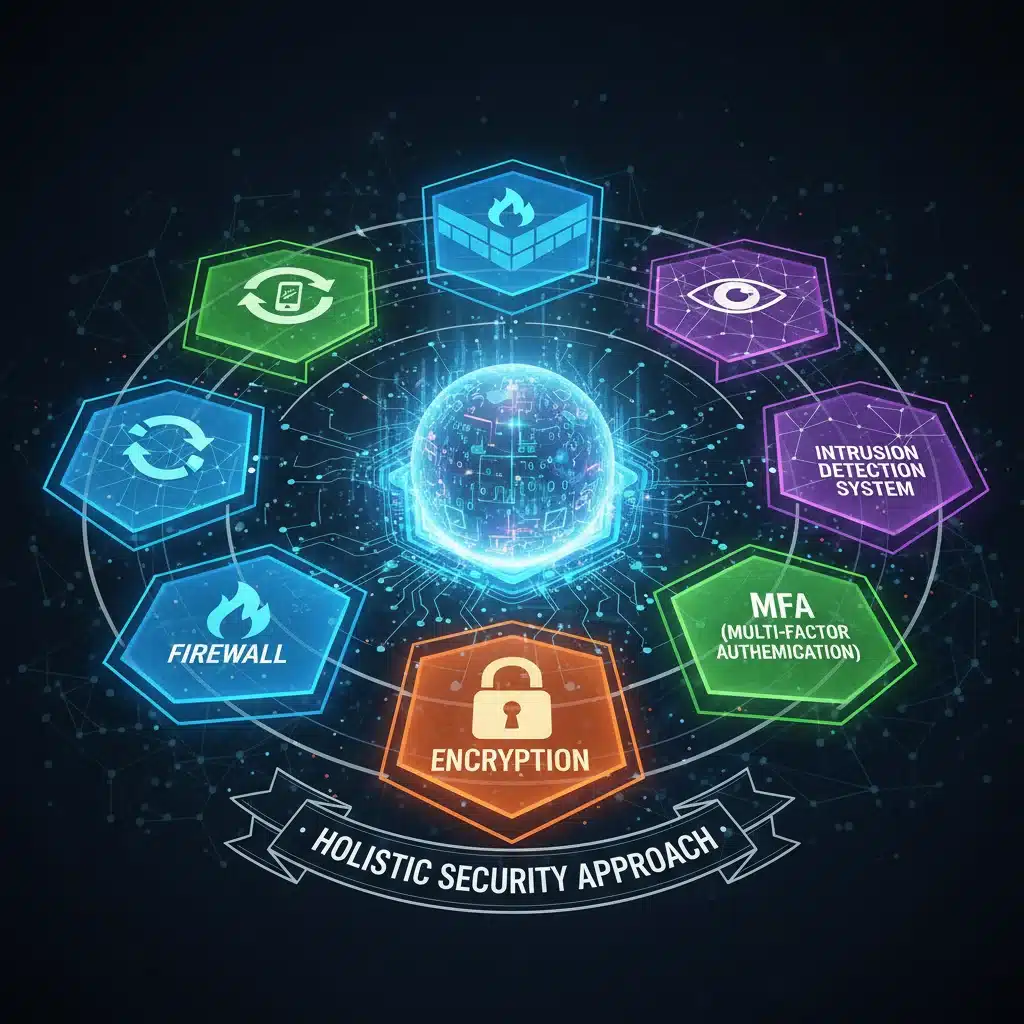
It is crucial to understand that these three measures – Zero Trust Architecture, Supply Chain Security, and AI-Powered Threat Intelligence – are not standalone solutions. They are interconnected and mutually reinforcing components of a holistic tech cybersecurity prevention strategy. For instance, an AI-powered threat intelligence system can feed critical data into a ZTA framework, informing access policies based on real-time threat indicators. Similarly, strong supply chain security ensures that the components used in building ZTA and AI systems are themselves secure.
Furthermore, cybersecurity is an ongoing process of continuous improvement. The threat landscape is constantly evolving, and so too must an organization’s defenses. Post-January 2026, tech companies must maintain vigilance, regularly review their security posture, conduct penetration testing and red teaming exercises, and adapt their strategies to emerging threats and technologies. Regular employee training and awareness programs are also vital, as human error remains a significant factor in many breaches.
Conclusion
The U.S. tech sector is at a crossroads. The choice is clear: either passively react to the relentless onslaught of cyber threats or proactively build a resilient and impenetrable defense. By embracing and rigorously implementing Zero Trust Architecture, fortifying Supply Chain Security, and strategically leveraging Advanced AI-Powered Threat Intelligence, U.S. tech companies can significantly reduce their risk of cybersecurity breaches by 15% before January 2026. This isn’t just about compliance; it’s about safeguarding innovation, protecting critical data, maintaining customer trust, and ensuring the continued leadership of the U.S. in the global technology arena. The time to act is now, with a clear vision and unwavering commitment to a secure digital future.