The Gig Economy’s 2026 Impact: Shifting Employment Models and Household Incomes Across the U.S.

The Gig Economy’s 2026 Impact: Shifting Employment Models and Household Incomes Across the U.S.
The landscape of work is undergoing a profound transformation, with the gig economy emerging as a dominant force reshaping how individuals earn a living and how businesses operate. As we look towards 2026, understanding the intricate ways in which these shifting employment models will impact household incomes across the U.S. is not just an academic exercise; it’s a critical financial planning imperative for millions. The gig economy impact is multifaceted, touching upon income stability, benefits access, skill development, and overall economic resilience.
Once considered a fringe aspect of the labor market, gig work – characterized by temporary, flexible jobs often involving connecting with clients through online platforms – has rapidly expanded. From ridesharing and food delivery to freelance writing, graphic design, and consulting, the opportunities for independent work are diverse and growing. This evolution is driven by technological advancements, changing worker preferences for flexibility, and businesses’ desire for agile staffing solutions. But what does this mean for the average American household? How will the increased prevalence of gig work affect their financial well-being, savings, and long-term security?
This comprehensive article delves into the projected financial implications of the gig economy by 2026. We will explore the key drivers behind its growth, analyze its effects on income stability and inequality, examine the challenges and opportunities for workers, and discuss the broader macroeconomic consequences. By understanding these dynamics, individuals, policymakers, and businesses can better navigate the evolving world of work and prepare for the future.
The Rise of the Gig Economy: A Shifting Paradigm
The gig economy, at its core, represents a departure from traditional, long-term employment relationships. It’s a system where temporary positions are common and organizations contract with independent workers for short-term engagements. This model offers flexibility for both workers and companies, but it also brings a new set of economic considerations. The gig economy impact is evident in nearly every sector, from transportation and logistics to creative industries and professional services.
Technological Catalysts and Changing Demographics
Several factors have fueled the rapid expansion of gig work. The proliferation of digital platforms (apps and websites) has dramatically lowered the barriers to entry for both workers and clients, making it easier to find and offer services. Smartphones have become indispensable tools, connecting workers to opportunities in real-time. Moreover, demographic shifts play a significant role. Younger generations, often burdened by student debt and seeking greater autonomy, are more inclined to embrace flexible work arrangements. Older workers, looking for supplemental income or a phased retirement, also find appeal in the gig model.
The Appeal of Flexibility and Autonomy
For many, the primary allure of gig work is the promise of flexibility and autonomy. Gig workers often have the freedom to set their own hours, choose their projects, and work from anywhere. This can be particularly appealing to parents, students, or individuals with other commitments who require a non-traditional work schedule. The ability to be one’s own boss, even if within the confines of a platform’s rules, is a powerful motivator. However, this flexibility often comes with trade-offs, particularly concerning income consistency and benefits.
Projected Financial Impact on Household Incomes by 2026
The financial ramifications of the gig economy are complex and vary widely among households. While some experience increased earning potential and financial freedom, others face income volatility and a lack of traditional benefits. By 2026, these trends are expected to solidify, creating distinct economic profiles for gig-dependent households.
Income Volatility and Instability
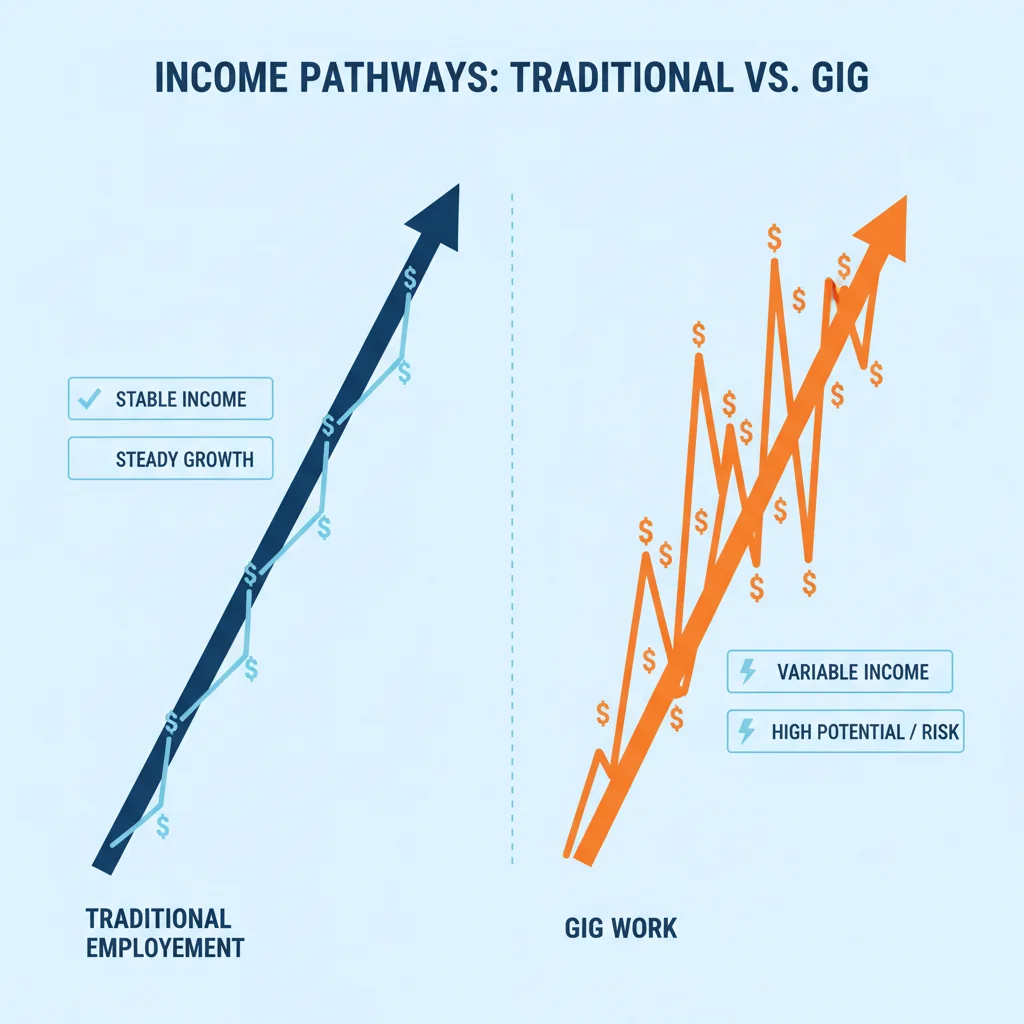
One of the most significant challenges associated with gig work is income volatility. Unlike traditional employment with a fixed salary or hourly wage, gig earnings can fluctuate significantly based on demand, seasonality, platform algorithms, and individual effort. This unpredictability makes budgeting, saving, and financial planning considerably more difficult for households. A sudden downturn in demand or a change in platform policies can directly and immediately impact a gig worker’s take-home pay, leading to periods of financial stress. Studies indicate that a substantial portion of gig workers report difficulty in managing fluctuating incomes, often leading to reliance on credit or depletion of savings.
The Erosion of Traditional Benefits
Another critical aspect of the gig economy impact on household incomes is the absence of employer-provided benefits. Gig workers are typically classified as independent contractors, meaning they do not receive health insurance, paid time off, retirement contributions, or unemployment insurance from the platforms they work for. Households relying solely on gig income must bear the full cost of these essential benefits, which can be a substantial financial burden. This often means higher out-of-pocket healthcare costs, less secure retirement planning, and no safety net during periods of illness or unemployment. The lack of these benefits can significantly reduce the net disposable income of gig households compared to their traditionally employed counterparts, even if their gross earnings appear similar.
Opportunities for Supplemental and Primary Income
Despite the challenges, the gig economy also presents significant opportunities. For many households, gig work serves as a crucial source of supplemental income, helping to cover unexpected expenses, pay down debt, or save for specific goals. This ‘side hustle’ phenomenon allows individuals to leverage existing skills or develop new ones to generate additional earnings without committing to another full-time job. For others, particularly those in areas with limited traditional employment opportunities or those with specialized skills, gig work can be a primary source of income, offering a path to self-sufficiency and entrepreneurship. The ability to work across geographical boundaries through online platforms also opens up markets that might otherwise be inaccessible.

Disparities and Inequality in the Gig Economy
The gig economy impact is not uniform; it often exacerbates existing economic disparities and creates new forms of inequality. Understanding these nuances is crucial for a complete picture of its financial effects.
Skill-Based vs. Low-Skill Gig Work
There’s a significant divide within the gig economy between high-skill, knowledge-based work (e.g., software development, advanced consulting, specialized design) and low-skill, task-based work (e.g., ridesharing, food delivery, micro-tasks). Workers in the former category often command higher rates, have greater autonomy, and can build sustainable freelance careers. Their household incomes may see a boost, sometimes exceeding what they could earn in traditional employment, particularly if they are adept at marketing their services and managing their finances. Conversely, those engaged in low-skill gig work often face intense competition, lower pay rates, and less control over their working conditions. Their earnings are more susceptible to platform changes and market saturation, potentially leading to lower and more unstable household incomes, pushing them closer to the poverty line or making it harder to escape it.
Geographic and Demographic Disparities
The financial benefits and drawbacks of the gig economy also vary by geography and demographics. Urban centers, with higher demand for services like ridesharing and delivery, often offer more consistent gig opportunities. However, competition can also be fierce, driving down individual earnings. Rural areas might have fewer gig opportunities, but those available could command higher rates due to less competition. Demographically, women and minority groups are often overrepresented in lower-paying gig sectors, which can perpetuate existing wage gaps and contribute to greater financial insecurity for these households. Access to reliable internet and appropriate technology also plays a role, creating a digital divide that can exclude certain populations from participating effectively in the gig economy.
The Regulatory Environment and Worker Protections
As the gig economy matures, governments and labor organizations are grappling with how to regulate it to ensure fair working conditions and adequate financial protections for gig workers. The debate around worker classification – whether gig workers are independent contractors or employees – is central to this discussion and will significantly shape the future gig economy impact on household incomes.
The Worker Classification Debate
The classification of gig workers as independent contractors allows companies to avoid paying for benefits, minimum wage, and overtime, significantly reducing labor costs. However, critics argue that many gig workers, despite the label, function more like employees, with platforms exerting substantial control over their work. Legal battles and legislative efforts (such as California’s AB5 or Proposition 22) are attempting to redefine these relationships, with varying outcomes. If more gig workers are reclassified as employees, it could lead to increased costs for platforms but also greater financial stability and access to benefits for workers, potentially boosting household incomes through reduced out-of-pocket expenses and access to social safety nets.
The Push for Portable Benefits
Recognizing the unique nature of gig work, some policymakers and advocates are exploring the concept of ‘portable benefits.’ This model would allow workers to accrue benefits (like health insurance, retirement savings, or paid time off) that are tied to the worker, not a specific employer or platform. As gig workers move between platforms or take on multiple gigs, their benefits would move with them. While still largely conceptual, the implementation of such systems by 2026 could significantly mitigate the financial insecurity currently faced by gig households, providing a crucial safety net without necessarily reclassifying workers as employees. This approach could offer a middle ground, preserving some of the flexibility of gig work while addressing its most significant financial drawbacks.
Adapting to the Gig Economy: Strategies for Households
For households navigating the evolving labor market, proactive strategies are essential to mitigate the risks and maximize the opportunities presented by the gig economy. The gig economy impact demands a more strategic approach to personal finance and career development.
Financial Planning for Income Volatility
Households relying on gig income must prioritize robust financial planning. This includes building a substantial emergency fund (ideally 6-12 months of living expenses) to buffer against income fluctuations. Creating a detailed budget and tracking expenses is crucial for understanding cash flow. Setting aside a portion of each payment for taxes (as independent contractors are responsible for self-employment taxes) is also vital. Diversifying income streams by engaging in multiple gig platforms or types of gig work can also help stabilize overall household income.
Skill Development and Continuous Learning
To thrive in the gig economy, continuous skill development is paramount. The demand for specific skills can change rapidly, and workers who invest in upskilling and reskilling themselves remain competitive. Online courses, certifications, and vocational training can open doors to higher-paying gigs and more stable opportunities. Developing in-demand skills, especially in technology, digital marketing, data analysis, and specialized creative fields, can significantly enhance earning potential and reduce reliance on lower-paying, commoditized tasks. This proactive approach to career growth is a key differentiator in the gig market.
Building a Personal Brand and Network
For gig workers, especially those in high-skill sectors, building a strong personal brand and professional network is as important as, if not more important than, finding a traditional job. A strong brand helps attract clients, command higher rates, and secure repeat business. Networking with other freelancers, industry professionals, and potential clients can lead to referrals and new opportunities. Platforms like LinkedIn, specialized freelance marketplaces, and industry events are excellent avenues for building these connections. A robust network provides a safety net and a continuous pipeline of work, mitigating the inherent instability of gig employment.
Broader Macroeconomic Implications by 2026
The pervasive growth of the gig economy extends beyond individual households, influencing broader macroeconomic trends and government policies. The collective gig economy impact will shape national economic indicators and social welfare systems.
Impact on GDP and Economic Growth
The gig economy contributes to GDP through increased economic activity, innovation, and efficiency. It allows businesses to scale more flexibly and access specialized talent on demand, potentially boosting productivity. For individuals, it can lower unemployment rates by providing opportunities for those who might otherwise be out of work. However, the exact measurement of its contribution is challenging due to its informal and often fragmented nature. By 2026, as gig work becomes more integrated into mainstream economic reporting, its direct and indirect contributions to national economic growth will become clearer, potentially influencing policy decisions on taxation and investment.
Challenges for Social Safety Nets and Tax Revenue
The shift towards gig work poses significant challenges for existing social safety nets, which are largely designed around traditional employment. Fewer workers contributing to social security and Medicare through standard payroll taxes, coupled with more individuals lacking employer-sponsored benefits, could strain these systems. Governments face the complex task of adapting tax codes and social welfare programs to accommodate a workforce that doesn’t fit neatly into traditional categories. If a substantial portion of the workforce remains without adequate benefits or social protections, it could lead to increased public health costs, greater reliance on welfare programs, and broader social inequality, impacting overall societal stability and productivity.
Innovation and Entrepreneurship
On the positive side, the gig economy fosters innovation and entrepreneurship. It lowers the barrier to starting a business or offering specialized services, encouraging individuals to become micro-entrepreneurs. This can lead to new products, services, and business models that benefit consumers and drive economic dynamism. The flexibility of gig work can also allow individuals to pursue passion projects or develop new skills that might not be possible in a rigid 9-to-5 structure, potentially leading to future innovations and new industries. This entrepreneurial spirit is a vital component of a healthy, growing economy.
Conclusion: Navigating the Evolving Gig Landscape
The gig economy impact on U.S. household incomes by 2026 will be profound and multifaceted. It promises unprecedented flexibility and opportunities for supplemental earnings for some, while posing significant challenges in terms of income stability, benefits access, and financial security for others. As employment models continue to shift, individuals will need to adopt more proactive financial planning strategies, prioritize continuous skill development, and actively manage their careers as independent entities.
For policymakers, the task is to create a regulatory environment that supports innovation and flexibility while ensuring adequate protections and safety nets for all workers. This may involve rethinking traditional employment classifications, exploring portable benefits models, and adapting social welfare programs to the realities of a more fluid workforce. Businesses, too, will need to consider their role in supporting gig workers, potentially through new partnership models or benefit structures that acknowledge their contributions.
Ultimately, the future health of U.S. household incomes in the face of the growing gig economy depends on a collaborative effort from individuals, businesses, and government. By understanding the trends, anticipating the challenges, and embracing the opportunities, we can work towards a future where the gig economy serves as a force for broad-based prosperity, rather than increased inequality. The transformation is underway, and adaptability will be the key to thriving in this new era of work.