Achieving Financial Independence by 2026: A 5-Step Roadmap
In an ever-evolving economic landscape, the dream of financial independence has never been more appealing. Imagine a life where your time is truly your own, where financial worries are a distant memory, and where your decisions are driven by passion, not paychecks. While it might sound like a far-off fantasy, achieving financial independence by 2026 is an ambitious yet entirely attainable goal with the right strategy and unwavering commitment. This comprehensive 5-step roadmap is designed to guide you through the intricate journey, providing actionable insights and practical advice to transform your financial future.
The journey to financial independence is not a sprint; it’s a marathon. It requires discipline, foresight, and a willingness to make smart choices consistently. This article will break down the complex process into manageable steps, making it easier for you to visualize your progress and stay motivated. We will delve into critical areas such as understanding your current financial standing, mastering budgeting, aggressively tackling debt, strategically investing for growth, and diversifying your income streams. By the end of this guide, you’ll have a clear, actionable plan to embark on your path to financial freedom.
Understanding the Core Concept of Financial Independence
Before we dive into the ‘how,’ let’s solidify our understanding of ‘what’ financial independence truly means. At its heart, financial independence means having enough income from investments or other passive sources to cover your living expenses without needing to work a traditional job. It’s not about being rich in the conventional sense, but rather about having the freedom to choose how you spend your time and energy. It’s about security, autonomy, and the ability to pursue your passions without financial constraints.
For many, the concept of financial independence is intertwined with the FIRE (Financial Independence, Retire Early) movement. While ‘retire early’ is a common outcome, the core focus remains on gaining control over your finances. This control allows for early retirement, but it also enables career changes, extended travel, entrepreneurial pursuits, or simply more time with loved ones. The beauty of financial independence roadmap is its flexibility; it adapts to your personal vision of an ideal life.
Advertisements
Setting a target year like 2026 makes the goal tangible and provides a powerful motivator. It forces you to think proactively and make deliberate choices rather than passively hoping for financial security. This roadmap will empower you to take charge, assess your current situation, and build a robust plan to achieve this significant milestone within a defined timeframe.
Step 1: Assess Your Current Financial Landscape
The first and most crucial step on your financial independence roadmap is to gain a crystal-clear understanding of where you stand financially. You cannot effectively plan your destination without knowing your starting point. This involves a thorough examination of your income, expenses, assets, and liabilities. Think of it as a financial audit of your life.
Calculate Your Net Worth
Your net worth is the ultimate snapshot of your financial health. It’s calculated by subtracting your total liabilities (debts) from your total assets (what you own). Assets include cash in bank accounts, investments (stocks, bonds, mutual funds), real estate, retirement accounts, and even valuable possessions. Liabilities encompass credit card debt, student loans, car loans, mortgages, and any other outstanding obligations.
A positive net worth is good, but the goal is to see it grow consistently. Tracking your net worth monthly or quarterly will provide invaluable insight into your progress and highlight areas where you might need to adjust your strategy. This number will be your primary benchmark as you work towards financial independence.
Track Your Income and Expenses Meticulously
Understanding where your money comes from and, more importantly, where it goes, is foundational. For at least one month, and ideally three, track every single dollar you earn and spend. This isn’t about judgment; it’s about awareness. Many people are surprised to discover how much they spend on non-essential items once they start tracking.
Utilize budgeting apps, spreadsheets, or even a simple notebook. Categorize your expenses to identify patterns and areas for potential savings. This exercise will reveal your true spending habits and lay the groundwork for creating a realistic and effective budget in the next step. Without this clarity, any attempts at budgeting will be based on assumptions rather than facts.
Identify Your Financial Independence Number
This is the magic number you’re aiming for. Your financial independence number is the amount of money you need invested to generate enough passive income to cover your annual living expenses. A common rule of thumb is the ’25x rule,’ which suggests you need 25 times your annual expenses. For example, if your annual expenses are $40,000, your financial independence number would be $1,000,000 ($40,000 x 25).
This number is based on the 4% ‘safe withdrawal rate,’ which posits that you can safely withdraw 4% of your investment portfolio annually without depleting your principal, adjusted for inflation. While this is a widely accepted guideline, it’s essential to research and understand its nuances and adjust it to your personal risk tolerance and financial goals. Knowing this target provides a concrete goal for your financial independence roadmap.
Step 2: Master Your Budget and Maximize Your Savings Rate
Once you know where you stand, the next critical step on your financial independence roadmap is to take control of your cash flow. This means creating and sticking to a budget that prioritizes saving and investing, and then aggressively maximizing your savings rate.
Create a Realistic and Sustainable Budget
Budgeting often gets a bad rap, associated with deprivation and restriction. However, a well-crafted budget is a tool for empowerment, giving you conscious control over your money. Based on your expense tracking from Step 1, allocate your income to different categories: housing, food, transportation, debt payments, savings, and discretionary spending.
Several budgeting methods exist, such as the 50/30/20 rule (50% for needs, 30% for wants, 20% for savings/debt), zero-based budgeting (every dollar has a job), or the envelope system. Choose a method that resonates with you and that you can realistically maintain. The key is to be honest with yourself and create a budget that allows for some enjoyment while pushing you towards your financial goals. Remember, a budget is not a straitjacket; it’s a financial GPS.
Ruthlessly Cut Unnecessary Expenses
This is where the rubber meets the road. Review your budget with a critical eye. Where can you cut back without significantly impacting your quality of life? Look for ‘leakage’ – small, recurring expenses that add up over time (e.g., subscriptions you don’t use, daily coffees, excessive dining out).
Consider larger expenses too. Can you negotiate better rates on insurance, internet, or phone bills? Could you downsize your living situation or transportation? Even seemingly small changes can free up significant funds over time, directly contributing to your savings rate. The more you save, the faster you’ll reach your financial independence number.
Automate Your Savings
Make saving non-negotiable. Set up automatic transfers from your checking account to your savings and investment accounts immediately after you get paid. Treat your savings as a fixed expense, just like rent or utilities. This ‘pay yourself first’ strategy ensures that your financial goals are prioritized.
Aim for a high savings rate – ideally 20% or more of your after-tax income. For those aiming for financial independence by 2026, a much higher savings rate (50% or even 70%) might be necessary, depending on your current financial situation and target number. The higher your savings rate, the shorter your journey to financial independence.
Step 3: Aggressively Tackle High-Interest Debt
Debt, especially high-interest debt, is a significant impediment on your financial independence roadmap. It acts like an anchor, dragging down your progress by siphoning off money that could otherwise be invested. Eliminating this debt should be a top priority.
Prioritize High-Interest Debts (Credit Cards, Personal Loans)
Not all debt is created equal. High-interest debts like credit card balances and personal loans can have annual percentage rates (APRs) upwards of 15-25%. Paying these off is often the best ‘return’ you can get on your money, as you’re effectively earning that interest rate by avoiding it. Focus your extra payments on the debt with the highest interest rate first, while making minimum payments on others. This is known as the ‘debt avalanche’ method and is mathematically the most efficient way to pay off debt.
Consider Debt Consolidation or Refinancing
If you have multiple high-interest debts, consolidating them into a single loan with a lower interest rate can simplify your payments and save you money. Options include a personal loan, a balance transfer credit card (be wary of introductory rates and fees), or even a home equity loan if you own property. Always compare interest rates, fees, and terms carefully before committing to a consolidation strategy.
For student loans or mortgages, refinancing can also be beneficial if you can secure a lower interest rate or more favorable terms. The goal is to reduce the amount of interest you pay over the life of the loan, freeing up more capital for savings and investments.
Maintain a Debt-Free Mindset
As you pay down debt, it’s crucial to adopt a mindset that avoids accumulating new debt. This means living within your means, avoiding impulse purchases, and building an emergency fund to cover unexpected expenses without resorting to credit cards. A debt-free life accelerates your journey to financial independence and provides immense peace of mind.
Step 4: Strategic Investing for Long-Term Growth
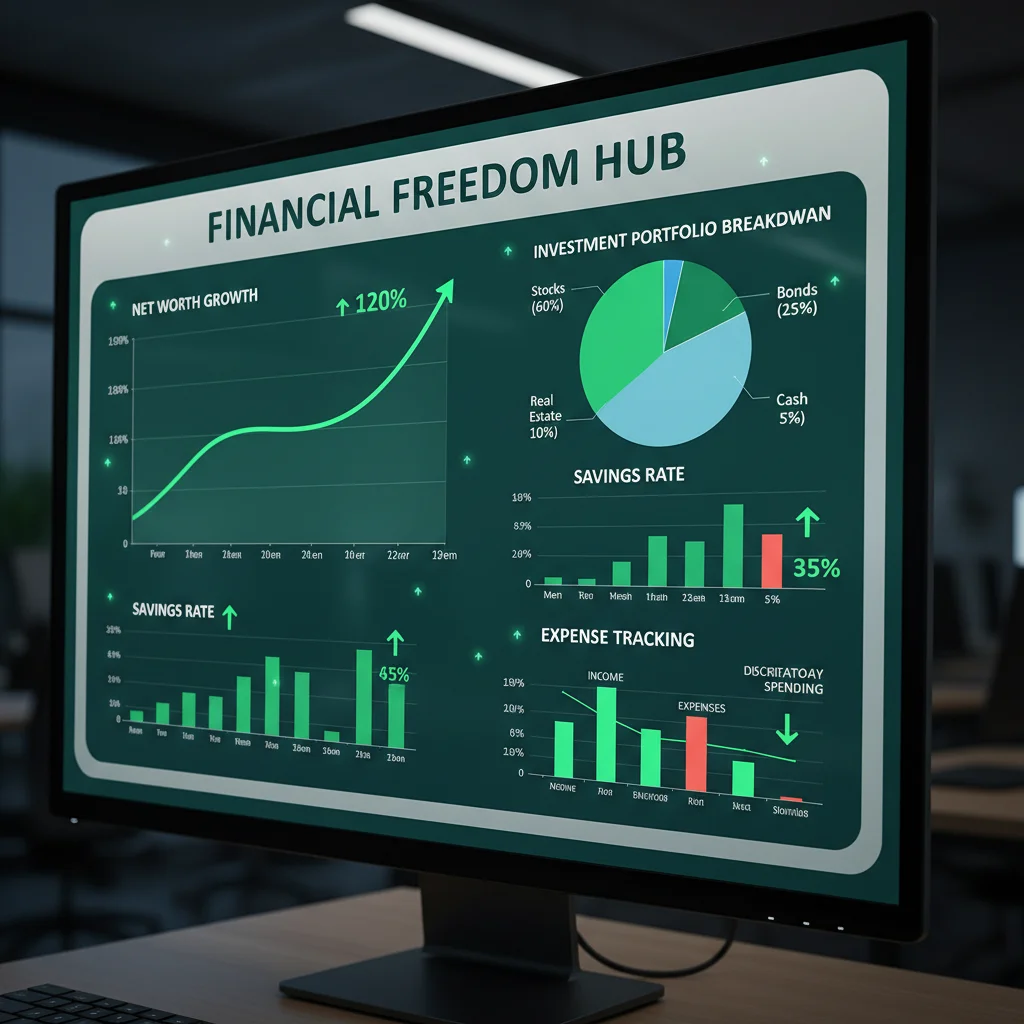
Once you’ve assessed your finances, mastered your budget, and eliminated high-interest debt, the real wealth-building begins. Strategic investing is the engine that will power your financial independence roadmap. The earlier you start, the more powerful compounding interest becomes.
Understand Basic Investment Principles
Before diving in, educate yourself on fundamental investment concepts. Understand the difference between stocks, bonds, mutual funds, and Exchange Traded Funds (ETFs). Learn about diversification, risk tolerance, and long-term versus short-term investing. Resources like reputable financial blogs, books, and courses can provide a solid foundation.
Don’t feel pressured to become a stock market guru. For most people, a simple, diversified portfolio of low-cost index funds or ETFs is the most effective strategy for long-term wealth accumulation. Consistency and discipline often trump complex trading strategies.
Maximize Retirement Accounts
Employer-sponsored retirement plans like 401(k)s (or 403(b)s, TSP, etc.) and individual retirement accounts (IRAs) like Roth IRAs and Traditional IRAs are powerful tools. They offer tax advantages that significantly boost your investment growth. If your employer offers a match on your 401(k) contributions, contribute at least enough to get the full match – it’s free money!
Understand the contribution limits and tax implications of each account type. For financial independence, contributing the maximum allowable amount to these accounts each year should be a primary goal. The tax-advantaged growth can shave years off your journey.
Diversify Your Investment Portfolio
Diversification is key to mitigating risk. Don’t put all your eggs in one basket. Spread your investments across different asset classes (stocks, bonds, real estate), industries, and geographies. A well-diversified portfolio helps cushion against market downturns in any single sector or asset type.
For those aiming for financial independence by 2026, a more aggressive investment strategy might be considered, but always within your personal risk tolerance. This could involve a higher allocation to equities (stocks) in your younger years, gradually shifting to a more conservative allocation as you approach your target date and financial independence number.
Regularly Rebalance Your Portfolio
Over time, the performance of different assets can cause your portfolio’s allocation to drift from your target. Rebalancing involves selling some assets that have performed well and buying more of those that have lagged, bringing your portfolio back to your desired allocation. This helps you maintain your risk profile and can even force you to ‘buy low and sell high’ systematically.

Step 5: Increase Your Income and Diversify Income Streams
While cutting expenses and investing smartly are crucial, increasing your income can significantly accelerate your financial independence roadmap. There’s a limit to how much you can cut, but theoretically, no limit to how much you can earn. Diversifying your income streams also adds resilience and security to your financial plan.
Negotiate Salary Increases and Seek Promotions
Don’t underestimate the power of your primary income source. Regularly assess your market value, develop new skills, and actively seek opportunities for advancement within your current role or company. When it’s time for performance reviews, be prepared to negotiate for a higher salary. A significant raise can have a compounding effect on your savings and investments over time.
Develop Side Hustles and Passive Income Streams
This is where many financial independence seekers find their acceleration. A side hustle can be anything from freelancing in your area of expertise, driving for a ride-share service, selling products online, or consulting. The extra income from a side hustle, especially if it’s entirely directed towards savings and investments, can dramatically shorten your timeline to financial independence.
Beyond active side hustles, explore passive income streams. These are income sources that require upfront effort but then generate revenue with minimal ongoing work. Examples include:
- Dividend Stocks/ETFs: Investments that pay out a portion of company profits to shareholders.
- Rental Properties: Generating income from real estate you own.
- High-Yield Savings Accounts/CDs: Earning interest on your cash.
- Blogging/Content Creation: Monetizing content through ads, sponsorships, or product sales.
- Royalties: From books, music, or other creative works.
- Peer-to-Peer Lending: Lending money to individuals or small businesses for interest.
The goal is to build multiple streams of income, creating a robust financial ecosystem that supports your journey and provides a safety net.
Invest in Yourself Through Education and Skill Development
The best investment you can make is in yourself. Continuously learning new skills, pursuing certifications, or even higher education can significantly increase your earning potential. Whether it’s mastering a new programming language, becoming proficient in digital marketing, or enhancing your leadership abilities, these investments pay dividends in increased income and career opportunities, directly feeding into your financial independence roadmap.
Maintaining Momentum and Adjusting Your Roadmap
Achieving financial independence by 2026 is an ambitious goal that requires ongoing commitment and flexibility. Your initial plan is a living document, and it will need regular review and adjustment.
Regularly Review Your Progress
Set aside time monthly or quarterly to review your budget, net worth, and investment portfolio. Are you on track to meet your goals? Are there any unexpected expenses or income changes that require adjustments? This regular check-in helps you stay accountable and make necessary course corrections.
Stay Motivated and Celebrate Milestones
The journey to financial independence can be long, and it’s easy to lose steam. Set smaller, achievable milestones along the way (e.g., paying off a specific debt, reaching a certain investment threshold, saving your first $10,000). Celebrate these wins, no matter how small, to keep your motivation high. Share your journey with a trusted friend, family member, or a community of like-minded individuals for support and encouragement.
Be Flexible and Adaptable
Life happens. Unexpected expenses, job changes, market fluctuations, or personal circumstances can all impact your financial plan. The key is to be adaptable. If a setback occurs, don’t get discouraged. Re-evaluate your situation, adjust your budget, and modify your timeline if necessary. The goal remains the same; the path might just need a slight detour.
For example, if the market experiences a downturn, resist the urge to panic sell. Instead, view it as an opportunity to buy assets at a lower price. If your income temporarily decreases, tighten your belt and focus on essential expenses until your situation improves. Flexibility is a cornerstone of a successful financial independence roadmap.
Educate Yourself Continuously
The world of personal finance and investing is constantly evolving. Stay informed about new investment opportunities, tax law changes, and economic trends. Read books, listen to podcasts, follow reputable financial advisors, and engage in continuous learning. The more knowledgeable you are, the better equipped you’ll be to make informed decisions and optimize your financial strategy.
The Power of Compounding and Time
One of the most powerful allies on your financial independence roadmap is the principle of compounding. Albert Einstein reportedly called compounding the eighth wonder of the world. It’s the process where the returns on your investments also start earning returns, leading to exponential growth over time. The earlier you start investing and the more consistently you contribute, the more pronounced the effect of compounding becomes.
Consider two individuals: one starts investing $500 a month at age 25, and another starts $500 a month at age 35. Assuming an average annual return of 7%, the person who started at 25 would have significantly more money by age 65, purely due to the extra ten years of compounding. This illustrates why starting early and maintaining a high savings rate is so critical for ambitious goals like achieving financial independence by 2026.
Even if you’re starting later, the principles remain the same: consistent contributions, smart investing, and patience will leverage compounding in your favor. The timeframe to 2026 is relatively short for such a grand goal, which emphasizes the need for aggressive savings, strategic debt elimination, and potentially higher-risk (but still diversified) investments in your early stages.
Common Pitfalls to Avoid on Your Journey
While the financial independence roadmap is clear, there are common traps that can derail your progress. Being aware of these can help you navigate around them.
- Lifestyle Inflation: As your income grows, it’s easy to increase your spending proportionally. This ‘lifestyle creep’ can negate any gains from higher earnings. Resist the urge to upgrade your lifestyle significantly until you’ve reached your financial independence number.
- Analysis Paralysis: Getting started is often the hardest part. Don’t get bogged down in trying to find the ‘perfect’ investment or the ‘optimal’ budget. Start with a good plan and adjust as you learn. Imperfect action is better than perfect inaction.
- Ignoring Debt: As discussed, high-interest debt is a wealth destroyer. Ignoring it will make financial independence an uphill battle.
- Lack of Emergency Fund: Without a robust emergency fund (3-6 months of living expenses), unexpected events can force you to go into debt or sell investments prematurely, setting back your progress.
- Emotional Investing: Making investment decisions based on fear or greed (e.g., selling during a market downturn, chasing ‘hot’ stocks) is a common mistake. Stick to your long-term investment plan and avoid reacting to short-term market fluctuations.
- Comparisonitis: Comparing your financial journey to others can be demotivating. Everyone’s situation is unique. Focus on your own progress and celebrate your own milestones.
Conclusion: Your Path to Financial Freedom by 2026
Achieving financial independence by 2026 is an ambitious, life-changing goal that requires dedication, strategic planning, and consistent action. By following this 5-step financial independence roadmap, you are not just saving money; you are actively building the life you desire. From meticulously assessing your current financial standing and mastering your budget to aggressively tackling debt, strategically investing, and diversifying your income, each step is a crucial building block towards your freedom.
Remember that this journey is personal and will have its unique challenges and triumphs. Stay disciplined, remain flexible, continuously educate yourself, and celebrate every milestone along the way. The power to transform your financial future lies within your hands. Start today, commit to the process, and by 2026, you could be living a life of unprecedented financial freedom and choice. Your future self will thank you.