Quantum Computing’s Impact on Data Encryption: A 2026 Outlook for U.S. Infrastructure
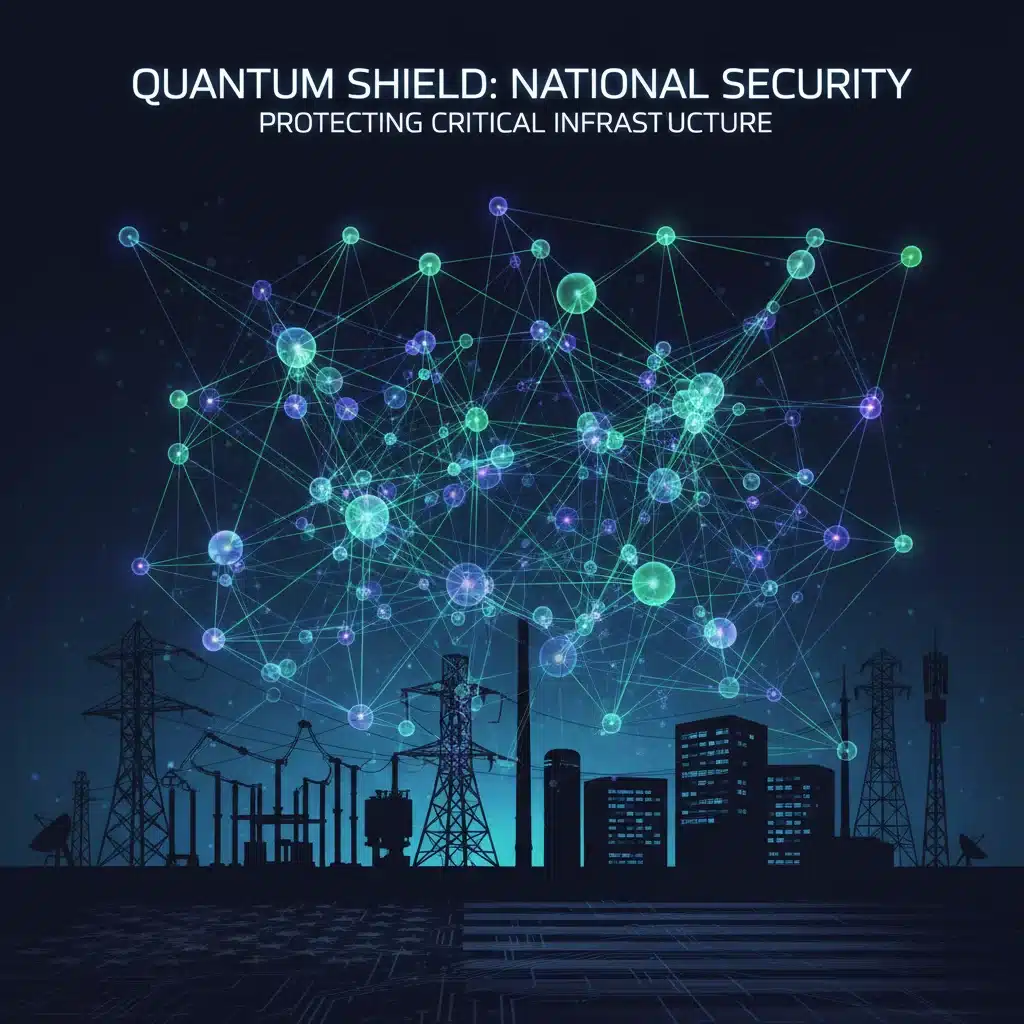
The future of secure data is at stake. Understanding the profound implications of quantum computing on data encryption is no longer a theoretical exercise but an urgent necessity for safeguarding U.S. critical infrastructure.
Quantum Computing’s Impact on Data Encryption: A 2026 Outlook for U.S. Infrastructure
The dawn of quantum computing promises revolutionary advancements across various sectors, from medicine to materials science. However, this transformative technology also casts a long shadow over the very foundations of modern cybersecurity, particularly data encryption. For the United States, with its vast and interconnected critical infrastructure, the potential for quantum computers to render current encryption methods obsolete presents an unprecedented national security challenge. As we look towards 2026, the urgency to address the quantum encryption impact on U.S. infrastructure is escalating rapidly.
This article will delve into the projected timeline and severity of the quantum threat, analyze the specific vulnerabilities within U.S. critical infrastructure, and outline the proactive strategies and policy considerations necessary to navigate this complex landscape. We will explore the principles behind quantum computing’s cryptographic threat, the current state of post-quantum cryptography (PQC) development, and the critical steps that government agencies, private sector entities, and research institutions must take to ensure the resilience and security of America’s vital systems.
Advertisements
Understanding the Quantum Threat to Current Encryption
To fully grasp the quantum encryption impact, it’s essential to understand why quantum computers pose such a significant threat to our existing cryptographic standards. Modern data encryption relies heavily on mathematical problems that are computationally intractable for classical computers. Algorithms like RSA and Elliptic Curve Cryptography (ECC), which underpin secure communications, financial transactions, and national defense systems, derive their strength from the immense time and resources required to factor large prime numbers or solve discrete logarithm problems.
Enter quantum computing. Unlike classical bits, which can be either 0 or 1, quantum bits (qubits) can exist in multiple states simultaneously (superposition) and become entangled, allowing them to perform complex calculations at speeds unimaginable for traditional machines. Shor’s algorithm, discovered in 1994, demonstrates that a sufficiently powerful quantum computer could efficiently break RSA and ECC. Grover’s algorithm, another quantum breakthrough, could significantly speed up brute-force attacks on symmetric key algorithms like AES, effectively halving the key length.
While a fault-tolerant, large-scale quantum computer capable of running Shor’s algorithm reliably is still some years away, experts widely predict that such a machine could emerge within the next decade. The year 2026 is often cited as a critical inflection point, where the threat transitions from theoretical to imminent, particularly for data with long-term confidentiality requirements. This ‘harvest now, decrypt later’ scenario, where encrypted data is collected today with the expectation of decrypting it once quantum computers are available, is a significant concern for national security and sensitive information.
The ‘Harvest Now, Decrypt Later’ Threat
The concept of ‘harvest now, decrypt later’ refers to the strategy of adversaries collecting vast amounts of currently encrypted data, knowing that once powerful quantum computers become available, they will be able to decrypt this data at will. This poses an immediate threat to information that needs to remain confidential for decades, such as classified government communications, intellectual property, critical infrastructure blueprints, and personal health records. The quantum encryption impact isn’t just about future breaches; it’s about the retroactive compromise of data secured today.
For U.S. critical infrastructure, this scenario is particularly alarming. Data related to energy grids, water systems, transportation networks, and defense systems often has a long lifespan and requires robust, enduring confidentiality. A successful quantum attack on this stored data could expose vulnerabilities, compromise operational integrity, and undermine national security. The time to act is not when quantum computers are fully operational, but now, to mitigate the risks associated with this ‘quantum waiting game.’
Vulnerabilities in U.S. Critical Infrastructure
U.S. critical infrastructure, encompassing 16 sectors ranging from communications and energy to healthcare and financial services, relies heavily on strong encryption for its operational security and integrity. The widespread adoption of public-key cryptography (PKC) means that virtually every secure communication, digital signature, and data storage mechanism within these sectors is potentially vulnerable to a future quantum attack. The quantum encryption impact on these sectors could be catastrophic.
Energy Sector
The energy sector, including electricity grids, oil, and gas pipelines, uses encryption for securing SCADA (Supervisory Control and Data Acquisition) systems, smart grid communications, and operational data. Compromise of this encryption could lead to unauthorized access, manipulation of energy flows, and widespread blackouts. The integrity of energy supply is paramount for national stability, making this a high-priority area for quantum-safe transitions.
Financial Services
Banks, stock exchanges, and financial institutions depend on encryption for securing transactions, customer data, and interbank communications. A quantum attack could not only lead to massive financial fraud but also undermine public trust in the entire financial system. The long-term confidentiality of financial records makes the ‘harvest now, decrypt later’ threat particularly potent here.
Defense and National Security
Perhaps the most critical sector, defense and national security, relies on encryption for classified communications, intelligence gathering, command and control systems, and protecting sensitive military data. The ability of an adversary to decrypt this information could have profound and devastating consequences, affecting troop movements, weapon systems, and strategic planning. The quantum encryption impact here is a direct threat to national sovereignty.
Healthcare and Public Health
Patient records, medical research data, and healthcare infrastructure communications are all protected by encryption. A quantum breach could expose sensitive personal health information, compromise medical devices, and disrupt healthcare services, leading to widespread public health crises and privacy violations.
Communications and Information Technology
The backbone of modern society, these sectors rely on encryption for internet traffic, telecommunications, and cloud services. A quantum attack could allow for widespread surveillance, data exfiltration, and disruption of essential communication channels. The pervasive nature of these technologies means the quantum encryption impact would ripple across all other critical sectors.
The 2026 Outlook: A Critical Juncture
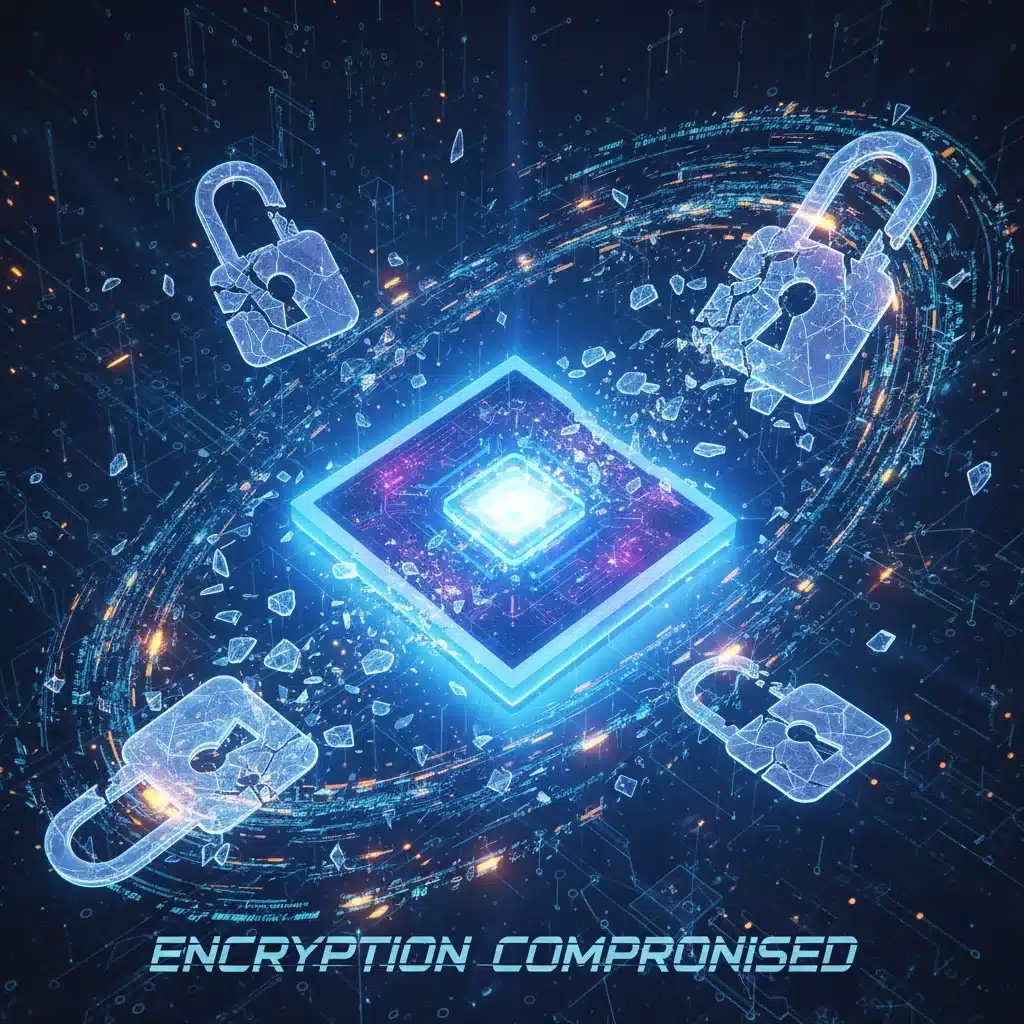
By 2026, the conversation around quantum computing will likely shift from theoretical discussions to concrete implementation plans and, potentially, early demonstrations of quantum attacks on classical encryption. Several factors contribute to why 2026 is a critical year for understanding the quantum encryption impact:
- Advancements in Quantum Hardware: While full fault-tolerant quantum computers are still in development, significant strides are being made in increasing qubit counts, connectivity, and error correction rates. Researchers anticipate that by 2026, quantum hardware will be sufficiently advanced to pose a credible threat to at least some forms of classical encryption, even if not yet fully breaking RSA-2048.
- NIST Post-Quantum Cryptography Standardization: The National Institute of Standards and Technology (NIST) has been leading a multi-year effort to standardize post-quantum cryptographic algorithms. By 2026, NIST is expected to have finalized its initial set of quantum-resistant algorithms. This standardization is a crucial precursor to widespread adoption and migration.
- Increased Awareness and Urgency: As the quantum threat becomes more tangible, awareness within government and industry will increase. This heightened understanding will drive more aggressive policy-making and investment in quantum-safe solutions.
- Window of Opportunity for Adversaries: Nation-state adversaries are undoubtedly investing heavily in quantum computing research. The period leading up to 2026 represents a window where they could potentially develop or acquire quantum capabilities that could compromise U.S. encrypted data, especially if U.S. infrastructure remains slow to adapt.
The transition to post-quantum cryptography is not a simple ‘patch’ but a complex, multi-year undertaking involving extensive research, development, testing, and deployment across vast and heterogeneous systems. The sheer scale of U.S. critical infrastructure means that a proactive and well-coordinated strategy is absolutely essential.
Post-Quantum Cryptography (PQC): The Solution
The primary defense against the quantum encryption impact is the development and deployment of Post-Quantum Cryptography (PQC), also known as quantum-resistant cryptography. PQC algorithms are designed to run on classical computers but are believed to be resistant to attacks from both classical and quantum computers. NIST’s ongoing standardization process is a cornerstone of the U.S. strategy.
NIST Standardization Process
NIST initiated its PQC standardization project in 2016, calling for proposals for quantum-resistant cryptographic algorithms. After several rounds of evaluation, NIST announced its first set of standardized algorithms in July 2022, including CRYSTALS-Kyber for key encapsulation mechanisms (KEMs) and CRYSTALS-Dilithium for digital signatures. Additional algorithms are still under consideration for future standardization. By 2026, these standards will be mature, providing a clear roadmap for implementation.
The goal is to provide a suite of algorithms that can replace current vulnerable ones without compromising performance or security. These new algorithms are based on different mathematical problems, such as lattice-based cryptography, code-based cryptography, and multivariate polynomial cryptography, which are believed to be hard for quantum computers to solve.
Challenges in PQC Adoption
Despite the progress, the adoption of PQC presents significant challenges:
- Algorithm Complexity and Performance: PQC algorithms can be more complex and may have larger key sizes, signatures, or ciphertexts compared to their classical counterparts. This could impact network bandwidth, processing power, and storage requirements, especially for resource-constrained devices within critical infrastructure.
- Migration Complexity: Identifying, upgrading, and replacing cryptographic modules across all critical infrastructure systems is a monumental task. It involves inventorying all cryptographic assets, understanding dependencies, testing new implementations, and ensuring interoperability.
- Interoperability: Ensuring that new PQC systems can seamlessly communicate with existing and legacy systems, both domestically and internationally, is crucial for maintaining operational continuity.
- Talent Gap: There is a significant shortage of cybersecurity professionals with expertise in quantum computing and PQC. Training and upskilling the workforce will be vital for successful migration.
- Long Deployment Cycles: Some critical infrastructure systems have extremely long operational lifespans and infrequent upgrade cycles. Integrating PQC into these systems will require careful planning and potentially accelerated replacement schedules.
Strategic Imperatives for U.S. Infrastructure by 2026
To mitigate the quantum encryption impact, a multi-faceted and coordinated strategy is indispensable. By 2026, several key actions must be well underway, if not completed, across all critical infrastructure sectors.
1. Cryptographic Inventory and Discovery
The first step for any organization is to gain a comprehensive understanding of its cryptographic landscape. This involves identifying all instances where encryption is used, what algorithms are employed, which keys are in use, and where cryptographic modules reside. This ‘crypto-discovery’ process is often more challenging than anticipated due to the sprawling and often undocumented nature of IT and OT (Operational Technology) systems within critical infrastructure.
2. Quantum-Readiness Assessments
Once cryptographic assets are identified, organizations must conduct quantum-readiness assessments. This involves evaluating the risk exposure of each system to quantum attacks, prioritizing data and systems based on their confidentiality requirements and expected lifespan, and developing a phased migration plan to PQC. This assessment should include both current and archived data that requires long-term security.
3. Phased Migration to PQC
The transition to PQC will not be a single event but a gradual, phased migration. Organizations should prioritize ‘crypto-agile’ solutions that allow for easy swapping of cryptographic algorithms. This agility is crucial as PQC standards evolve and new threats emerge. Early adoption of hybrid modes (using both classical and PQC algorithms simultaneously) can provide an interim layer of security while the full transition is underway.
4. Research and Development Investment
Continued investment in quantum computing and PQC research is vital. This includes funding academic institutions, fostering public-private partnerships, and supporting startups in the quantum security space. The U.S. must maintain its leadership in this field to stay ahead of adversaries.

5. Workforce Development and Training
Addressing the talent gap is paramount. Educational programs must be developed to train a new generation of cybersecurity professionals, quantum engineers, and cryptographers. Existing IT and OT personnel will also require training on PQC principles, implementation, and management.
6. Policy and Regulatory Frameworks
Government agencies, such as NIST, CISA (Cybersecurity and Infrastructure Security Agency), and OMB (Office of Management and Budget), are playing a critical role in guiding the national PQC migration. By 2026, clearer mandates and guidelines will be needed to accelerate PQC adoption across all federal agencies and encourage similar transitions in the private sector critical infrastructure. International collaboration on PQC standards is also essential to ensure global interoperability and security.
7. Supply Chain Security
The security of critical infrastructure is intrinsically linked to its supply chain. Ensuring that hardware, software, and services procured by critical infrastructure operators are quantum-safe or have a clear roadmap for PQC migration will be a significant challenge. By 2026, procurement policies should increasingly reflect PQC requirements, demanding transparency from vendors regarding their quantum-readiness plans.
The Role of Government and Private Sector Collaboration
Addressing the quantum encryption impact is too large a task for any single entity. It requires unprecedented collaboration between the U.S. government, private sector critical infrastructure owners and operators, and academic research institutions. Government agencies can provide funding, set standards, and disseminate threat intelligence, while the private sector brings operational expertise, innovative solutions, and the ability to implement changes at scale. Academia contributes foundational research and workforce development.
Initiatives like the National Quantum Initiative Act and the recent National Security Memorandum on Post-Quantum Cryptography are vital steps in establishing a coordinated national strategy. However, these efforts must be translated into actionable plans and adequately resourced to meet the 2026 timeline effectively.
Looking Beyond 2026: Continuous Adaptation
While 2026 serves as a crucial near-term milestone, the quantum threat is not static. The field of quantum computing is rapidly evolving, and new algorithms or attack vectors may emerge. Therefore, the strategy for securing U.S. critical infrastructure must incorporate continuous adaptation and a commitment to cryptographic agility.
Organizations must establish processes for monitoring developments in quantum computing, regularly reassessing their PQC implementations, and being prepared to update algorithms as new standards or threats arise. The goal is not just a one-time migration but the establishment of a resilient, quantum-safe security posture that can withstand future cryptographic challenges.
Conclusion
The quantum encryption impact on data encryption for U.S. critical infrastructure by 2026 is a challenge of immense proportions, demanding immediate and sustained attention. The potential for quantum computers to dismantle current cryptographic protections poses an existential threat to national security, economic stability, and public trust. The ‘harvest now, decrypt later’ scenario underscores the urgency of proactive measures.
By prioritizing cryptographic inventory, conducting thorough quantum-readiness assessments, investing in PQC migration, fostering workforce development, and strengthening public-private partnerships, the United States can navigate this complex transition. The year 2026 is not merely a date on the calendar; it is a critical benchmark for ensuring that America’s vital infrastructure remains secure in the quantum age. Failure to act decisively and strategically now could leave the nation vulnerable to unprecedented cyber threats in the very near future.