Next-Gen Gaming Consoles: Hardware Upgrades & Future Innovations
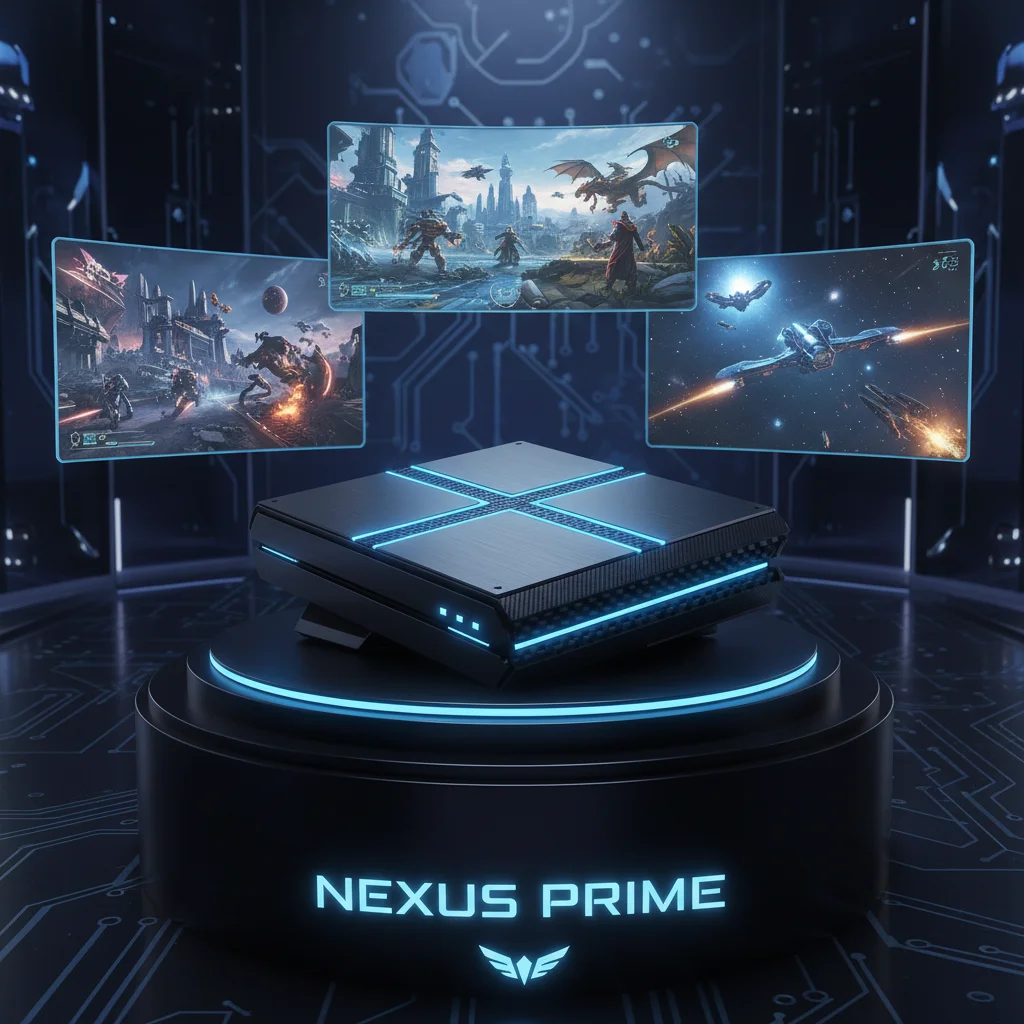
The gaming world is perpetually on the cusp of its next major evolution, and as we look towards late 2026, the anticipation for next-gen gaming consoles is reaching a fever pitch. Gamers and industry analysts alike are eagerly speculating about the significant hardware upgrades that will define this new era. Each console generation brings with it a promise of enhanced graphical fidelity, faster load times, and more immersive experiences, and the upcoming iteration is expected to deliver on these promises in spades. Understanding the core technologies and innovations that will power these machines is crucial for anyone keen on the future of interactive entertainment. This deep dive will explore the expected advancements in next-gen console hardware, offering insights into what players can truly expect from their late 2026 gaming experiences.
The Heart of the Beast: CPU Advancements in Next-Gen Consoles
At the core of any powerful computing device, especially a gaming console, lies the Central Processing Unit (CPU). For next-gen gaming consoles, the CPU is set to receive a substantial boost, moving beyond the capabilities of current-generation systems. It’s widely expected that AMD will continue its partnership with both Sony and Microsoft, providing custom-designed Zen architecture-based processors. We anticipate a significant leap from the Zen 2 architecture found in the PlayStation 5 and Xbox Series X/S to a more advanced iteration, likely Zen 4 or even Zen 5. This upgrade will translate directly into more complex game worlds, more sophisticated AI behaviors, and a greater number of on-screen elements without compromising performance.
The move to a smaller manufacturing process, such as 4nm or even 3nm, will be a key factor in these CPU advancements. A smaller process allows for more transistors to be packed into the same die size, leading to increased clock speeds, improved power efficiency, and reduced heat generation. This efficiency is critical for maintaining console form factors and ensuring quiet operation, a common request from gamers. Furthermore, these next-gen CPUs are expected to feature more cores and threads, enabling developers to parallelize tasks more effectively. This means that physics simulations, character animations, and background processes can run more smoothly, contributing to a more believable and responsive game world. The enhanced CPU power will also be vital for handling the increased demands of higher frame rates and resolutions, pushing towards native 4K and even 8K experiences in some titles, though 4K at high refresh rates will likely be the primary target.
Advertisements
The impact of a stronger CPU extends beyond mere numbers. It enables developers to implement more dynamic environments, more realistic crowd simulations, and more intelligent non-player characters (NPCs). Imagine open-world games where every NPC has a more complex routine, or strategy games where AI opponents exhibit truly adaptive strategies. These are the kinds of experiences that a significantly upgraded CPU for next-gen console hardware will facilitate, pushing the boundaries of what’s possible in interactive storytelling and gameplay mechanics.
Graphical Powerhouse: GPU Evolution and Ray Tracing Dominance
While the CPU handles the logic, the Graphics Processing Unit (GPU) is where the visual magic happens. The current generation introduced ray tracing, but often at a significant performance cost. Next-gen gaming consoles are poised to make ray tracing a standard feature, not just a niche graphical enhancement. This will be achieved through dedicated hardware acceleration, far more advanced than what’s available today. We can expect RDNA 4 or even RDNA 5 architecture from AMD, offering substantial improvements in raw compute power, shader efficiency, and, crucially, ray tracing performance.
The leap in GPU capabilities will allow for more realistic lighting, reflections, and shadows, creating environments that are virtually indistinguishable from reality. Imagine water surfaces that accurately reflect the surrounding world, or shadows that soften and diffuse naturally based on light sources. Beyond ray tracing, these GPUs will boast higher shader counts, increased clock speeds, and larger, faster memory bandwidths. This will enable developers to render more complex geometries, higher resolution textures, and more elaborate particle effects without sacrificing frame rates. Techniques like mesh shaders and variable rate shading, already present in current consoles, will be further optimized and utilized to maximize performance and visual fidelity.
Furthermore, advancements in upscaling technologies will play a pivotal role. While native 4K and 8K rendering will be a goal, techniques like AMD’s FidelityFX Super Resolution (FSR) and potentially new, even more advanced proprietary upscaling methods will be crucial for achieving high frame rates at these resolutions. These technologies render games at a lower resolution and then intelligently upscale them, often with minimal visual degradation, allowing for a smoother gaming experience. The synergy between a powerful GPU and sophisticated upscaling algorithms will be key to delivering stunning visuals without compromise, making next-gen console hardware a true visual spectacle.
The graphical leap will also empower game artists to create incredibly detailed character models, expansive and vibrant open worlds, and cinematic experiences that blur the line between gameplay and pre-rendered cutscenes. The ambition of game developers is often limited by the hardware they have to work with, but with these expected GPU advancements, their creative horizons will expand dramatically. This means more immersive narratives, more believable characters, and environments that react dynamically to player actions, all rendered with breathtaking realism.
Storage Revolution: The Continued Reign of SSDs and Beyond
One of the most impactful upgrades in the current generation was the widespread adoption of Solid-State Drives (SSDs). Next-gen gaming consoles will undoubtedly push this even further. While current SSDs are fast, the next iteration will likely leverage PCIe Gen 5 NVMe technology, offering theoretical speeds that are double those of PCIe Gen 4. This translates to near-instantaneous load times, seamless streaming of game assets, and the elimination of texture pop-in. Developers will be able to design worlds that are truly open, without the need for hidden loading screens or cleverly disguised corridors.
Beyond raw speed, the architecture surrounding the SSD will also see improvements. Custom I/O solutions, similar to Sony’s PlayStation 5 architecture, will likely become more sophisticated. These systems allow data to bypass the CPU for certain operations, directly feeding information from the SSD to the GPU, further reducing latency and bottlenecks. This direct storage access will enable game engines to stream assets at unprecedented rates, allowing for more detailed environments to be loaded on the fly, and enabling truly massive game worlds without performance hitches.
The increased speed and efficiency of storage will have a profound impact on game design. Developers will be less constrained by memory budgets and loading times, allowing for more ambitious and complex game structures. Imagine games where fast travel is genuinely instantaneous, or where the entire game world is always loaded in the background, making transitions seamless and immersion unbroken. The next-gen console hardware will make these dreams a reality, redefining how we interact with virtual environments and expanding the scope of what a game can be. Furthermore, the capacity of these SSDs is also expected to increase significantly, addressing a common complaint from current-gen console owners about limited storage space, especially with ever-growing game sizes. Expect base models to offer at least 2TB of ultra-fast storage, with options for further expansion.
Memory Matters: RAM and Bandwidth Boosts
Memory, or RAM, is another critical component that will see substantial upgrades. Current-gen consoles typically feature 16GB of GDDR6 RAM. For next-gen gaming consoles, we can expect a jump to at least 24GB or even 32GB of GDDR6X or a newer, faster memory standard. This increase in capacity will allow for larger game assets to be held in memory, reducing the need to constantly fetch data from the SSD. More importantly, the bandwidth of this memory will also see a significant boost, enabling the CPU and GPU to access data at much higher speeds.
Increased memory capacity and bandwidth are crucial for supporting higher resolutions, more complex textures, and advanced graphical effects like ray tracing. It allows the GPU to work with more data simultaneously, leading to smoother rendering and more detailed visuals. Developers will be able to implement more intricate particle systems, more realistic physics simulations, and larger, more detailed environments without hitting memory bottlenecks. This also benefits techniques like virtual texture mapping, where huge textures are streamed from storage and only the visible portions are loaded into RAM, requiring fast memory to ensure seamless transitions.
The combination of a powerful CPU, a cutting-edge GPU, and abundant, high-bandwidth memory will create a balanced system where no single component acts as a bottleneck. This holistic approach to hardware design is essential for squeezing every last drop of performance out of the next-gen console hardware, ensuring that that next-gen gaming looks and run their absolute best. The synergy between these components will unlock new possibilities for game design, allowing for experiences that were previously unimaginable, pushing the boundaries of realism and immersion.
Innovative Features and Peripheral Enhancements
Beyond the core components, next-gen gaming consoles are likely to introduce a host of innovative features and peripheral enhancements. Haptic feedback and adaptive triggers, pioneered by the PlayStation 5’s DualSense controller, have set a new standard for controller immersion. We can expect these technologies to evolve further, perhaps incorporating more precise haptics, new forms of tactile feedback, or even entirely new input methods. Microsoft’s Xbox controllers might also integrate similar or proprietary advanced haptic technologies to compete.
Audio will also be a major focus. While current consoles offer advanced 3D audio solutions, next-gen systems will likely refine these, offering even more precise spatial audio that can adapt dynamically to the player’s position and environment. This will enhance immersion significantly, making players feel truly present in the game world. Dedicated audio processing hardware, similar to what’s found in high-end PCs, could become standard, allowing for more complex soundscapes and real-time audio manipulation without taxing the main CPU.
Connectivity will also see upgrades, with Wi-Fi 7 becoming standard, offering faster speeds and lower latency for online gaming and streaming. HDMI 2.1 will remain crucial, supporting 4K at 120Hz and 8K resolutions, with potential advancements like higher refresh rate support for future display technologies. Power efficiency will also be a key design goal, with consoles aiming to deliver more performance per watt, reducing energy consumption and heat output. This is not only good for the environment but also for the longevity and quiet operation of the console.
Another area of potential innovation is modularity or upgradability. While traditional consoles have been closed systems, there’s growing speculation about the possibility of certain components being user-upgradable, particularly storage. While a fully modular console is unlikely, offering more flexible and less proprietary expansion options for SSDs would be a welcome change for consumers. Furthermore, cloud gaming integration will likely become even more seamless, with next-gen consoles designed from the ground up to leverage the power of cloud infrastructure for certain aspects of gameplay or even full game streaming, offering greater accessibility and flexibility.
The Promise of Enhanced Immersion and New Gameplay Paradigms
Ultimately, all these hardware upgrades converge on a single goal: to deliver unparalleled immersion and unlock new gameplay paradigms. The sheer power of next-gen console hardware will allow developers to craft worlds that are more believable, characters that are more expressive, and narratives that are more engaging. We can expect to see a significant reduction in technical limitations that often constrain creative vision, leading to a new wave of innovative and groundbreaking titles.
Imagine games where every blade of grass reacts individually to wind, where character facial animations convey a full spectrum of human emotion, or where physics simulations are so precise that every interaction feels real. These are not just incremental improvements; they are foundational shifts that will redefine what we consider possible in gaming. The increased processing power, graphical fidelity, and lightning-fast storage will enable developers to create truly dynamic and reactive environments, where player choices have tangible and visible consequences on the game world.
The convergence of powerful hardware with advancements in AI and machine learning will also open doors to more adaptive and intelligent game systems. NPCs could learn from player behavior, enemies could devise complex strategies on the fly, and game worlds could evolve dynamically based on player actions and choices. This level of responsiveness and intelligence will make every playthrough feel unique and personal, deepening the player’s connection to the game world. The future of gaming with next-gen console hardware is not just about prettier graphics; it’s about richer, deeper, and more personalized interactive experiences.
Challenges and Considerations for Next-Gen Console Hardware
While the prospects for next-gen gaming consoles are incredibly exciting, there are also significant challenges and considerations that manufacturers and developers will face. One of the primary concerns is cost. Integrating cutting-edge technology inevitably drives up manufacturing expenses, and finding the right balance between performance and an accessible price point will be crucial for widespread adoption. Consumers are always looking for value, and a console that is too expensive, even with revolutionary hardware, might struggle to gain traction.
Another challenge lies in software optimization. Even with powerful hardware, games need to be meticulously optimized to take full advantage of the underlying architecture. Developers will need to adapt their engines and workflows to harness the new capabilities of the next-gen console hardware, which often requires a significant learning curve and investment. The transition period can sometimes lead to games that don’t fully utilize the new hardware, but as developers become more familiar, the true potential of the consoles will be unlocked.
Furthermore, the ever-present issue of backward compatibility will likely remain a key feature. Consumers appreciate being able to play their existing game libraries on new hardware, and ensuring seamless compatibility while introducing new architectural changes can be complex. Maintaining a robust digital storefront and providing easy access to previous generation titles will be important for retaining customer loyalty and expanding the user base. The ecosystem around the console, including services, subscriptions, and exclusive titles, will also play a crucial role in its success.
The supply chain and manufacturing capacity will also be critical factors. As seen with current-gen launches, global events and component shortages can significantly impact availability. Ensuring a smooth and sufficient supply of consoles at launch and throughout their lifecycle will be paramount to avoid consumer frustration. Finally, the competitive landscape will continue to evolve, with PC gaming and cloud gaming services offering alternative experiences. Next-gen console hardware will need to offer compelling unique selling points to stand out in a crowded market, emphasizing ease of use, exclusive content, and a curated gaming experience that is difficult to replicate elsewhere.
Conclusion: The Dawn of a New Gaming Era
The late 2026 timeframe for next-gen gaming consoles promises to usher in a truly transformative era for interactive entertainment. With expected advancements in CPU and GPU architecture, the widespread adoption of ultra-fast PCIe Gen 5 SSDs, and significant boosts in memory capacity and bandwidth, the next iteration of consoles will redefine our expectations of graphical fidelity, immersion, and gameplay fluidity. From hyper-realistic lighting and reflections powered by advanced ray tracing to expansive worlds with instantaneous loading, the future of gaming is set to be more breathtaking and seamless than ever before.
Beyond raw power, innovations in haptic feedback, spatial audio, and connectivity will further deepen player immersion, making virtual worlds feel more tangible and responsive. While challenges related to cost, optimization, and supply chain logistics will undoubtedly exist, the collective ambition of console manufacturers and game developers points towards a future where the line between virtual and reality becomes increasingly blurred. The next-gen console hardware is not just an upgrade; it’s a leap forward, inviting us all to experience games in ways we’ve only dreamed of. Prepare for an exhilarating journey into the next frontier of gaming.