
Master Smart Money Habits: Cut 20% Discretionary Spending by 2026
In an increasingly complex financial landscape, cultivating smart money habits is not just a recommendation; it’s a necessity. Many of us find ourselves caught in a cycle of earning and spending, often without a clear understanding of where our money truly goes. Discretionary spending, in particular, can be a silent drain on our financial resources, preventing us from achieving our long-term goals. Imagine a future where you have an extra 20% of your current discretionary spending saved or invested. This isn’t a pipe dream; it’s an achievable goal if you commit to developing and implementing smart money habits. This comprehensive guide will walk you through the process of identifying, analyzing, and ultimately reducing your discretionary spending by a significant 20% by 2026, paving the way for greater financial freedom and security.
The journey to financial mastery begins with awareness. Before you can cut down on spending, you need to know exactly what you’re spending on. This article will delve into actionable strategies, from meticulous budgeting and expense tracking to mindful consumption and leveraging technology. We’ll explore how small, consistent changes in your daily financial behavior can accumulate into substantial savings over time. By the end of this guide, you’ll possess the knowledge and tools to not only hit your 20% reduction target but also to embed these smart money habits into your everyday life, ensuring sustainable financial health for years to come.
Understanding Discretionary Spending: The First Step to Smart Money Habits
Before we can tackle the task of cutting 20% from your discretionary spending, it’s crucial to define what it is. Discretionary spending refers to non-essential expenses – money spent on goods and services that aren’t necessary for survival or maintaining your basic lifestyle. This includes things like dining out, entertainment, subscriptions, vacations, new gadgets, and impulse purchases. While these expenses often bring joy and convenience, they are also the most flexible part of your budget and the easiest to trim when you’re focused on developing smart money habits.
Advertisements
In contrast, non-discretionary spending covers essential costs such as housing (rent/mortgage), utilities, groceries, transportation, and healthcare. These are fixed or semi-fixed expenses that are harder to reduce significantly without making major lifestyle changes. Our focus here is on the discretionary portion, as it offers the most immediate and impactful opportunities for savings.
The challenge with discretionary spending is often its insidious nature. Many small, seemingly insignificant purchases can add up to a substantial amount over a month or a year. A daily coffee, a streaming service you rarely use, or an extra online shopping spree can collectively erode your savings potential. Recognizing these patterns is the foundational step in building smart money habits and taking control of your financial destiny.
Phase 1: The Audit – Uncovering Your Spending Patterns
1. Track Every Penny: The Foundation of Smart Money Habits
The first and most critical step in reducing discretionary spending is to know exactly where your money is going. For at least one to three months, meticulously track every single expense. This might sound daunting, but modern technology makes it easier than ever. Utilize budgeting apps (like Mint, YNAB, or Personal Capital), spreadsheets, or even a simple notebook. The goal is to capture a complete picture of your financial outflows. Categorize your expenses as you go – distinguishing between essential and discretionary items.
This tracking period serves as your financial diagnostic. Without this data, any attempts to cut spending will be based on guesswork, which is rarely effective. You might be surprised at what you discover. Many people underestimate how much they spend on certain categories, especially those ‘small’ daily purchases.
2. Analyze and Identify Spending Leakage
Once you have a few months of spending data, it’s time to analyze it. Look for patterns, recurring expenses, and areas where your spending seems disproportionately high. Ask yourself:
- Where am I spending money without much thought?
- Are there subscriptions I’m paying for but not using?
- How often do I eat out, and could I reduce this?
- Are impulse purchases a significant part of my discretionary spending?
- What are my ‘wants’ versus my ‘needs’?
This analysis is where you begin to identify your ‘spending leaks’ – those areas where money is flowing out unnecessarily. This crucial step is what truly transforms your approach to money, allowing you to build truly effective smart money habits.
Phase 2: Setting Your 20% Reduction Goal by 2026
1. Calculate Your Baseline Discretionary Spending
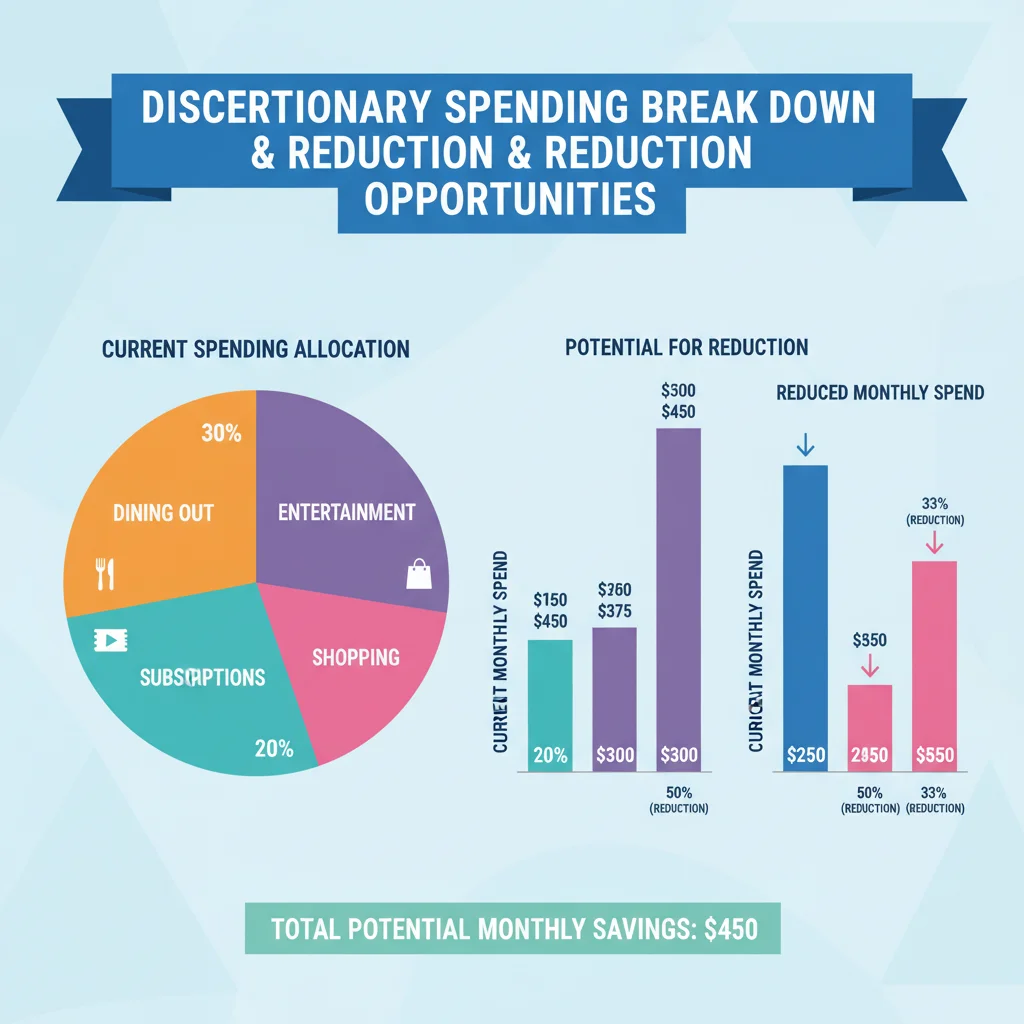
Based on your audit, calculate your average monthly discretionary spending. For example, if you spend $1,000 per month on non-essentials, your 20% reduction target would be $200 per month. This means aiming to spend only $800 on discretionary items. By setting a clear, quantifiable goal, you make the objective tangible and measurable. Remember, 2026 gives you ample time to implement these changes gradually and sustainably.
2. Prioritize Areas for Reduction
Not all discretionary spending is created equal. Some items bring more joy or value to your life than others. When aiming for a 20% cut, you don’t necessarily have to eliminate everything you enjoy. Instead, prioritize areas where you can cut back with the least impact on your quality of life. For instance, if dining out is your biggest discretionary expense, you might aim to cook at home more often or choose less expensive restaurants. If multiple streaming services are draining your budget, consider consolidating or rotating subscriptions.
This strategic approach to cutting back is a hallmark of smart money habits. It’s about being intentional with your money, rather than simply depriving yourself.
Phase 3: Implementing Smart Money Habits for Reduction
1. Master the Art of Budgeting
A budget is your financial roadmap. It tells your money where to go instead of wondering where it went. Adopt a budgeting method that suits your style. Popular methods include:
- 50/30/20 Rule: 50% for needs, 30% for wants (discretionary), 20% for savings/debt. You’ll be focusing on reducing that 30% to closer to 24% (a 20% cut of the 30%).
- Zero-Based Budgeting: Assign every dollar a job. This is very effective for gaining granular control.
- Envelope System: Physically or digitally allocate cash for different discretionary categories.
The key is consistency. Regularly review and adjust your budget to ensure it aligns with your spending habits and financial goals. A flexible but firm budget is a cornerstone of smart money habits.
2. Mindful Consumption: Buy Less, Live More
Before making any discretionary purchase, pause and ask yourself:
- Do I truly need this, or is it a want?
- Will this purchase bring lasting value or joy, or is it a fleeting desire?
- Can I find a cheaper alternative or borrow it instead?
- How does this align with my goal of cutting 20% discretionary spending?
This practice of mindful consumption helps to curb impulse buying and encourages you to make more deliberate choices. It’s about shifting your mindset from immediate gratification to long-term financial well-being, a true embodiment of smart money habits.
3. Optimize Your Subscriptions and Services
Subscription services are a prime area for cutting discretionary spending. Review all your monthly and annual subscriptions. Are you actively using every streaming service, gym membership, or software subscription you pay for? Cancel those that you rarely use or can do without. Consider rotating streaming services – subscribe to one for a few months, then switch to another. This simple habit can lead to significant savings over time.
4. Smart Shopping Strategies
- Meal Planning: Plan your meals for the week to reduce grocery waste and avoid impulsive takeout orders. Cooking at home is almost always cheaper than dining out.
- Comparison Shopping: For any significant discretionary purchase, compare prices from multiple vendors.
- Wait 24-48 Hours: For non-essential items, implement a waiting period before purchasing. Often, the urge to buy passes.
- Utilize Sales and Discounts Wisely: Don’t buy something just because it’s on sale. Only purchase items you genuinely need or planned to buy anyway.
5. Embrace Frugal Entertainment and Hobbies
Entertainment can be a significant discretionary expense. Look for free or low-cost alternatives:
- Explore local parks, libraries, and free community events.
- Host potlucks or game nights instead of going out.
- Find free online courses or tutorials for new hobbies.
- Consider public transportation or carpooling for outings to save on fuel and parking.
Developing frugal entertainment options is a powerful way to cultivate smart money habits without feeling deprived.
Phase 4: Leveraging Technology and Tools
1. Automation for Savings
Automate your savings. Set up automatic transfers from your checking account to your savings account each payday. Even small, consistent transfers add up. If you’re cutting 20% from discretionary spending, direct that saved amount directly into savings or investments. This ‘pay yourself first’ mentality is a cornerstone of smart money habits.
2. Budgeting Apps and Software
As mentioned, budgeting apps can be invaluable. They provide real-time insights into your spending, help categorize transactions, and can even alert you when you’re close to exceeding a budget category. Many offer features like net worth tracking and goal setting, making the entire financial management process more streamlined and engaging.
3. Browser Extensions for Smart Shopping
Use browser extensions that automatically search for coupon codes or compare prices when you shop online. These can help ensure you’re getting the best deal on necessary purchases, freeing up more of your budget from discretionary items.
Phase 5: Staying Motivated and Adjusting Your Smart Money Habits
1. Regularly Review Your Progress
Financial planning isn’t a one-time event; it’s an ongoing process. Schedule monthly or quarterly financial reviews to assess your progress towards your 20% reduction goal. Celebrate small victories to stay motivated. If you’re falling short, analyze why and adjust your strategies. Perhaps a certain category is proving harder to cut than anticipated, or an unexpected expense threw you off track.
2. Set Clear Financial Goals Beyond Spending Cuts
Cutting discretionary spending is a means to an end. What are you saving for? Whether it’s a down payment on a house, a child’s education, retirement, or a dream vacation, having clear, compelling financial goals will provide the motivation needed to stick to the smart money habits. Visualize the achievement of these goals to reinforce your commitment.
3. Build a Support System
Share your goals with a trusted friend, family member, or partner. Having someone to hold you accountable or to bounce ideas off can be incredibly helpful. You might even find a community of like-minded individuals online who are also working on improving their financial health.
4. Be Kind to Yourself
There will be times when you overspend or make a financial mistake. Don’t let a single misstep derail your entire plan. Acknowledge it, learn from it, and get back on track. The goal is progress, not perfection. Building smart money habits is a marathon, not a sprint.

The Long-Term Impact of Smart Money Habits
Successfully cutting 20% from your discretionary spending by 2026 will have a profound impact far beyond the immediate savings. It will:
- Increase Your Savings Rate: More money will be available for your emergency fund, short-term goals, and long-term investments.
- Accelerate Debt Repayment: Extra funds can be directed towards high-interest debts, saving you thousands in interest over time.
- Boost Your Financial Security: A larger financial cushion provides peace of mind and resilience against unexpected expenses or economic downturns.
- Enhance Financial Literacy: The process of tracking, analyzing, and adjusting your spending will deepen your understanding of personal finance.
- Cultivate Lasting Smart Money Habits: The behaviors you develop during this period will serve you well for a lifetime, leading to sustained financial health.
- Open Doors to New Opportunities: With more financial flexibility, you might be able to pursue new career paths, invest in personal development, or even start a business.
Consider the cumulative effect. If you save an extra $200 per month (our example from a $1,000 baseline), that’s $2,400 per year. Over two years, leading up to 2026, that’s $4,800. If you invest that money, even conservatively, it could grow significantly, demonstrating the power of compounding and consistent smart money habits.
Common Pitfalls and How to Avoid Them
While the path to cutting discretionary spending is clear, there are common obstacles that can trip people up:
- Lack of Consistency: Sporadic tracking or budgeting will not yield results. Make it a routine.
- Unrealistic Expectations: Don’t try to cut too much too fast, which can lead to burnout. A 20% cut is ambitious but achievable over two years.
- Emotional Spending: Using shopping or dining out as a coping mechanism for stress or boredom. Identify these triggers and find healthier alternatives.
- Peer Pressure: Feeling compelled to spend money to keep up with friends or social expectations. Learn to say no or suggest more frugal alternatives.
- Ignoring Small Expenses: Believing that small purchases don’t matter. They do, especially when they’re frequent.
By being aware of these pitfalls, you can proactively develop strategies to overcome them, reinforcing your commitment to smart money habits.
Conclusion: Your Path to Financial Empowerment with Smart Money Habits
Achieving a 20% reduction in your discretionary spending by 2026 is an ambitious yet entirely attainable goal. It requires dedication, discipline, and a willingness to examine your financial behaviors critically. By adopting smart money habits such as meticulous tracking, strategic budgeting, mindful consumption, and leveraging technology, you are not just cutting expenses; you are actively reshaping your financial future.
This journey is about more than just saving money; it’s about gaining control, reducing financial stress, and opening doors to new opportunities. The lessons learned and the habits formed will empower you to make smarter financial decisions for a lifetime. Start today, commit to the process, and by 2026, you’ll look back with satisfaction at the significant strides you’ve made towards financial freedom and a more secure future, all thanks to your unwavering commitment to smart money habits.
Embrace the challenge, celebrate your progress, and enjoy the profound benefits of a life lived with intentional financial choices.