Edge Computing 2026: Revolutionizing Data Processing with Real-World Applications

Edge Computing in 2026: 3 Real-World Applications for Faster Data Processing
The digital landscape is evolving at an unprecedented pace, and at its forefront is the relentless pursuit of faster, more efficient data processing. As we hurtle towards 2026, one technology stands out as a pivotal enabler of this evolution: edge computing. Far from being a mere buzzword, edge computing is rapidly transitioning from a theoretical concept to a cornerstone of modern technological infrastructure, fundamentally reshaping how we collect, analyze, and act upon data. This paradigm shift, moving computation closer to the data source, addresses critical challenges such as latency, bandwidth limitations, and data privacy, unlocking a new era of real-time capabilities and intelligent automation.
The traditional model of sending all data to centralized cloud servers for processing, while powerful, often introduces delays that are unacceptable for mission-critical applications. Imagine an autonomous vehicle needing to make instantaneous decisions based on sensor input, or a smart factory requiring real-time adjustments to its production line. In these scenarios, every millisecond counts. Edge computing intervenes by distributing computational resources to the ‘edge’ of the network – closer to where the data is generated. This localized processing significantly reduces latency, conserves bandwidth, and enhances data security, making it an indispensable technology for the interconnected world of tomorrow. By 2026, the impact of edge computing will be profoundly felt across numerous industries, driving innovation and efficiency in ways we are only just beginning to fully comprehend.
This article will delve into the transformative power of edge computing by exploring three compelling real-world applications that are poised to dominate the technological landscape by 2026. We will examine how these applications leverage the unique advantages of edge computing to achieve faster data processing, enable smarter decision-making, and create unprecedented value. From revolutionizing transportation to optimizing industrial operations and transforming urban environments, the examples we discuss will illustrate the profound and pervasive influence of edge computing on our daily lives and the global economy. Understanding these applications is not just about staying current with technology; it’s about recognizing the foundational shifts that will define the next generation of digital innovation.
Understanding the Core Principles of Edge Computing
Before we dive into specific edge computing applications, it’s crucial to establish a solid understanding of what edge computing entails and why it’s so vital. At its heart, edge computing is a distributed computing paradigm that brings computation and data storage closer to the sources of data. This contrasts sharply with traditional cloud computing, where data is typically transmitted to a remote data center for processing. The ‘edge’ refers to any point in the network that is geographically closer to the end-user or the data-generating device than a centralized cloud server. This could be anything from a local server in a factory, a base station in a telecommunications network, or even the device itself, such as a smart sensor or an autonomous vehicle.
The "Why" Behind Edge Computing’s Rise
The surge in popularity of edge computing can be attributed to several key factors, primarily driven by the exponential growth of the Internet of Things (IoT) and the increasing demand for real-time analytics and artificial intelligence (AI) at scale. With billions of IoT devices generating zettabytes of data daily, the sheer volume of information can overwhelm traditional network infrastructures. Sending all this raw data to the cloud for processing is often impractical due to:
- Latency: The time delay incurred when data travels from its source to a distant data center and back. For applications requiring immediate responses, such as critical industrial control systems or augmented reality, even a few milliseconds of latency can be detrimental. Edge computing dramatically reduces this by processing data locally.
- Bandwidth Constraints: Transmitting massive amounts of data over network infrastructure can consume significant bandwidth, leading to congestion and increased operational costs. Edge computing allows for pre-processing, filtering, and aggregation of data at the source, sending only relevant insights to the cloud, thus optimizing bandwidth usage.
- Security and Privacy: Keeping sensitive data localized at the edge can enhance security by reducing the attack surface that comes with transmitting data across public networks. It also helps meet stringent data privacy regulations (like GDPR) by processing personal data closer to its origin without necessarily sending it to a remote server.
- Reliability: Edge devices can operate autonomously even when connectivity to the central cloud is intermittent or lost, ensuring continuous operation for critical applications.
These advantages make edge computing not just an option, but a necessity for many of the cutting-edge technologies and services emerging today. By pushing computation to the periphery, edge computing empowers devices and local networks to make intelligent decisions faster, more securely, and more efficiently.
Application 1: Autonomous Vehicles and Smart Transportation Systems
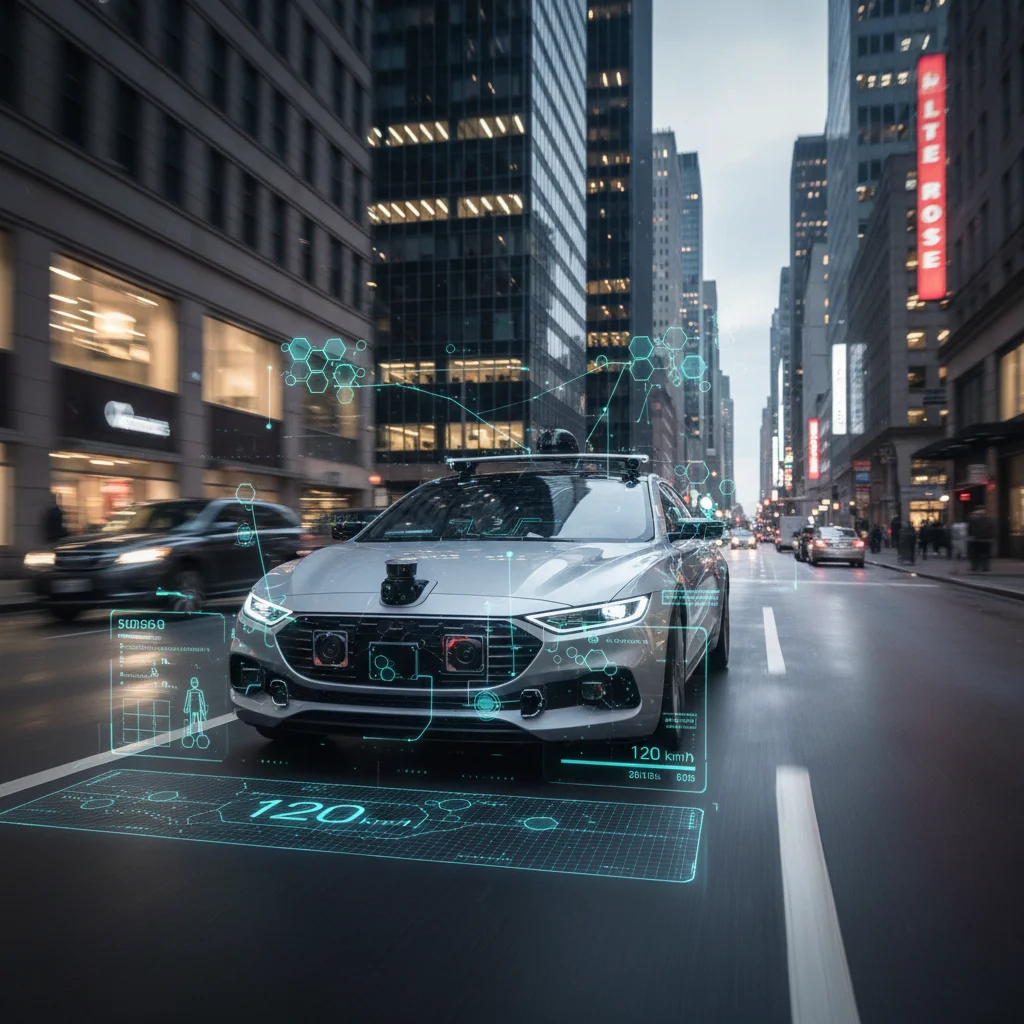
By 2026, autonomous vehicles (AVs) will be a more common sight on our roads, and their safe and efficient operation hinges almost entirely on edge computing. These vehicles are essentially data centers on wheels, equipped with an array of sensors – cameras, lidar, radar, ultrasonic sensors – that continuously generate vast quantities of data about their surroundings. This data must be processed and acted upon in real-time to ensure passenger safety and optimal navigation. Cloud-based processing simply cannot meet the latency requirements for split-second decision-making, such as detecting an obstacle, predicting pedestrian movement, or reacting to sudden changes in traffic.
How Edge Computing Powers Autonomous Driving
In an autonomous vehicle, edge computing allows for immediate, on-board processing of sensor data. This local computation enables the vehicle to:
- Real-time Obstacle Detection and Avoidance: Sensors generate raw data that needs to be analyzed instantly to identify other vehicles, pedestrians, cyclists, road signs, and potential hazards. Edge processors within the vehicle can perform complex AI algorithms for object recognition and trajectory prediction in milliseconds, allowing the car to brake, accelerate, or steer appropriately.
- Predictive Maintenance: By continuously monitoring the performance of various vehicle components (engine, brakes, tires), edge devices can detect anomalies and predict potential failures before they occur. This allows for proactive maintenance, increasing vehicle uptime and safety.
- Traffic Optimization and Route Planning: While high-level route planning might still involve cloud resources, local edge computing can optimize routes in real-time based on immediate traffic conditions, road closures, or accidents detected by the vehicle itself or nearby vehicles (Vehicle-to-Vehicle, V2V, and Vehicle-to-Infrastructure, V2I, communication, which also relies heavily on edge principles).
- Enhanced Security and Privacy: Processing sensitive data, such as passenger movements or vehicle diagnostics, locally at the edge reduces the need to transmit it to remote servers, thereby enhancing privacy and cybersecurity.
Beyond individual vehicles, edge computing extends to the broader smart transportation ecosystem. Smart traffic lights, roadside units, and public transport systems can leverage edge processing to coordinate traffic flow, manage parking, and provide real-time information to commuters. For instance, a smart intersection equipped with edge capabilities can analyze video feeds from multiple cameras to dynamically adjust traffic light timings, reducing congestion and improving safety. The synergy between autonomous vehicles and smart city infrastructure, all powered by distributed edge intelligence, promises a future of safer, more efficient, and more sustainable transportation.
Application 2: Smart Manufacturing and Industry 4.0
The manufacturing sector is undergoing a profound transformation, often referred to as Industry 4.0, characterized by the integration of cyber-physical systems, the Internet of Things (IoT), and artificial intelligence. At the heart of this revolution is edge computing, enabling smart factories to achieve unprecedented levels of automation, efficiency, and flexibility. By 2026, edge computing will be indispensable for optimizing production lines, ensuring quality control, and performing predictive maintenance in real-time.
Edge Computing in Action on the Factory Floor
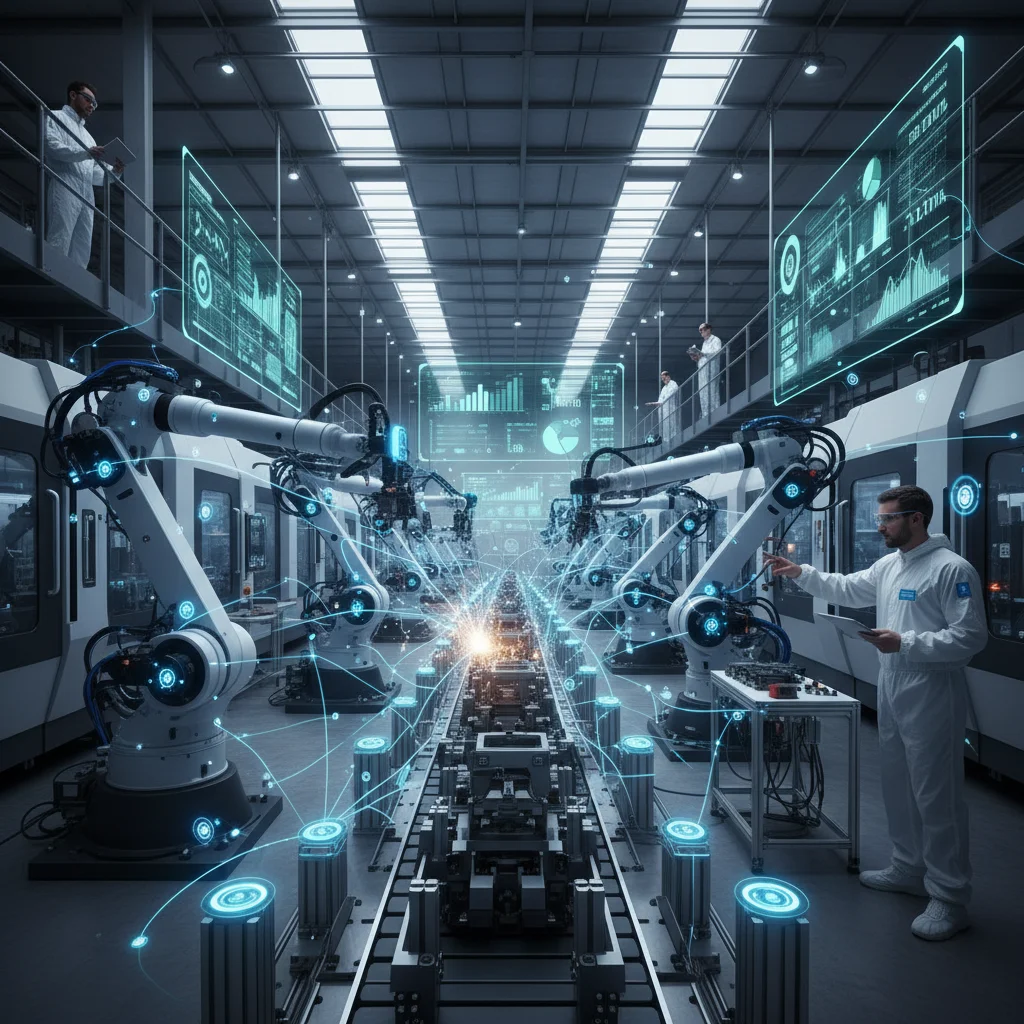
Consider a modern factory equipped with thousands of sensors monitoring every aspect of the production process – from the temperature of machinery and the speed of conveyor belts to the quality of individual products. Sending all this raw data to a central cloud for analysis would introduce unacceptable delays and bandwidth costs. Edge computing addresses this by deploying localized computational power directly on the factory floor:
- Real-time Quality Control: High-speed cameras and sensors can capture images and data of products as they move along the assembly line. Edge devices, equipped with AI algorithms, can instantly analyze these inputs to detect defects, anomalies, or deviations from quality standards. This immediate feedback allows for defective products to be identified and removed, or for machine parameters to be adjusted, preventing further errors and minimizing waste. Without edge computing, such rapid intervention would be impossible.
- Predictive Maintenance of Machinery: Industrial machines are complex and prone to wear and tear. IoT sensors on critical components continuously collect data on vibration, temperature, pressure, and acoustic signatures. Edge gateways located near these machines can process this data in real-time, using machine learning models to identify patterns indicative of impending equipment failure. This allows maintenance teams to perform proactive repairs or replacements, preventing costly downtime and ensuring continuous operation.
- Optimized Production Processes: Edge computing can analyze real-time operational data from various machines and processes to identify bottlenecks, optimize resource allocation, and fine-tune production parameters. For example, it can adjust robotic arm movements, material flow, or energy consumption based on immediate demand or supply chain changes, leading to significant efficiency gains and cost reductions.
- Worker Safety Monitoring: Wearable sensors and cameras, processed at the edge, can monitor worker safety in hazardous environments, detecting potential accidents or dangerous situations and triggering immediate alerts.
The localized nature of edge computing in smart manufacturing also enhances data security, as sensitive operational data can be processed and stored within the factory’s perimeter, reducing exposure to external cyber threats. Furthermore, it ensures operational resilience, allowing factory systems to continue functioning even if external network connectivity is temporarily lost. By 2026, edge computing will be the backbone of highly automated, intelligent, and responsive manufacturing environments, driving productivity and innovation across the industrial landscape.
Application 3: Smart Cities and Public Safety
The concept of a ‘smart city’ envisions urban environments that leverage technology to improve the quality of life for residents, enhance operational efficiency, and promote sustainability. Edge computing is a foundational technology for realizing this vision, particularly in areas concerning public safety, urban infrastructure management, and resource optimization. By 2026, we will see a significant expansion of edge computing deployments in smart cities, enabling faster responses to emergencies, more efficient public services, and a safer urban experience.
Edge Computing’s Role in Urban Intelligence
Smart cities generate an enormous volume of data from a multitude of sources: surveillance cameras, environmental sensors, traffic monitors, public transport systems, and utility grids. Processing all this data in a centralized cloud would be impractical due to latency, bandwidth, and privacy concerns. Edge computing provides the distributed intelligence necessary to make smart cities truly responsive:
- Real-time Public Safety and Emergency Response: City-wide networks of surveillance cameras can be equipped with edge AI capabilities to perform real-time video analytics. Instead of streaming all video footage to a central server, edge devices can process the video locally to detect unusual activities, suspicious packages, traffic incidents, or even identify individuals in distress. Only relevant alerts or analyzed metadata are then sent to emergency services, enabling faster response times for police, fire, and medical personnel. This immediate detection and notification capability is critical for enhancing public safety and managing crises effectively.
- Intelligent Traffic Management: Beyond individual autonomous vehicles, edge computing plays a crucial role in optimizing overall urban traffic flow. Smart traffic lights, equipped with edge processors, can analyze real-time vehicle and pedestrian data from intersections to dynamically adjust signal timings, reducing congestion and improving commute times. Furthermore, edge-enabled sensors can monitor parking availability, guiding drivers to open spots and reducing urban traffic circling.
- Environmental Monitoring and Pollution Control: Networks of environmental sensors deployed across a city can monitor air quality, noise levels, and water purity. Edge devices can process this raw sensor data locally to identify pollution hotspots or sudden changes in environmental conditions. This allows city officials to issue immediate warnings, implement mitigation strategies, and gain a more granular understanding of urban environmental health.
- Smart Utilities and Infrastructure Management: Edge computing can optimize the operation of critical urban infrastructure such as power grids, water supply networks, and waste management systems. Smart meters and sensors, coupled with edge analytics, can detect leaks, predict equipment failures, and balance energy loads in real-time, leading to increased efficiency, reduced waste, and improved reliability of essential services.
The deployment of edge computing in smart cities is not just about technology; it’s about creating more livable, sustainable, and resilient urban environments. By bringing intelligence closer to the source of urban data, cities can become more proactive, responsive, and ultimately, smarter in how they serve their citizens. The privacy implications are also significant; edge processing allows for anonymization and aggregation of data locally, reducing the need to transmit raw, personally identifiable information to central clouds.
The Broader Impact and Future of Edge Computing
The three applications discussed – autonomous vehicles, smart manufacturing, and smart cities – represent just the tip of the iceberg when it comes to the potential of edge computing. By 2026, the technology’s influence will permeate nearly every sector, fundamentally altering how businesses operate and how individuals interact with the digital world. The common thread across all these applications is the imperative for faster data processing, lower latency, and enhanced security, all of which edge computing delivers by decentralizing computational power.
Key Drivers for Edge Computing’s Continued Growth
- 5G Networks: The rollout of 5G infrastructure, with its ultra-low latency and high bandwidth capabilities, is a perfect complement to edge computing. 5G enables faster communication between edge devices and localized edge servers, further enhancing real-time applications and unlocking new possibilities for mobile edge computing.
- Artificial Intelligence (AI) and Machine Learning (ML): As AI models become more sophisticated, the need to deploy them closer to the data source for real-time inference grows. Edge AI allows devices to make intelligent decisions without constant cloud connectivity, enabling applications like facial recognition at security checkpoints or predictive maintenance on remote equipment.
- Data Privacy and Regulations: With increasing concerns over data privacy and stricter regulations (e.g., GDPR, CCPA), processing data at the edge becomes a crucial strategy. It allows organizations to comply with regulations by minimizing the transmission of sensitive data to centralized clouds and enabling anonymization or aggregation at the source.
- IoT Proliferation: The sheer volume of connected IoT devices continues to explode. Each device is a potential data generator, and managing this data deluge efficiently demands a distributed processing model. Edge computing is the only viable solution for scaling IoT deployments effectively.
- Cost Efficiency: While initial setup costs can be a consideration, edge computing often leads to significant long-term cost savings by reducing bandwidth consumption, minimizing cloud processing fees, and preventing costly downtime through predictive analytics.
Challenges and Considerations
Despite its immense potential, the widespread adoption of edge computing also presents challenges. These include managing a distributed infrastructure, ensuring consistent security across numerous edge devices, developing standardized protocols for interoperability, and addressing the complexity of deploying and maintaining software on diverse hardware at the edge. However, ongoing advancements in containerization, orchestration tools, and specialized edge hardware are rapidly addressing these hurdles, paving the way for even broader adoption.
Conclusion: The Edge as the New Frontier of Innovation
As we look towards 2026, it’s clear that edge computing is not just a technological trend; it’s a fundamental shift in how we approach data processing. The ability to bring computation closer to the source of data is unlocking unprecedented levels of efficiency, responsiveness, and intelligence across a myriad of applications. From ensuring the safety of autonomous vehicles and optimizing the precision of smart factories to enhancing public safety and managing resources in smart cities, edge computing is the invisible force driving the next wave of digital transformation.
The three real-world applications explored in this article demonstrate the tangible benefits of faster data processing at the edge: reduced latency for critical decision-making, optimized bandwidth usage, enhanced data security, and improved operational resilience. Organizations and cities that embrace edge computing will be better positioned to innovate, compete, and deliver superior services in an increasingly connected and data-driven world. The future is distributed, intelligent, and unequivocally at the edge.
The journey towards a fully edge-enabled world is still unfolding, but the trajectory is undeniable. By 2026, edge computing will be an integral, often invisible, component of our technological infrastructure, enabling a future where data is processed with unprecedented speed and intelligence, transforming industries and improving lives in profound ways. It’s a future where every device, every sensor, and every interaction contributes to a smarter, more responsive, and more efficient global ecosystem, all thanks to the power of localized data processing at the network’s edge.