5G Network Expansion 2026: Device Connectivity & Speed Impact

The digital landscape is on the cusp of a monumental transformation, driven by the relentless march of technological innovation. At the forefront of this revolution is the widespread deployment and maturation of 5G networks. By 2026, the 5G network expansion is projected to reach unprecedented levels, fundamentally reshaping how we interact with our devices, access information, and conduct our daily lives. This article delves into the profound implications of this expansion, exploring its impact on device connectivity, internet speed, and the myriad of opportunities and challenges that lie ahead.
The promise of 5G extends far beyond just faster internet. It envisions a future of seamless, instantaneous connectivity that powers everything from smart cities and autonomous vehicles to advanced healthcare and immersive entertainment. Understanding the scope of this transformation is crucial for businesses, consumers, and policymakers alike.
The Current State of 5G and What’s Driving the Expansion
While 5G has been a buzzword for several years, its true potential is only just beginning to be realized. Initial deployments focused on urban centers, offering early adopters a glimpse into the future of mobile connectivity. However, the next few years will see a dramatic acceleration in 5G network expansion, extending its reach to suburban and rural areas, and solidifying its position as the backbone of our digital infrastructure.
Several factors are propelling this rapid expansion. Governments worldwide are recognizing the strategic importance of 5G for economic growth and national competitiveness, investing heavily in infrastructure development and spectrum allocation. Telecommunication companies are locked in a race to capture market share, continuously upgrading their networks and introducing new services. Furthermore, the increasing demand for data-intensive applications, the proliferation of IoT devices, and the growing reliance on cloud computing are all creating an urgent need for the higher bandwidth and lower latency that 5G provides.
Advertisements
Beyond simply connecting more devices, 5G is designed to offer a vastly superior user experience. Its architecture supports massive machine-type communications (mMTC), enabling billions of IoT devices to communicate efficiently. Enhanced mobile broadband (eMBB) delivers blistering speeds and increased capacity, making high-definition streaming, virtual reality, and cloud gaming a seamless experience. Ultra-reliable low-latency communications (URLLC) is perhaps the most revolutionary aspect, offering near-instantaneous response times critical for applications like autonomous driving, remote surgery, and industrial automation. This trifecta of capabilities is what truly sets 5G apart and underpins its transformative potential.
Unprecedented Device Connectivity: A World Interconnected
The most immediate and tangible impact of widespread 5G network expansion will be on device connectivity. Imagine a world where every device, from your smartphone and smart home appliances to industrial sensors and medical implants, is seamlessly connected to a high-speed, low-latency network. This isn’t a distant dream; it’s the reality that 5G promises to deliver by 2026.
The sheer number of connected devices is set to explode. The Internet of Things (IoT) will move from a niche technology to an omnipresent force. Smart homes will become truly intelligent, with interconnected devices anticipating our needs and automating tasks with unparalleled efficiency. Smart cities will leverage 5G to optimize traffic flow, manage public services, and enhance safety through real-time data collection and analysis. In healthcare, remote monitoring devices will provide continuous patient data, enabling proactive care and potentially life-saving interventions.
For individuals, this means a more integrated and responsive digital life. Wearable technology will become even more sophisticated, offering real-time health insights and seamless communication. Augmented Reality (AR) and Virtual Reality (VR) applications, currently hampered by latency and bandwidth limitations, will flourish, offering immersive experiences for entertainment, education, and professional training. The lines between our physical and digital worlds will blur, creating a hyper-connected environment where information and services are always at our fingertips.
Blazing Fast Speeds: Redefining Digital Experience
While connectivity is key, speed is the engine that drives the true potential of 5G. The significant increase in data transfer rates offered by 5G network expansion will fundamentally redefine our digital experiences. We’re talking about theoretical peak speeds of up to 10 gigabits per second (Gbps), which is orders of magnitude faster than current 4G networks.
What does this mean in practical terms? Downloading a full-length high-definition movie will take mere seconds. Cloud-based applications will run as smoothly as native software, eliminating the need for powerful local hardware for many tasks. Gaming will achieve console-level performance on mobile devices, with cloud gaming platforms offering an unparalleled, lag-free experience. Video conferencing will become crystal clear, even with multiple participants and high-resolution content.
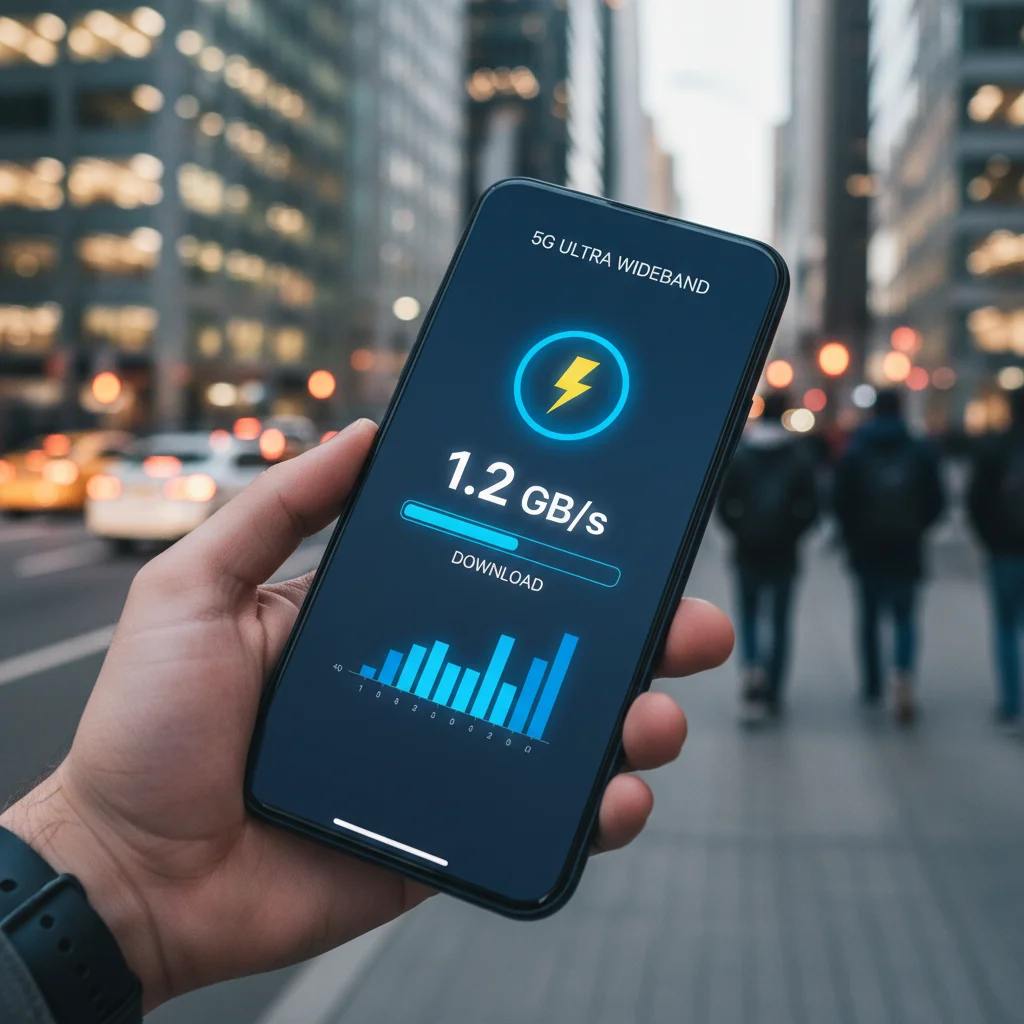
Beyond consumer applications, these speeds will unlock new possibilities for businesses and industries. Large datasets can be transferred almost instantaneously, accelerating research and development cycles. Real-time analytics will become truly real-time, allowing businesses to make faster, more informed decisions. The ability to process and transmit vast amounts of data quickly is a cornerstone for the development of AI and machine learning applications, which will become even more powerful and pervasive with widespread 5G adoption.
Transforming Industries: From Manufacturing to Entertainment
The impact of 5G network expansion will reverberate across virtually every industry, fostering innovation and creating new business models. Here’s a glimpse into some key sectors:
Manufacturing and Industry 4.0
5G is a cornerstone of Industry 4.0, enabling smart factories where machines, robots, and sensors communicate in real-time. This allows for predictive maintenance, optimized production lines, and enhanced safety protocols. Low latency is critical here, ensuring that automated systems respond instantly, preventing accidents and improving efficiency. The ability to deploy private 5G networks within factories will offer unparalleled security and control.
Healthcare
The healthcare sector stands to gain immensely. Telemedicine will become more robust, with high-quality video consultations and remote diagnostics. Remote surgery, powered by URLLC, could allow specialists to operate on patients across vast distances. Wearable health monitors will provide continuous data streams to healthcare providers, enabling proactive care and early detection of health issues. Emergency services will benefit from faster communication and real-time data sharing, improving response times and patient outcomes.
Transportation and Logistics
Autonomous vehicles rely heavily on ultra-low latency communication for safe and efficient operation. 5G will enable vehicles to communicate with each other (V2V), with infrastructure (V2I), and with pedestrians (V2P), creating a truly intelligent transportation system. This will lead to reduced traffic congestion, fewer accidents, and more efficient logistics operations. Drone delivery services and smart traffic management systems will also become more viable and widespread.
Entertainment and Media
The entertainment industry will be revolutionized by 5G. Immersive VR/AR experiences will become mainstream, offering new forms of gaming, live events, and interactive storytelling. High-quality 8K video streaming will be commonplace, and cloud gaming will allow users to play graphics-intensive games on any device, anywhere. Content creation and distribution will also be streamlined, with faster uploads and downloads for professionals.
Challenges and Considerations for Widespread 5G Adoption
While the benefits of 5G network expansion are undeniable, the path to widespread adoption is not without its challenges. Addressing these issues will be crucial for realizing 5G’s full potential.
Infrastructure Deployment
Rolling out a comprehensive 5G network requires significant infrastructure investment. This includes deploying a vast number of small cells, particularly in dense urban areas, and upgrading fiber optic backbones. Overcoming regulatory hurdles, securing permits, and managing the logistics of such a massive undertaking are complex tasks.
Security and Privacy
With an exponentially increasing number of connected devices, the attack surface for cyber threats expands dramatically. Ensuring the security and privacy of data transmitted over 5G networks is paramount. Robust encryption, advanced authentication protocols, and continuous monitoring will be essential to protect against breaches and cyberattacks.
Spectrum Allocation
The availability and allocation of sufficient spectrum are critical for 5G performance. Different frequency bands offer different characteristics (e.g., higher speed vs. wider coverage), and governments must effectively manage spectrum auctions and assignments to optimize network capabilities.
Device Compatibility and Cost
For consumers to fully benefit from 5G, they need 5G-enabled devices. While the cost of 5G smartphones is decreasing, ensuring affordability and widespread availability across all device categories (IoT, industrial sensors, etc.) will be important. Furthermore, older devices will not be able to leverage 5G capabilities, creating a potential digital divide.
Energy Consumption
The increased density of 5G infrastructure and the higher data throughput can lead to increased energy consumption. Developing energy-efficient 5G technologies and sustainable deployment practices will be crucial to mitigate environmental impact and operational costs.
The Future of Connectivity: Beyond 2026
The 5G network expansion by 2026 is not an endpoint but rather a significant milestone in the evolution of connectivity. As 5G matures, research and development are already underway for 6G and beyond. These future generations of wireless technology promise even higher speeds, lower latency, and new capabilities such as integrated sensing and communication, AI-native air interfaces, and holographic communication.

The widespread adoption of 5G will lay the groundwork for these future innovations, creating a robust and intelligent network infrastructure that can adapt to evolving technological demands. It will accelerate the development of artificial intelligence, machine learning, and edge computing, pushing processing power closer to the data source and enabling even more sophisticated real-time applications.
Moreover, the expansion of 5G will foster a new era of digital inclusion. As connectivity becomes more ubiquitous and affordable, it will open up opportunities for education, economic development, and social connection in previously underserved areas. The digital divide, while still a challenge, will hopefully narrow as high-speed internet becomes a fundamental utility rather than a luxury.
Preparing for the 5G Era
For individuals and businesses, preparing for the full impact of 5G network expansion involves several key steps. Consumers should consider upgrading to 5G-compatible devices to take full advantage of the improved speeds and connectivity. Exploring new applications and services that leverage 5G’s unique capabilities will also enhance the digital experience.
Businesses, on the other hand, need to strategically assess how 5G can be integrated into their operations to drive efficiency, foster innovation, and create new revenue streams. This might involve investing in IoT solutions, exploring private 5G networks for critical infrastructure, or developing new services that capitalize on low latency and high bandwidth. Training employees on 5G-enabled technologies and fostering a culture of digital transformation will also be vital.
Policymakers and regulators have a crucial role to play in facilitating this transition. This includes ensuring fair competition, promoting infrastructure sharing, addressing security concerns, and developing policies that encourage innovation while protecting consumer interests. International collaboration will also be important to ensure interoperability and global standards for 5G and future networks.
Conclusion: A Connected Future Awaits
The 5G network expansion by 2026 represents a pivotal moment in technological history. It promises a future where devices are seamlessly connected, information flows at unprecedented speeds, and new possibilities emerge across every sector of society. While challenges remain in infrastructure deployment, security, and spectrum management, the collective efforts of governments, industries, and researchers are paving the way for a truly hyper-connected world.
The transformative power of 5G will not only enhance our daily digital interactions but also drive economic growth, foster innovation, and improve the quality of life globally. As we move closer to 2026, the anticipation for this new era of connectivity continues to build, promising a future that is faster, smarter, and more interconnected than ever before.