Future of Entertainment: 4 Technologies Redefining Pop Culture
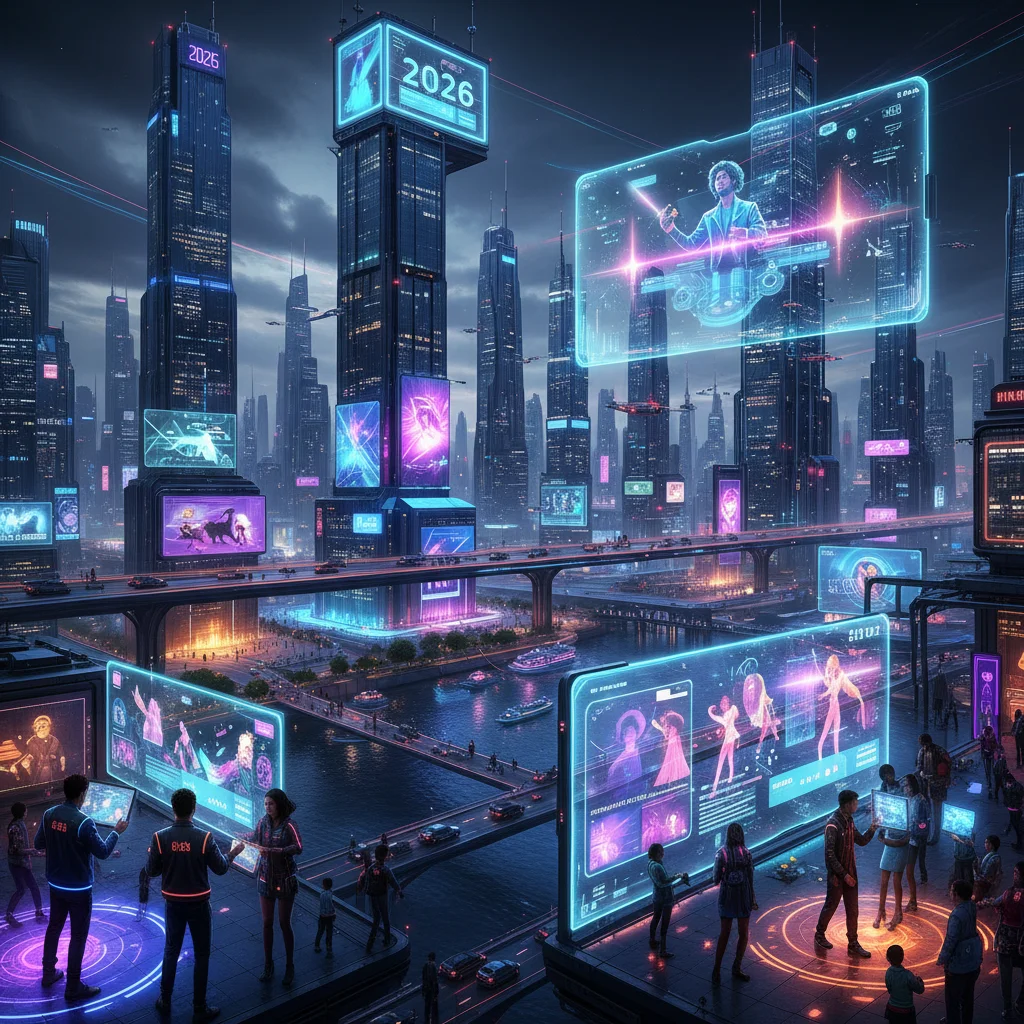
The world of entertainment is a constantly evolving tapestry, woven with threads of creativity, innovation, and human desire for connection and escapism. For centuries, our methods of storytelling and amusement have shifted, from oral traditions and theatrical performances to the golden age of cinema, television, and now, the digital frontier. As we hurtle towards 2026, the pace of technological advancement is accelerating, promising a seismic shift in how we engage with pop culture. This isn’t just about better graphics or faster downloads; it’s about fundamentally redefining the very nature of interactive experiences. The future entertainment technology is not a distant dream, but a rapidly approaching reality.
We stand at the precipice of an era where entertainment will no longer be a passive consumption but an active, deeply personal, and often communal journey. Imagine stepping directly into your favorite movie, feeling the rumble of a dragon’s roar, or owning a unique piece of digital art that truly belongs to you. These aren’t far-fetched science fiction concepts; they are the tangible outcomes of four transformative technologies that are poised to redefine pop culture as we know it. From hyper-personalized narratives crafted by artificial intelligence to tactile sensations delivered by haptic feedback, the coming years promise an unprecedented level of immersion and interaction.
This article will delve into the exciting potential of these four game-changing technologies: Artificial Intelligence (AI), Advanced Haptic Feedback, Mixed Reality (MR), and Blockchain. We’ll explore how each of these innovations, both individually and in synergy, will contribute to a richer, more engaging, and ultimately, more unforgettable entertainment landscape. Prepare to have your perceptions of pop culture challenged and expanded, as we explore the cutting-edge innovations that will shape our leisure time in the very near future. The advent of new future entertainment technology is set to revolutionize every facet of our digital and physical interactions with media.
Advertisements
Artificial Intelligence (AI): The Architect of Personalized Realities
Artificial Intelligence has moved beyond being a mere tool; it’s rapidly becoming an active participant and even a creative force within the entertainment industry. By 2026, AI’s role will be far more sophisticated than simply recommending your next binge-watch. We are looking at AI as the architect of hyper-personalized realities, capable of crafting dynamic narratives, generating realistic content, and even creating interactive characters that adapt to your preferences in real-time. This is a monumental leap for future entertainment technology.
Dynamic Storytelling and Adaptive Narratives
Imagine a video game where the storyline isn’t fixed, but evolves based on your choices, playing style, and even your emotional state. AI algorithms will analyze player data, identify patterns, and dynamically adjust plot points, character dialogue, and even environmental elements to create a truly unique experience for every individual. This means no two playthroughs will ever be the same, fostering unparalleled replayability and a deep sense of personal investment in the narrative. Think of interactive novels on steroids, where the AI is not just a narrator but a co-author, shaping the story with you.
Beyond gaming, AI will revolutionize film and television. We could see interactive movies where viewers vote on plot twists or character fates in real-time, influencing the narrative as it unfolds. AI could even generate multiple endings or alternative scenes, offering a bespoke cinematic experience. This level of personalization moves beyond simple branching narratives into a realm where the AI acts as a sophisticated dungeon master, crafting a compelling story on the fly.
AI-Generated Content and Virtual Performers
The rise of generative AI is already evident in art and music, but its application in entertainment will become even more profound. By 2026, AI will be capable of generating highly realistic virtual environments, background characters, and even entire musical scores tailored to specific moods or scenes. This could significantly reduce production costs and open up new avenues for independent creators to produce high-quality content.
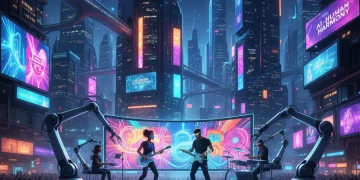
Furthermore, virtual performers powered by AI will become increasingly commonplace. These aren’t just animated avatars; they will be intelligent entities capable of improvisation, expressing nuanced emotions, and interacting with audiences in live virtual concerts or theatrical productions. Imagine a virtual pop star whose personality and performance style adapt based on audience feedback, creating a truly responsive and engaging experience. This aspect of future entertainment technology is particularly exciting.
Hyper-Personalized Recommendations and Curations
While recommendation engines are already ubiquitous, AI in 2026 will take personalization to an entirely new level. Instead of merely suggesting content based on your viewing history, AI will understand your deeper preferences, psychological profiles, and even your current mood. It will curate entire entertainment ecosystems, suggesting not just movies or songs, but also interactive experiences, virtual events, and even social connections based on your evolving tastes. This will transform discovery into a more intuitive and rewarding process, ensuring you’re always engaging with content that resonates deeply with you.
Advanced Haptic Feedback: Feeling the Digital World
For too long, our interaction with digital entertainment has been limited to sight and sound. While these senses provide immense enjoyment, the absence of touch creates a barrier to true immersion. Advanced haptic feedback technology is poised to bridge this gap, allowing us to feel the textures, impacts, and subtle nuances of the digital world. This is a crucial element for immersive future entertainment technology.
Beyond Simple Vibrations: Tactile Immersion
Current haptic technology, often limited to simple vibrations in game controllers or smartphones, is rudimentary. By 2026, we will see the widespread adoption of sophisticated haptic suits, gloves, and even full-body interfaces that can simulate a wide range of sensations. Imagine feeling the recoil of a weapon, the gentle patter of rain, the warmth of a virtual fire, or the smooth texture of a digital fabric. This level of tactile feedback will dramatically enhance the realism and emotional impact of virtual and augmented experiences.
Haptic feedback will be crucial for gaming, allowing players to truly feel the environment and the actions of their in-game avatars. It will also transform virtual reality (VR) and augmented reality (AR) experiences, making virtual objects feel tangible and interactions more natural. This technology has the potential to make digital worlds feel as real and responsive as the physical one.
Applications in Gaming, VR, and Live Events
In gaming, advanced haptics will elevate immersion to unprecedented levels. Picture yourself in a horror game, feeling the brush of a spiderweb or the cold touch of a ghostly hand. In sports simulations, you could feel the impact of a tackle or the resistance of a swing. This adds a visceral layer that significantly amplifies the emotional response and engagement.
For VR, haptic suits will be essential for creating truly believable virtual environments. When you reach out to touch a virtual object, haptic feedback will provide the sensation of its form and texture, completing the illusion. In live virtual concerts or theatrical performances, haptic vests could allow attendees to feel the bass of the music or the vibrations of a stage performance, even from thousands of miles away. This will make remote participation feel far more engaging and present.
Enhancing Accessibility and Emotional Connection
Beyond entertainment, advanced haptics also holds immense promise for accessibility. For individuals with visual impairments, tactile feedback could provide crucial information about digital environments, aiding navigation and interaction. Furthermore, the ability to ‘feel’ digital interactions could foster deeper emotional connections, allowing users to experience empathy through simulated touch in virtual social spaces or therapeutic applications. This human-centric approach is vital for the evolution of future entertainment technology.
Mixed Reality (MR): Blurring the Lines Between Worlds
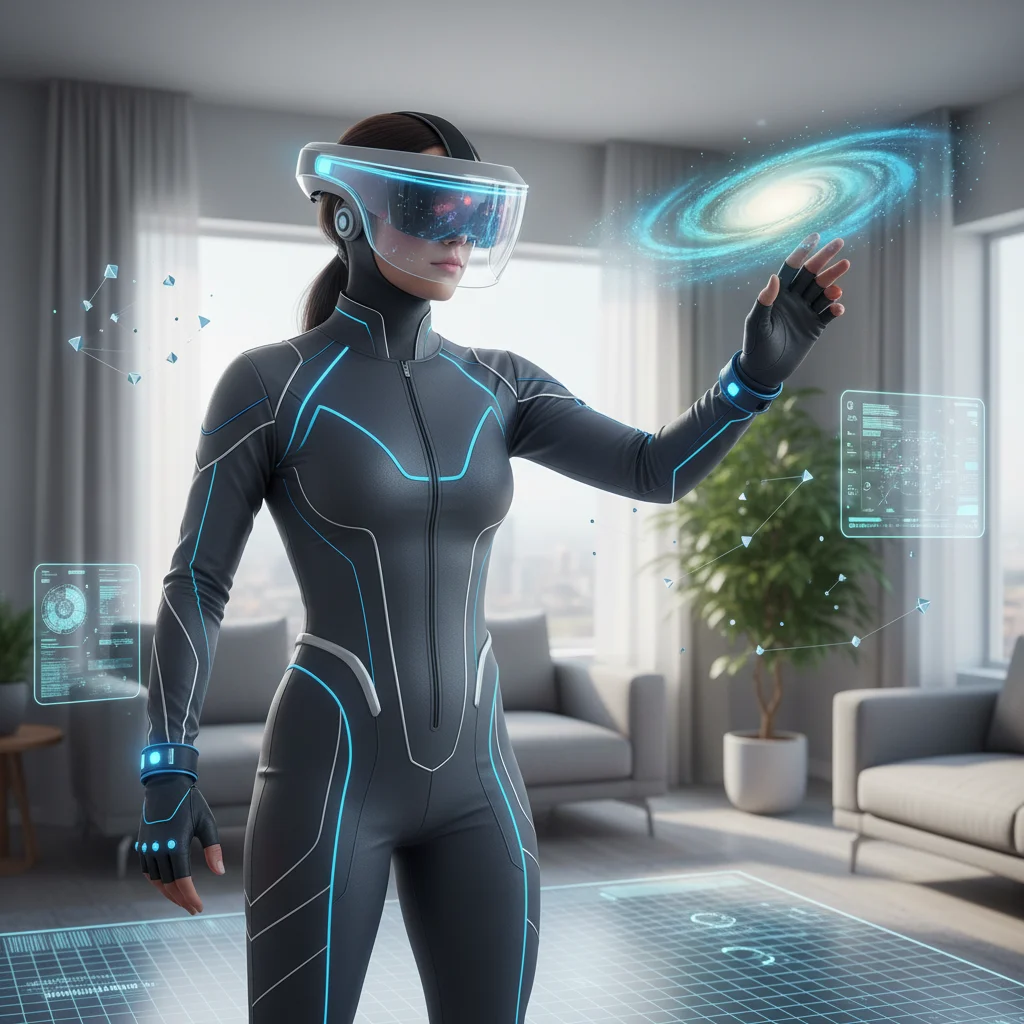
Mixed Reality (MR) is the next evolution beyond Virtual Reality (VR) and Augmented Reality (AR). While VR fully immerses you in a digital world and AR overlays digital elements onto the real world, MR seamlessly blends both, allowing digital and physical objects to coexist and interact in real-time. By 2026, MR devices will be more sophisticated, comfortable, and integrated into our daily lives, fundamentally altering how we consume entertainment.
Interactive Holograms and Spatial Computing
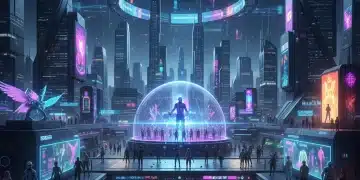
Imagine your living room transforming into a battlefield, with digital characters taking cover behind your actual furniture. Or a holographic concert unfolding on your coffee table, with virtual musicians performing right in front of you. MR will enable interactive holograms that are not just visual overlays but tangible presences that react to your movements and the physical environment. This is achieved through spatial computing, where devices understand the geometry and semantics of your surroundings, allowing digital content to realistically interact with the real world.
This capability opens up entirely new forms of gaming, where your home becomes the game board, and digital characters can seemingly walk through your doors or hide behind your couch. It also has profound implications for educational entertainment, allowing users to interact with 3D models of historical artifacts or scientific phenomena in their own space.
Augmented Live Experiences and Social Interaction
MR will revolutionize live events, from sports to concerts. Imagine attending a football game where holographic statistics and player information are overlaid onto the field, visible only through your MR glasses. Or a concert where virtual effects, generated in real-time, swirl around the performers and audience, creating a truly unique spectacle. The ability to customize your view of a live event with digital enhancements will make every experience deeply personal.
Social interaction will also be transformed. Instead of just seeing friends on a screen, MR could allow holographic avatars of your distant friends to appear in your living room, enabling shared experiences like playing board games or watching movies together as if they were physically present. This bridges geographical distances in a far more immersive way than current video calls, pushing the boundaries of future entertainment technology.
Creator Economy and User-Generated MR Content
As MR platforms mature, we will see a flourishing creator economy centered around user-generated MR content. Individuals will be able to design and share their own holographic experiences, from interactive art installations in public spaces to personalized digital decor for their homes. This democratization of content creation will lead to an explosion of innovative and diverse MR entertainment, moving beyond commercially produced experiences to a vast ecosystem of community-driven creativity.
Blockchain: Empowering Ownership and New Economic Models
Blockchain technology, often associated with cryptocurrencies, is far more than just digital money. Its core principles of decentralization, transparency, and immutable record-keeping are set to revolutionize the economic and ownership models within entertainment. By 2026, blockchain will empower creators and consumers alike, fostering new forms of digital ownership, verifiable scarcity, and innovative reward systems. This is a foundational shift for future entertainment technology.
True Digital Ownership (NFTs) and Collectibles
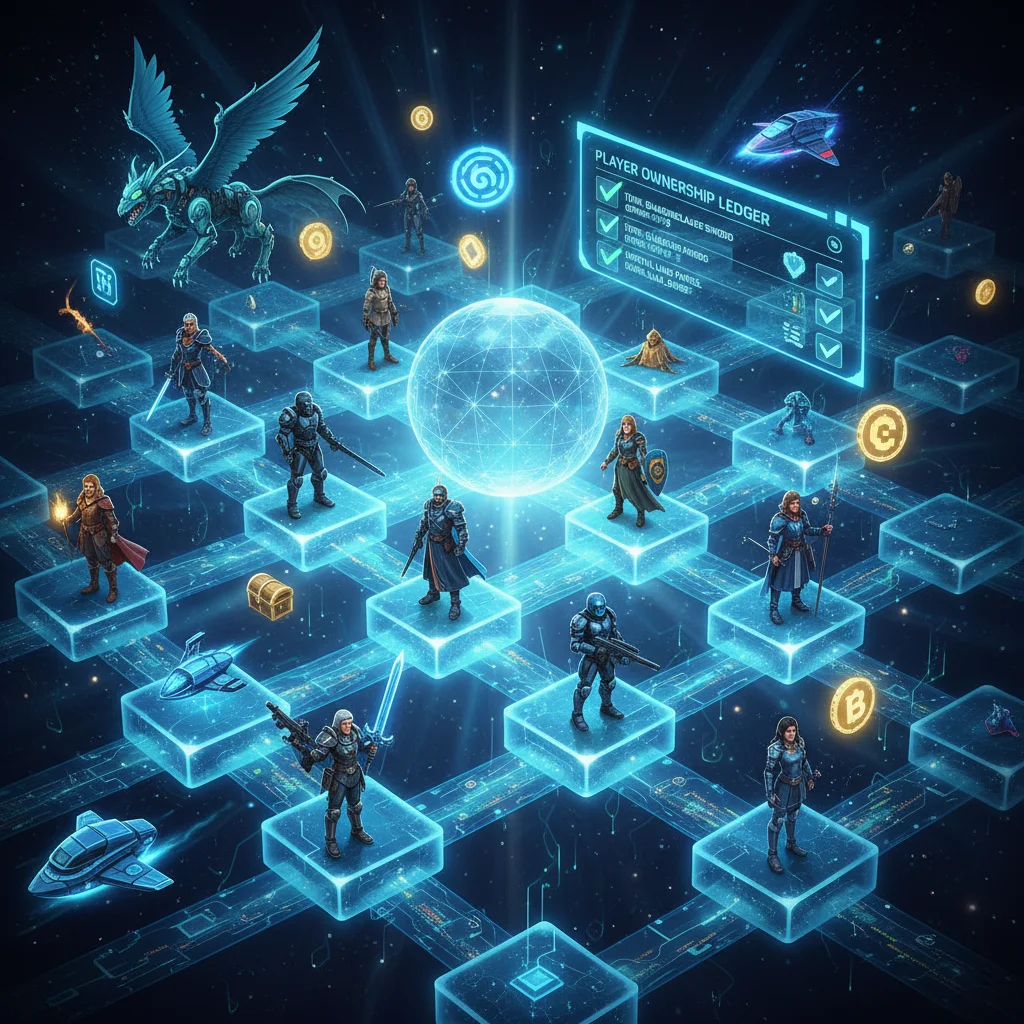
Non-Fungible Tokens (NFTs), powered by blockchain, have already demonstrated the potential for true digital ownership. In 2026, this concept will mature beyond speculative art pieces into practical applications within entertainment. Imagine owning a unique in-game item that is verifiably scarce and can be freely traded or even used across different games. Or a digital collectible from your favorite movie franchise that holds real, provable value and provenance.
This extends to digital music, art, and even virtual real estate within metaverse platforms. Blockchain ensures that when you ‘buy’ a digital asset, you truly own it, with a transparent and secure record of ownership. This empowers consumers and creates new revenue streams for creators, bypassing traditional intermediaries and fostering a more direct relationship between artists and their audience.
Play-to-Earn Gaming and Decentralized Autonomous Organizations (DAOs)
The rise of ‘play-to-earn’ (P2E) gaming models, where players can earn real-world value through their in-game activities, will become more sophisticated and widespread. Blockchain enables secure and transparent ownership of in-game assets and currencies, allowing players to monetize their time and skills. This transforms gaming from a mere leisure activity into a potential source of income, blurring the lines between work and play.
Furthermore, Decentralized Autonomous Organizations (DAOs) will play a significant role in content creation and platform governance. Imagine a community of fans collectively owning and governing a gaming studio or a streaming platform, voting on creative decisions, and sharing in the profits. This democratizes the entertainment industry, giving power back to the communities that drive its success. This collaborative aspect is a major draw for future entertainment technology.
Fan Engagement and Loyalty Programs
Blockchain can also revolutionize fan engagement and loyalty programs. Imagine receiving unique, verifiable digital tokens for attending concerts, buying merchandise, or actively participating in a fan community. These tokens could unlock exclusive content, early access to events, or even voting rights on future creative projects. This creates a more robust and transparent system for rewarding loyal fans, deepening their connection to artists and franchises.
Smart contracts, self-executing agreements stored on the blockchain, can automate royalty payments to artists, ensuring fair compensation and transparency across complex distribution networks. This streamlines the back-end of the entertainment industry, allowing creators to focus more on their craft and less on administrative burdens.
The Synergy of Technologies: A New Era of Immersion
While each of these technologies is powerful on its own, their true potential is unleashed when they converge. Imagine a scenario by 2026 where you:
- Step into a Mixed Reality experience where an AI-driven narrative adapts to your every move.
- Feel the virtual environment through advanced haptic feedback, making digital objects feel tangible.
- Own unique, blockchain-verified digital assets within this experience, which you can trade or carry into other virtual worlds.
This interconnected web of future entertainment technology creates an unprecedented level of immersion, personalization, and interaction. Entertainment will become a truly multi-sensory, dynamic, and economically empowering experience. The boundaries between creator and consumer, and between the digital and physical worlds, will blur into a seamless, interactive tapestry.
Ethical Considerations and the Road Ahead
As with any transformative technology, there are ethical considerations to address. Questions around data privacy, potential for addiction, digital ownership rights, and the impact on traditional entertainment industries will need careful navigation. Ensuring equitable access to these advanced experiences will also be crucial to prevent a digital divide.
However, the promise of these technologies far outweighs the challenges. The creative possibilities are limitless, and the potential for deeper human connection through shared, immersive experiences is profound. The entertainment industry is not just evolving; it’s undergoing a metamorphosis, driven by these four pillars of innovation. The future entertainment technology is not just about gadgets; it’s about enriching human experience.
Conclusion: Embracing the Interactive Revolution
The landscape of pop culture is on the cusp of an exhilarating transformation, driven by the relentless march of technological innovation. Artificial Intelligence, advanced haptic feedback, mixed reality, and blockchain are not merely buzzwords; they are the foundational pillars upon which the next generation of interactive entertainment will be built. By 2026, these technologies will have matured significantly, moving from niche applications to mainstream adoption, fundamentally reshaping how we experience and interact with stories, games, music, and live events.
We are moving beyond passive consumption to an era of active participation, where every individual can be a co-creator, an owner, and a central figure in their own personalized entertainment universe. The line between reality and simulation will continue to blur, offering experiences that are not only visually and audibly stunning but also tactilely rich and emotionally resonant. The ability to truly feel the digital world, to interact with holograms in our own spaces, and to own verifiable digital assets will redefine what it means to be entertained.
As these technologies converge, they promise a synergy that will unlock unparalleled levels of immersion, personalization, and community engagement. While challenges related to ethics, accessibility, and regulation will undoubtedly arise, the overall trajectory points towards a future where entertainment is more vibrant, diverse, and deeply integrated into our lives than ever before. The future entertainment technology promises not just new ways to play, but new ways to connect, create, and experience the world around us.
Prepare to embrace this interactive revolution. The future of entertainment is not just coming; it’s already here, waiting to be explored, felt, and owned.