Roth vs. Traditional IRA 2026: Which Retirement Account is Best for You?
Roth vs. Traditional IRA 2026: Which Retirement Account is Best for You?
Choosing the right retirement account is one of the most critical financial decisions you’ll make. As we look towards 2026, understanding the nuances between a Roth vs Traditional IRA is paramount for optimizing your savings and minimizing your tax burden in retirement. Both Individual Retirement Arrangements (IRAs) offer incredible tax advantages, but they operate on fundamentally different principles regarding when you pay taxes. The decision often boils down to your current income, your projected income in retirement, and your overall tax strategy.
This comprehensive guide will delve deep into the mechanics of both Roth and Traditional IRAs, exploring their contribution limits, eligibility requirements, tax treatments, and withdrawal rules for 2026. By the end, you’ll have a clearer understanding of which IRA type aligns best with your personal financial situation and long-term retirement goals.
Understanding the Basics: Roth vs Traditional IRA
Before we dive into the specifics for 2026, let’s establish a foundational understanding of what each IRA offers. The core difference between a Roth vs Traditional IRA lies in when you receive your tax benefits.
What is a Traditional IRA?
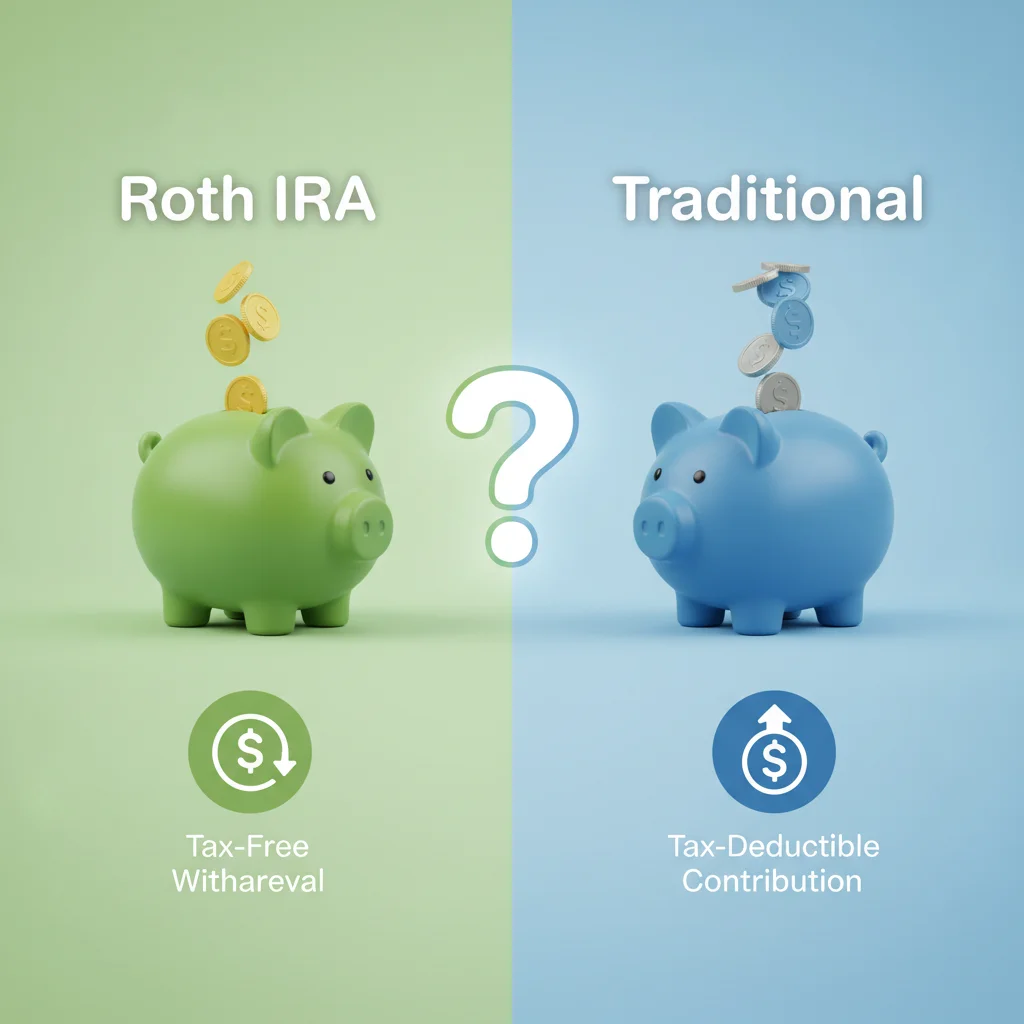
A Traditional IRA is a retirement savings plan that allows you to contribute pre-tax dollars, meaning your contributions might be tax-deductible in the year you make them. This can lower your taxable income in the present. The money in your Traditional IRA then grows tax-deferred, meaning you don’t pay taxes on the investment gains until you withdraw the money in retirement. Withdrawals in retirement are taxed as ordinary income.
Advertisements
What is a Roth IRA?
A Roth IRA is the opposite. You contribute after-tax dollars, meaning your contributions are not tax-deductible. However, the significant advantage of a Roth IRA is that your qualified withdrawals in retirement are completely tax-free. This includes both your contributions and any earnings. This makes the Roth IRA particularly attractive to individuals who expect to be in a higher tax bracket in retirement than they are today.
Key Differences: Roth vs Traditional IRA Tax Treatment in 2026
The tax treatment is arguably the most significant differentiator when comparing a Roth vs Traditional IRA. Let’s break down how taxes work for each in the context of 2026.
Traditional IRA Tax Benefits
- Tax-Deductible Contributions: For many, contributions to a Traditional IRA are tax-deductible. The deductibility depends on whether you (or your spouse) are covered by a retirement plan at work and your Modified Adjusted Gross Income (MAGI). For 2026, these income limits and deductibility rules will be updated, so it’s crucial to consult the latest IRS guidelines or a financial advisor. If you’re not covered by a workplace retirement plan, your contributions are generally fully deductible.
- Tax-Deferred Growth: Your investments grow without being taxed annually. This compounding effect can lead to substantial growth over decades.
- Taxable Withdrawals in Retirement: When you take distributions in retirement (typically after age 59½), these withdrawals are taxed as ordinary income.
- Required Minimum Distributions (RMDs): You must start taking RMDs from a Traditional IRA once you reach a certain age (currently 73, but subject to change).
Roth IRA Tax Benefits
- After-Tax Contributions: You contribute money that has already been taxed, so there’s no upfront tax deduction.
- Tax-Free Growth and Withdrawals: This is the Roth IRA’s superpower. If you meet certain conditions (primarily, the account must be open for at least five years and you must be age 59½ or older, disabled, or using the funds for a first-time home purchase), all qualified withdrawals, including earnings, are completely tax-free.
- No RMDs for the Original Owner: Unlike Traditional IRAs, Roth IRAs do not have RMDs for the original owner. This allows your money to continue growing tax-free for as long as you live, providing excellent estate planning flexibility.
Contribution Limits and Eligibility for 2026
While the core principles remain constant, contribution limits and income eligibility thresholds are subject to annual adjustments by the IRS. While 2026 figures are projections, we can discuss the general framework.
IRA Contribution Limits (Roth and Traditional)
For 2026, it’s expected that the IRA contribution limits for both Roth and Traditional accounts will be similar, likely seeing an increase from previous years due to inflation adjustments. For reference, in recent years, the limit has been around $6,500 – $7,000 for those under age 50, with an additional catch-up contribution for those age 50 and over (typically an extra $1,000). Always check the official IRS publications for the most up-to-date figures for 2026 as they become available.
Traditional IRA Eligibility
There are generally no income limits to contribute to a Traditional IRA. However, as mentioned, your ability to deduct those contributions is subject to income limits if you are covered by a workplace retirement plan. If you’re not covered by a workplace plan, you can typically deduct the full amount of your contributions, regardless of your income.
Roth IRA Eligibility
Roth IRAs have income limitations for direct contributions. If your Modified Adjusted Gross Income (MAGI) exceeds certain thresholds, you may not be able to contribute the full amount, or any amount, directly to a Roth IRA. These limits are adjusted annually for inflation. For those who exceed the income limits, the ‘backdoor Roth IRA’ strategy remains a popular option, which involves contributing to a non-deductible Traditional IRA and then converting it to a Roth IRA.
Which One is Right for You? Roth vs Traditional IRA Scenarios
The choice between a Roth vs Traditional IRA is highly personal and depends on several factors. Let’s explore common scenarios.
Scenario 1: You Expect to Be in a Higher Tax Bracket in Retirement
If you are currently in a lower tax bracket (e.g., early in your career, lower income) but anticipate earning significantly more in the future or being in a higher tax bracket during retirement, a Roth IRA is likely the better choice. Paying taxes now at your lower current rate to enjoy tax-free withdrawals later is a powerful advantage. This is often the case for young professionals or those just starting their careers.
Scenario 2: You Expect to Be in a Lower Tax Bracket in Retirement
If you are currently in a high tax bracket and expect your income to decrease significantly in retirement (perhaps you’ll be relying solely on Social Security and modest pension income), a Traditional IRA might be more advantageous. The upfront tax deduction can provide immediate tax savings, and you’ll pay taxes on withdrawals when you’re in a lower tax bracket.
Scenario 3: You’re Unsure About Your Future Tax Bracket
If you’re unsure about future tax rates or your future income, a common strategy is to diversify. Contributing to both a Traditional IRA (if eligible for deductions) and a Roth IRA (if eligible) can provide flexibility. This way, you have both tax-deferred and tax-free income streams in retirement, allowing you to strategically withdraw from either account to manage your taxable income.

Scenario 4: You Value Tax-Free Income and Flexibility
The tax-free nature of Roth IRA withdrawals offers immense flexibility in retirement. You can withdraw funds without affecting your Adjusted Gross Income (AGI), which can be beneficial for managing Medicare premiums, Social Security taxation, and other income-dependent benefits. The absence of RMDs for the original owner also provides greater control over your assets and estate planning.
Scenario 5: You Need the Upfront Tax Deduction
If you’re looking to reduce your current taxable income, especially if you’re in a higher tax bracket now, the immediate tax deduction offered by a Traditional IRA can be very appealing. This can free up cash flow in the present, which could be used for other financial goals or to invest further.
Withdrawal Rules: What You Need to Know
Understanding when and how you can withdraw money from your IRA without penalties is crucial for both Roth vs Traditional IRA accounts.
Traditional IRA Withdrawals
- Early Withdrawal Penalty: Generally, withdrawals before age 59½ are subject to a 10% early withdrawal penalty, in addition to being taxed as ordinary income.
- Exceptions to Penalty: There are several exceptions to the 10% penalty, including withdrawals for unreimbursed medical expenses, qualified higher education expenses, first-time home purchase (up to $10,000), substantial equal periodic payments, and disability.
- Required Minimum Distributions (RMDs): As noted, you must begin taking RMDs from your Traditional IRA at a certain age, currently 73. Failure to do so can result in significant penalties.
Roth IRA Withdrawals
- Contributions Can Be Withdrawn Tax-Free, Penalty-Free Anytime: This is a significant advantage of Roth IRAs. You can withdraw your original contributions at any time, for any reason, without paying taxes or penalties. This provides a level of liquidity not found in Traditional IRAs or 401(k)s.
- Qualified Withdrawals of Earnings: To withdraw earnings tax-free and penalty-free, two conditions must be met: the account must have been open for at least five years (the ‘five-year rule’), AND you must be age 59½ or older, disabled, or using the funds for a first-time home purchase (up to $10,000 lifetime limit).
- Non-Qualified Withdrawals of Earnings: If you withdraw earnings before meeting the qualified withdrawal conditions, the earnings will be subject to income tax and may incur a 10% early withdrawal penalty.
- No RMDs for Original Owner: This offers unparalleled flexibility in managing your retirement income and estate.
Backdoor Roth IRA and Roth Conversions
For those whose income exceeds the direct contribution limits for a Roth IRA, the ‘backdoor Roth IRA’ strategy remains a popular and legal method to get money into a Roth account. This involves contributing to a non-deductible Traditional IRA and then immediately converting it to a Roth IRA. It’s crucial to understand the pro-rata rule if you have existing pre-tax IRA money when considering this strategy.
Similarly, a ‘Roth conversion’ involves moving funds from a Traditional IRA (or 401(k)) into a Roth IRA. You’ll pay income taxes on the converted amount in the year of conversion, but all future qualified withdrawals from the Roth will be tax-free. This can be a strategic move if you anticipate lower income in a particular year, allowing you to pay taxes on the conversion at a reduced rate.
Considering 2026 and Beyond: What Else to Keep in Mind
When evaluating a Roth vs Traditional IRA, it’s also important to consider broader economic and legislative factors that might influence your decision in 2026 and the years that follow.
Future Tax Rate Projections
The current tax landscape is subject to change. If you believe tax rates will be higher in the future, locking in tax-free withdrawals with a Roth IRA becomes even more attractive. Conversely, if you foresee lower tax rates in retirement, the upfront deduction of a Traditional IRA might be more appealing.
Inflation
Inflation erodes purchasing power. Tax-free growth and withdrawals from a Roth IRA mean that the real value of your withdrawals is preserved, as you won’t be paying taxes on potentially inflated earnings in the future. This is a subtle but powerful benefit.
Estate Planning
Roth IRAs offer significant estate planning advantages. Because there are no RMDs for the original owner, the account can continue to grow tax-free and can be passed on to heirs who will also benefit from tax-free withdrawals (though they will be subject to RMDs). This makes Roth IRAs an excellent vehicle for leaving a tax-efficient legacy.
Your Overall Financial Picture
Your choice of IRA should not be made in a vacuum. Consider it as part of your entire financial plan, including your 401(k) or other workplace retirement plans, taxable investment accounts, and emergency savings. Maximizing employer contributions to a 401(k) (especially if there’s a match) should typically be a priority before contributing to an IRA.

Making the Decision: Consult a Professional
While this guide provides a comprehensive overview of the Roth vs Traditional IRA debate for 2026, personal finance is inherently personal. Tax laws are complex and can change, and your individual circumstances (income, age, other investments, family situation) are unique.
It is always advisable to consult with a qualified financial advisor or tax professional. They can help you analyze your specific situation, project future tax scenarios, and recommend the optimal strategy for your retirement savings, ensuring you make the most informed decision for your financial future.
Conclusion: Your Path to a Secure Retirement
The choice between a Roth vs Traditional IRA is a fundamental decision in retirement planning. Both offer powerful tax advantages designed to help you build wealth for your golden years. The Traditional IRA provides potential upfront tax deductions and tax-deferred growth, with taxes paid in retirement. The Roth IRA, conversely, offers after-tax contributions in exchange for tax-free growth and withdrawals in retirement.
As you plan for 2026 and beyond, consider where you are in your career, your current and projected income, your expected tax bracket in retirement, and your overall financial goals. Whether you choose one over the other, or decide to utilize both for diversification, the most important step is to start saving and investing consistently. Your future self will thank you for making an informed decision today.