Estate Planning Essentials 2026: Protect Your Legacy and Assets

Estate Planning Essentials 2026: Protecting Your Assets and Legacy
In an ever-evolving world, safeguarding your future and ensuring your loved ones are cared for is paramount. As we look towards 2026, the landscape of financial and legal regulations continues to shift, making robust estate planning essentials more crucial than ever. This comprehensive guide will delve into the critical components of estate planning, offering insights and strategies to protect your assets, define your legacy, and provide peace of mind for you and your family.
Many people mistakenly believe that estate planning is only for the wealthy. This couldn’t be further from the truth. Regardless of your net worth, having a well-structured estate plan is a fundamental step in managing your affairs, ensuring your wishes are honored, and minimizing potential burdens on your family during difficult times. Without proper planning, state laws will dictate how your assets are distributed, and who will make decisions on your behalf, which may not align with your personal desires.
The year 2026 brings with it potential changes in tax laws, inheritance regulations, and technological advancements that could impact how we approach our estates. Staying informed and proactive is key to developing an effective strategy. This article will serve as your go-to resource for understanding the core estate planning essentials that you need to consider now.
Understanding the Core of Estate Planning Essentials
At its heart, estate planning is the process of anticipating and arranging for the management and disposal of a person’s estate during their life and after death. It involves a suite of legal documents and strategies designed to:
- Distribute Assets: Ensure your property, investments, and other valuables are passed on to your chosen beneficiaries.
- Appoint Guardians: Designate guardians for minor children or dependents with special needs.
- Minimize Taxes and Fees: Strategically reduce estate taxes, inheritance taxes, and probate costs.
- Appoint Decision-Makers: Name individuals to make financial and healthcare decisions if you become incapacitated.
- Avoid Probate: Streamline the process of transferring assets, often bypassing the lengthy and public probate court.
- Support Charitable Causes: Leave a lasting impact through philanthropic giving.
These estate planning essentials are not static; they require periodic review and adjustment to reflect life changes, such as marriage, divorce, birth of children, changes in financial status, and evolving legal landscapes. For 2026, a particular emphasis will be placed on understanding potential shifts in federal estate tax exemptions and state-specific regulations.
Key Documents in Your Estate Planning Toolkit
A robust estate plan is built upon several foundational legal documents. Understanding each one’s purpose is crucial for effective estate planning essentials.
1. The Last Will and Testament
Often considered the cornerstone of any estate plan, a Last Will and Testament (or simply a Will) outlines how your assets should be distributed upon your death. It allows you to name an executor to manage your estate, designate beneficiaries, and, critically, appoint guardians for minor children. Without a Will, your estate will be subject to intestacy laws, which vary by state and may not align with your wishes. For instance, without a Will, the court might appoint a guardian for your children, or your assets might be divided among relatives in a way you hadn’t intended. This document is truly one of the most fundamental estate planning essentials.
Furthermore, a Will can include specific bequests, such as leaving a particular piece of jewelry to a specific person, or donating a percentage of your estate to a charity. It can also establish trusts within the Will (testamentary trusts) to manage assets for beneficiaries, especially minors or those with special needs, ensuring responsible distribution over time rather than a lump sum. Reviewing your Will regularly, particularly before 2026, is vital to ensure it reflects your current wishes and is compliant with any new legal requirements.
2. Trusts: Beyond the Will
While a Will is essential, trusts offer a more sophisticated level of control and privacy. A trust is a legal arrangement where a trustee holds assets for the benefit of beneficiaries. There are various types of trusts, each serving different purposes:
- Revocable Living Trust: This popular trust allows you to maintain control over your assets during your lifetime. You can modify or revoke it at any time. Upon your death, assets held in a revocable trust typically avoid probate, offering privacy and a quicker distribution to beneficiaries. This is a powerful tool among estate planning essentials for seamless asset transfer.
- Irrevocable Trust: Once established, an irrevocable trust generally cannot be changed or revoked. Assets transferred into an irrevocable trust are removed from your taxable estate, which can significantly reduce estate taxes. They also offer strong asset protection from creditors and lawsuits.
- Special Needs Trust: Designed to provide for individuals with disabilities without jeopardizing their eligibility for government benefits.
- Charitable Trust: Allows you to leave assets to a charity while potentially receiving income during your lifetime or providing for other beneficiaries.
Choosing the right type of trust depends on your specific goals, family situation, and financial standing. Consulting with an estate planning attorney is crucial to determine which trust structures best fit your needs and to understand their implications for 2026 and beyond.

3. Powers of Attorney: Financial and Healthcare
Estate planning isn’t just about what happens after you’re gone; it’s also about preparing for potential incapacitation during your lifetime. This is where Powers of Attorney (POA) become indispensable estate planning essentials.
- Durable Power of Attorney for Finances: This document designates someone (your agent or attorney-in-fact) to manage your financial affairs if you become unable to do so yourself. This can include paying bills, managing investments, and making banking transactions. The term ‘durable’ means it remains in effect even if you become incapacitated.
- Durable Power of Attorney for Healthcare (Healthcare Proxy/Medical Power of Attorney): This empowers a chosen individual to make medical decisions on your behalf if you are unable to communicate your wishes. This person will ensure your healthcare choices, as outlined in your living will, are respected.
Without these POAs, your family may have to petition the court for guardianship or conservatorship, a process that can be costly, time-consuming, and emotionally draining. These documents ensure your voice is heard and your affairs are managed by someone you trust implicitly.
4. Living Will (Advance Directive)
A Living Will, also known as an Advance Directive, is a legal document that expresses your wishes regarding medical treatment at the end of life or if you are in a persistent vegetative state. It specifies what medical interventions you want or don’t want, such as life support, artificial nutrition, and hydration. This document works hand-in-hand with a Healthcare Power of Attorney to ensure your end-of-life decisions are respected, alleviating difficult choices for your family. Including a Living Will is a compassionate and practical aspect of estate planning essentials.
Strategic Considerations for 2026 Estate Planning
As we approach 2026, several strategic considerations come into play that can significantly impact your estate plan. Staying abreast of these developments is vital for optimizing your estate planning essentials.
Potential Tax Law Changes
Tax laws, particularly those related to estate and gift taxes, are subject to change based on legislative priorities. The federal estate tax exemption amount, for instance, has fluctuated considerably over the years. While it is currently quite high, there is always the possibility of it being lowered in the future. A lower exemption means more estates could be subject to federal estate taxes. Proactive planning, such as utilizing trusts or making annual gifts, can help mitigate potential tax liabilities under future regimes. This makes understanding potential tax law changes a crucial element of estate planning essentials.
Digital Assets and Online Presence
In our increasingly digital world, your ‘estate’ now includes digital assets. This can range from online bank accounts and cryptocurrency to social media profiles, email accounts, and digital photos. Without proper planning, these assets can be lost or become inaccessible. Your estate plan should include provisions for managing your digital footprint, designating a digital executor, and providing clear instructions for accessing and managing these accounts. This is a relatively new but increasingly important aspect of estate planning essentials that many overlook.
Beneficiary Designations Review
Many assets, such as life insurance policies, retirement accounts (401(k)s, IRAs), and annuities, pass directly to named beneficiaries, bypassing your Will and the probate process. It is critical to regularly review and update these beneficiary designations. A common mistake is forgetting to update beneficiaries after major life events like marriage, divorce, or the birth of a child. An outdated designation could lead to unintended individuals receiving significant assets, overriding your Will’s instructions. This simple check is a powerful component of estate planning essentials.
Business Succession Planning
For business owners, estate planning extends to business succession. What will happen to your business if you become incapacitated or pass away? A robust business succession plan ensures the continuity of your enterprise, protects its value, and provides for a smooth transition of ownership or management. This could involve buy-sell agreements, key person insurance, or detailed transition plans. Integrating business succession into your overall estate planning essentials is vital for preserving your legacy and financial well-being.
The Importance of Regular Review and Updates
An estate plan is not a one-time document; it’s a living strategy that needs to evolve with your life. Life events such as marriage, divorce, birth or adoption of children, death of a beneficiary or executor, significant changes in assets or liabilities, or relocation to a different state (which has different laws) all necessitate a review of your plan. Furthermore, legislative changes, particularly those anticipated around 2026, can render parts of an old plan ineffective or suboptimal. Regularly revisiting your estate planning essentials ensures they remain current, effective, and aligned with your wishes.
It is recommended to review your estate plan every three to five years, or immediately after any significant life event. This proactive approach helps you adapt to new circumstances and take advantage of any favorable changes in tax laws or legal frameworks. A stagnant plan can lead to unforeseen complications, increased costs, and unintended consequences for your loved ones.
Working with Professionals: Your Estate Planning Team
Navigating the complexities of estate planning essentials requires expertise. Building a team of trusted professionals is crucial for developing a comprehensive and legally sound plan:
- Estate Planning Attorney: An attorney specializing in estate law is indispensable. They can draft legally binding documents, advise on complex trust structures, help minimize taxes, and ensure your plan complies with all state and federal laws.
- Financial Advisor: A financial advisor can help you assess your assets, liabilities, and financial goals. They can provide strategies for wealth management, investment planning, and charitable giving that integrate seamlessly with your estate plan.
- Tax Professional/Accountant: A tax professional can offer insights into the tax implications of your estate plan, helping you understand potential estate, gift, and income taxes, and devise strategies to minimize them.
- Insurance Agent: An insurance agent can help you determine appropriate life insurance coverage to provide liquidity for estate taxes, cover final expenses, or provide for beneficiaries.
Collaborating with these professionals ensures that all facets of your financial and legal life are considered, resulting in a cohesive and effective estate plan. Their combined knowledge is vital for mastering your estate planning essentials.
Common Misconceptions About Estate Planning
Several myths often deter individuals from undertaking estate planning. Let’s debunk a few:
- “I’m too young to need an estate plan.” Accidents and unforeseen circumstances can happen at any age. Having a plan ensures your wishes are known, especially regarding healthcare decisions and guardianship for minor children.
- “Estate planning is only for the wealthy.” As mentioned, everyone, regardless of net worth, benefits from a plan. It’s about control and peace of mind, not just taxes.
- “A Will is all I need.” While a Will is crucial, it’s just one piece of the puzzle. Trusts, POAs, and advance directives offer more comprehensive protection and control.
- “My family knows what I want.” While open communication is good, verbal wishes are not legally binding. Formal documents are necessary to ensure your intentions are honored.
Dispelling these myths is an important step in embracing the full scope of estate planning essentials and taking proactive control of your future.
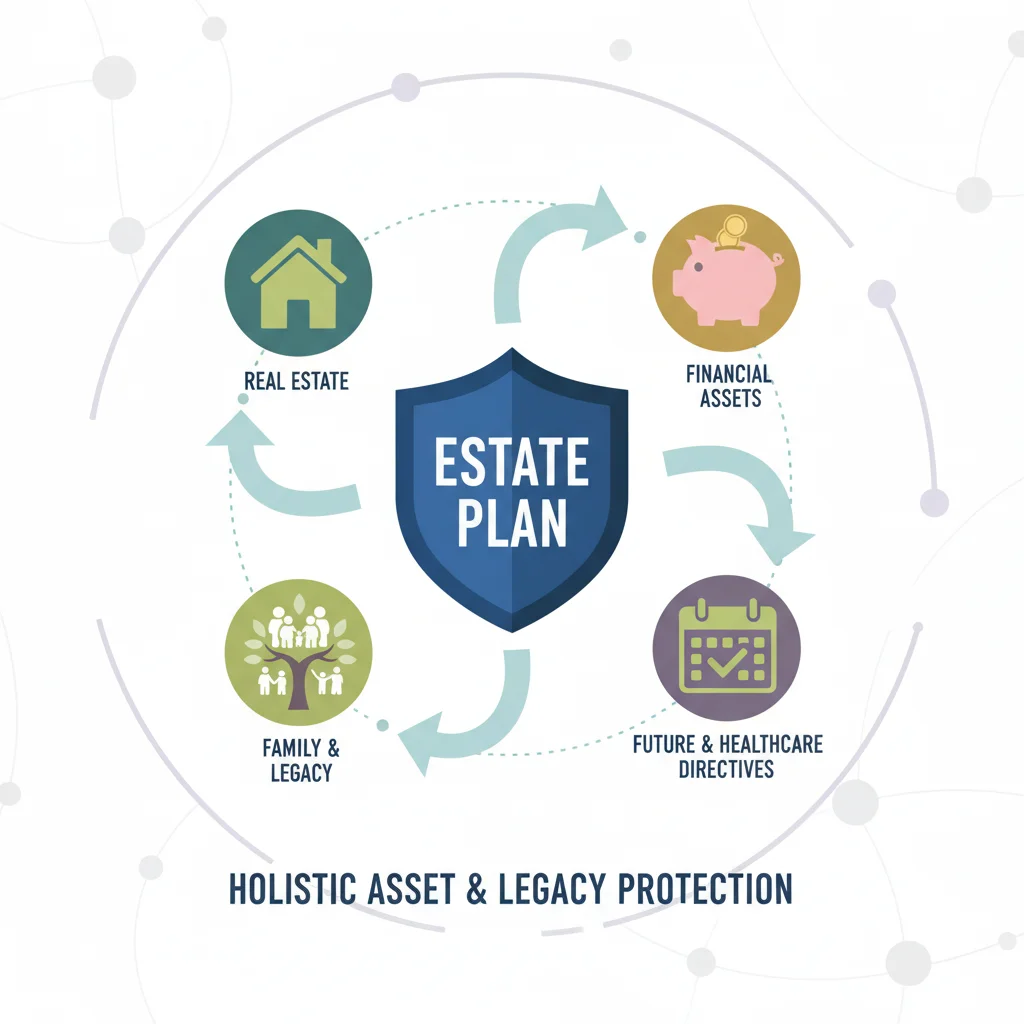
The Emotional and Practical Benefits of Proactive Planning
Beyond the legal and financial aspects, engaging in estate planning essentials offers profound emotional and practical benefits. It provides immense peace of mind, knowing that you have taken steps to protect your loved ones and ensure your wishes are respected. This proactive approach alleviates stress and potential conflict among family members during an already difficult time. When a clear plan is in place, your family can focus on grieving and supporting each other, rather than grappling with complex legal and financial decisions.
Practically, a well-executed estate plan can significantly reduce the time and cost associated with settling an estate. Probate can be a lengthy, public, and expensive process. By utilizing tools like trusts and proper beneficiary designations, you can often bypass probate entirely, allowing for a quicker, more private, and more efficient transfer of assets. This efficiency is a direct benefit of understanding and implementing estate planning essentials.
Moreover, estate planning allows you to leave a legacy that reflects your values. Whether through charitable giving, establishing educational funds for grandchildren, or ensuring a family business continues to thrive, your plan can be a powerful expression of what matters most to you. It’s an opportunity to make a lasting impact beyond your lifetime.
Preparing for 2026 and Beyond: Actionable Steps
As you consider your estate planning essentials for 2026, here are some actionable steps to take:
- Inventory Your Assets: Create a comprehensive list of all your assets (real estate, bank accounts, investments, insurance policies, digital assets) and liabilities (mortgages, loans, debts).
- Define Your Goals: Clearly articulate what you want to achieve with your estate plan. Who do you want to benefit? What legacy do you want to leave?
- Choose Your Team: Identify and engage with an estate planning attorney, financial advisor, and other relevant professionals.
- Draft/Update Documents: Work with your attorney to draft or update your Will, trusts, POAs, and Living Will.
- Review Beneficiary Designations: Check and update beneficiaries on all eligible accounts.
- Discuss with Family: While not legally required, discussing your plan with key family members can foster understanding and prevent future disputes.
- Store Documents Safely: Keep original documents in a secure, accessible location, and inform your executor and trusted individuals of their whereabouts.
- Schedule Regular Reviews: Commit to reviewing your plan periodically (every 3-5 years) or after any major life event.
Taking these steps now will ensure that your estate plan is robust, up-to-date, and ready for whatever 2026 and the future may hold. Don’t procrastinate on these vital estate planning essentials.
Conclusion: Secure Your Future with Proactive Estate Planning
The journey of estate planning is a profound act of care and responsibility. By focusing on estate planning essentials for 2026, you’re not just organizing documents; you’re actively shaping your legacy, protecting your assets, and providing enduring security for those you cherish most. The legal and financial landscape is dynamic, and a proactive, well-informed approach is your best defense against uncertainty.
Remember, estate planning is a continuous process, not a one-time event. As your life evolves, so too should your plan. By engaging with experienced professionals and regularly reviewing your arrangements, you can ensure your estate plan remains a powerful tool that reflects your values and safeguards your family’s future for generations to come. Start today, and give yourself and your loved ones the gift of peace of mind.