The Future of Augmented Reality: 6 Enterprise Applications Dominating the U.S. Market in 2026
The Future of Augmented Reality: 6 Enterprise Applications Dominating the U.S. Market in 2026
Augmented Reality (AR) is no longer a futuristic concept confined to science fiction; it is a rapidly evolving technology that is already reshaping industries and revolutionizing how businesses operate. As we approach 2026, the U.S. market is poised to witness an unprecedented surge in the adoption of enterprise AR applications, transforming everything from manufacturing and healthcare to retail and logistics. This comprehensive guide will delve into the most impactful enterprise AR applications that are set to dominate the U.S. market, offering businesses a competitive edge through enhanced efficiency, improved training, and unparalleled customer experiences.
The global Augmented Reality market size was valued at USD 25.3 billion in 2021 and is projected to reach USD 597.6 billion by 2030, growing at a CAGR of 42.7% from 2022 to 2030. This exponential growth is largely driven by enterprise adoption, as companies recognize the tangible benefits AR brings to their bottom line. From reducing operational costs to accelerating product development cycles, the strategic integration of enterprise AR applications is becoming a critical component of digital transformation strategies across various sectors. The U.S., being a hub of technological innovation and early adoption, is at the forefront of this AR revolution.
Understanding these emerging trends and the specific applications that will drive this growth is crucial for businesses looking to stay ahead of the curve. This article will explore six key areas where enterprise AR applications are not just making an impact, but are set to become indispensable by 2026. We’ll examine how these technologies are being deployed, the benefits they offer, and what businesses need to consider to effectively implement them.
Advertisements
1. Enhanced Training and Remote Assistance in Manufacturing and Field Service
One of the most significant areas where enterprise AR applications are making a profound impact is in training and remote assistance, particularly within the manufacturing and field service sectors. Traditional training methods often involve extensive physical presence, costly equipment, and significant time investment. AR changes this paradigm by overlaying digital information onto the real world, providing immersive, hands-on learning experiences without the need for physical prototypes or travel.
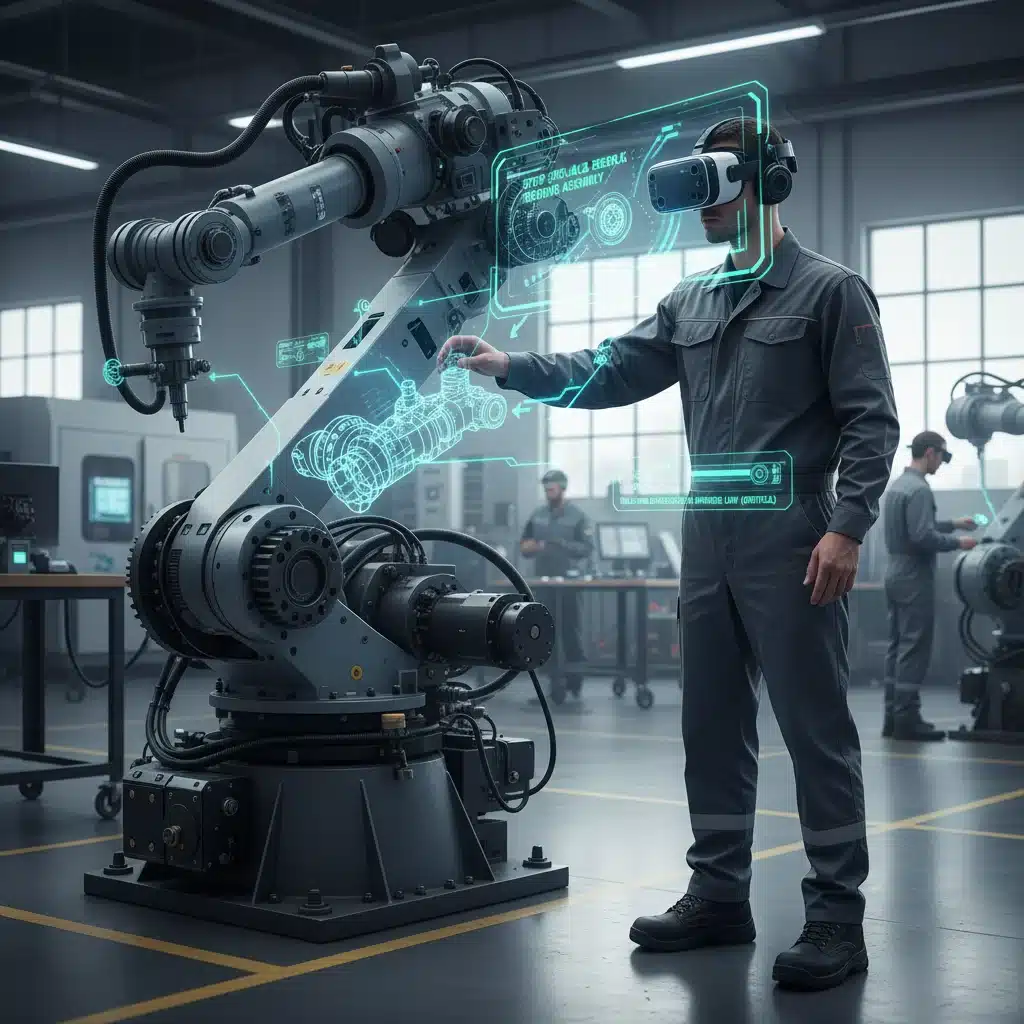
Imagine a new technician needing to learn the intricacies of a complex machine. With AR, they can wear a headset and see step-by-step instructions, diagrams, and animations superimposed directly onto the machine itself. This not only accelerates the learning curve but also reduces errors and improves retention. Companies like Boeing and GE have already reported significant improvements in training efficiency and a reduction in training costs by implementing AR solutions.
Beyond initial training, AR is invaluable for remote assistance. When a piece of machinery breaks down in a remote location, a local technician, even if inexperienced, can connect with an expert hundreds or thousands of miles away. The expert can see exactly what the local technician sees through the AR headset’s camera and can draw annotations, highlight components, and provide real-time verbal instructions, guiding them through the repair process. This minimizes downtime, reduces the need for expensive expert travel, and ensures that critical operations can resume quickly.
The ability to provide contextual, on-demand information and expert guidance is a game-changer for industries reliant on complex machinery and geographically dispersed workforces. By 2026, the adoption of AR for training and remote assistance will be a standard practice in a vast majority of U.S. manufacturing plants and field service organizations, driving unprecedented levels of operational efficiency and expertise transfer. This application of enterprise AR applications is proving to be a cornerstone of modern industrial operations.
2. Immersive Design and Prototyping in Product Development
The product development lifecycle, from conceptualization to prototyping and final design, is inherently iterative and often time-consuming. Enterprise AR applications are poised to revolutionize this process by offering immersive design and prototyping capabilities that accelerate development cycles and reduce costs. Instead of creating expensive physical prototypes, designers and engineers can use AR to visualize and interact with 3D models of their products in a real-world environment.
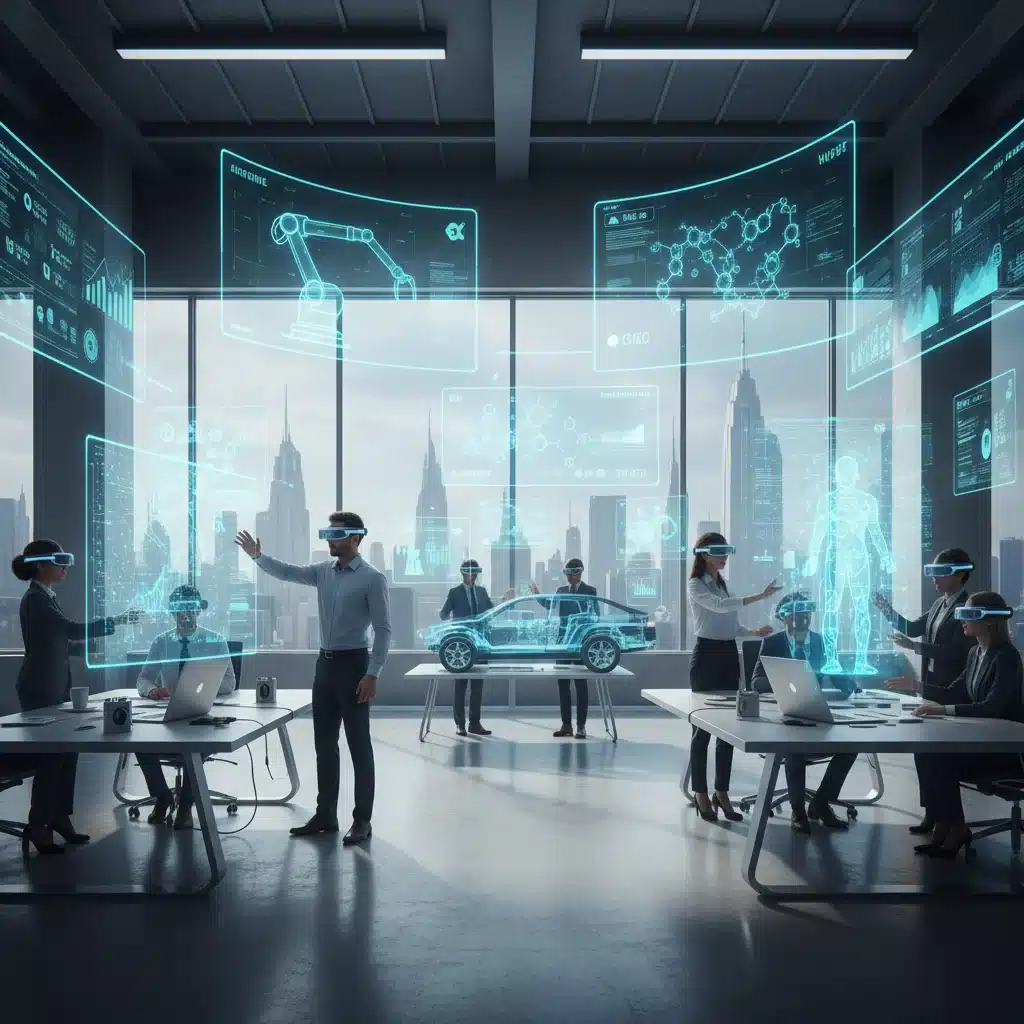
Consider an automotive designer. With an AR headset, they can project a full-scale digital model of a new car design into a physical space, walk around it, examine it from all angles, and even interact with digital controls. They can instantly change colors, materials, and components, allowing for rapid iteration and feedback. This significantly shortens the time required for design reviews and allows stakeholders to experience the product in a realistic context before any physical production begins.
Furthermore, AR facilitates collaborative design sessions. Multiple designers, even those in different geographical locations, can simultaneously view and interact with the same AR model, discussing changes and making real-time adjustments. This fosters a more agile and efficient design process, leading to better products reaching the market faster. Companies like Ford and Airbus are already experimenting with AR in their design studios, demonstrating its potential to transform how products are conceived and refined.
By 2026, AR will be an indispensable tool in the arsenals of product development teams across various industries, from consumer electronics to heavy machinery. The ability to visualize, interact with, and iterate on designs in an immersive digital environment will not only save significant resources but also foster greater creativity and innovation. This represents a powerful advancement in enterprise AR applications for competitive product creation.
3. Enhanced Retail Experiences and Merchandising
The retail sector is constantly seeking innovative ways to attract customers, enhance their shopping experience, and optimize store operations. Enterprise AR applications offer a myriad of possibilities to achieve these goals, from virtual try-ons to intelligent merchandising and personalized shopping journeys. By 2026, AR will be a cornerstone of both in-store and online retail strategies in the U.S.
In brick-and-mortar stores, AR can transform the shopping experience. Customers can use their smartphones or in-store AR mirrors to virtually try on clothes, visualize how furniture would look in their homes, or even see how different makeup products would appear on their face. This reduces the need for physical inventory in showrooms, minimizes returns, and empowers customers to make more confident purchasing decisions. Retailers like IKEA, Sephora, and Gucci have already successfully launched AR-powered virtual try-on and visualization tools, reporting increased engagement and sales.
For merchandising, AR offers powerful tools for optimizing shelf space and product placement. Store managers can use AR devices to visualize planograms, experiment with different store layouts, and ensure optimal product visibility without physically moving items. This leads to more efficient inventory management and improved sales performance. Furthermore, AR can provide employees with real-time information about product stock levels, customer preferences, and promotional offers, enabling them to provide more personalized and efficient service.
The convergence of physical and digital shopping experiences through AR will be a defining characteristic of retail in 2026. Businesses that successfully integrate these enterprise AR applications will not only attract a tech-savvy customer base but also create more engaging, convenient, and personalized shopping journeys, ultimately driving loyalty and revenue.
4. Advanced Healthcare and Medical Training
The healthcare industry stands to gain immensely from the precision, visualization, and training capabilities offered by enterprise AR applications. From surgical planning and medical education to patient care and rehabilitation, AR is already demonstrating its potential to revolutionize various aspects of healthcare. By 2026, its adoption will be widespread in U.S. hospitals and medical institutions.
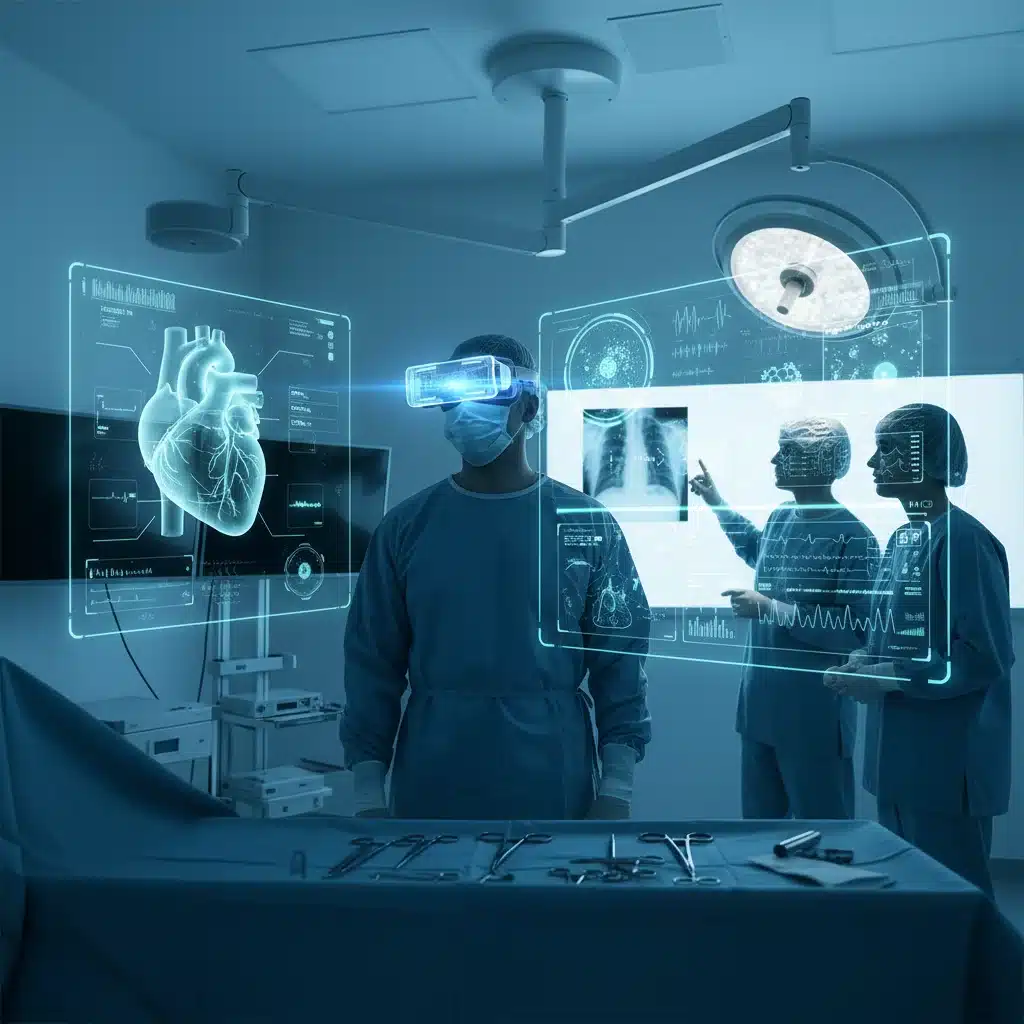
In surgical settings, AR can overlay critical patient data, such as MRI or CT scans, directly onto the patient’s body during an operation. This provides surgeons with a ‘x-ray vision’ capability, allowing them to visualize organs, blood vessels, and tumors with unprecedented accuracy. This enhanced visualization can lead to more precise incisions, reduced operating times, and improved patient outcomes. Companies like Philips and Brainlab are developing advanced AR solutions for surgical navigation and visualization.
For medical training, AR offers an immersive and risk-free environment for students and practitioners to practice complex procedures. Instead of relying solely on cadavers or expensive simulators, AR allows them to perform virtual surgeries, learn anatomical structures in 3D, and simulate emergency scenarios. This accelerates skill acquisition and reduces the learning curve for new medical professionals.
Beyond the operating room, AR can assist in patient rehabilitation by providing interactive exercises and visual feedback. It can also enhance nurse training by simulating patient interactions and medical procedures in a controlled environment. The ability of enterprise AR applications to provide real-time, context-aware information and immersive training experiences makes it an invaluable tool for advancing medical practice and education, ultimately leading to better healthcare delivery.
5. Logistics and Warehouse Management Optimization
Efficiency is paramount in logistics and warehouse management, where even minor improvements can lead to significant cost savings and faster delivery times. Enterprise AR applications are emerging as powerful tools for optimizing various warehouse operations, from picking and packing to inventory management and route optimization. By 2026, AR-powered solutions will be a standard feature in many U.S. distribution centers.
One of the most impactful applications is in ‘vision picking’. Warehouse workers wearing AR smart glasses can receive visual instructions directly in their field of view, guiding them to the correct shelves and indicating which items to pick. This eliminates the need for handheld scanners or paper lists, significantly reducing picking errors and improving picking speed. Companies like DHL and GEODIS have reported substantial increases in picking efficiency and accuracy after implementing AR-based vision picking solutions.
AR can also streamline inventory management. Workers can quickly scan items and instantly see real-time inventory levels, reorder points, and product locations overlaid onto the physical environment. This reduces the time spent searching for items, minimizes stockouts, and improves overall inventory accuracy. Furthermore, AR can assist in optimizing warehouse layouts by allowing managers to visualize different configurations and assess their impact on workflow efficiency before making physical changes.
The ability of enterprise AR applications to provide contextual, real-time information and hands-free guidance empowers warehouse workers to perform their tasks more efficiently and accurately. As e-commerce continues to surge, the demand for optimized logistics and warehouse operations will only grow, making AR an essential technology for maintaining a competitive edge in the supply chain.
6. Collaborative Workspaces and Remote Collaboration
The shift towards remote and hybrid work models has accelerated the need for effective collaborative tools that can bridge geographical distances and foster productive teamwork. Enterprise AR applications are at the forefront of this evolution, offering immersive collaborative workspaces that transcend the limitations of traditional video conferencing. By 2026, AR will play a crucial role in enabling seamless remote collaboration for U.S. businesses.
Imagine a team of architects, engineers, and clients collaborating on a new building design. Instead of sharing screens or static 3D models, they can all enter a shared AR space, where a holographic model of the building is projected. Each participant, regardless of their physical location, can interact with the model, point out details, make annotations, and discuss changes as if they were all in the same room. This level of immersive interaction fosters deeper understanding, reduces miscommunication, and accelerates decision-making.
AR can also enhance virtual meetings by allowing participants to interact with digital content in a more natural and engaging way. Instead of just seeing faces on a screen, participants can share and manipulate 3D objects, data visualizations, and interactive presentations within a shared AR environment. This makes remote meetings more dynamic and productive, fostering a stronger sense of presence and collaboration.
Beyond design and planning, AR can facilitate joint problem-solving and training for distributed teams. Experts can guide remote colleagues through complex tasks by overlaying instructions and visual cues directly into their real-world view. As businesses continue to embrace flexible work arrangements, the demand for enterprise AR applications that enable truly immersive and effective remote collaboration will only grow, making AR an indispensable tool for the modern workforce.
Challenges and Considerations for AR Adoption
While the benefits of enterprise AR applications are compelling, their widespread adoption is not without challenges. Businesses looking to integrate AR into their operations must consider several key factors:
- Cost of Hardware and Software: High-quality AR headsets and specialized software can be expensive, representing a significant upfront investment. However, as the technology matures and adoption increases, prices are expected to decrease.
- Integration with Existing Systems: Seamless integration of AR solutions with existing enterprise resource planning (ERP), customer relationship management (CRM), and other legacy systems is crucial for maximizing their value. This often requires robust API development and careful planning.
- Data Security and Privacy: AR systems often process sensitive operational data and personal information. Ensuring robust data security and compliance with privacy regulations (e.g., GDPR, CCPA) is paramount.
- User Experience and Training: For AR solutions to be effective, they must be intuitive and easy for employees to use. Adequate training and ongoing support are essential to ensure user adoption and maximize productivity gains.
- Connectivity and Bandwidth: Many advanced AR applications, especially those involving real-time data streaming and remote collaboration, require stable and high-bandwidth internet connectivity.
- Scalability: Businesses need to consider the scalability of AR solutions to ensure they can grow with the company’s needs and be deployed across multiple sites or departments.
Addressing these challenges proactively will be key to successful AR implementation and realizing the full potential of enterprise AR applications. Investing in pilot programs, partnering with experienced AR solution providers, and fostering an innovation-driven culture can help mitigate these hurdles.
The Road Ahead for Enterprise AR in the U.S.
By 2026, Augmented Reality will have moved beyond its nascent stages to become a mature and integral component of enterprise operations across the United States. The six applications discussed – enhanced training and remote assistance, immersive design and prototyping, enhanced retail experiences, advanced healthcare, logistics optimization, and collaborative workspaces – represent just a fraction of the potential impact of AR. However, they are indicative of the transformative power this technology holds.
The driving forces behind this rapid adoption include increasing demand for efficiency, the need for skilled workforce development, the push for personalized customer experiences, and the growing complexity of global supply chains. As AR hardware becomes more sophisticated, affordable, and comfortable, and as software platforms become more robust and user-friendly, the barriers to entry will continue to diminish.
For businesses in the U.S., embracing enterprise AR applications is not merely an option but an imperative for staying competitive in an increasingly digital and interconnected world. Those that strategically invest in and integrate AR will be better positioned to innovate, optimize operations, attract top talent, and deliver superior value to their customers. The future is augmented, and the enterprise landscape of 2026 will be defined by its transformative presence.
Conclusion
The journey of Augmented Reality from a niche technology to a mainstream enterprise solution is well underway. By 2026, enterprise AR applications will be deeply embedded in the operational fabric of numerous industries across the U.S., driving unprecedented levels of productivity, innovation, and engagement. From empowering frontline workers with real-time intelligence to revolutionizing product design and customer interactions, AR’s impact will be profound and far-reaching.
As businesses navigate the complexities of digital transformation, the strategic adoption of AR will differentiate leaders from laggards. The key lies in understanding the specific use cases that align with business objectives, carefully planning implementation, and fostering a culture that embraces technological innovation. The future of enterprise is augmented, and the time to prepare for this transformative shift is now.