Achieve Financial Security: Build a $10,000 Emergency Fund in 12 Months

The 5-Step Plan for Americans to Build an Emergency Fund of $10,000 in 12 Months
In an unpredictable world, financial security isn’t just a luxury; it’s a necessity. For many Americans, the idea of having a substantial emergency fund might seem daunting, especially with rising living costs and economic uncertainties. However, building a robust emergency fund plan of $10,000 within a year is not only achievable but also a crucial step towards true financial peace of mind. This comprehensive guide will walk you through a practical, 5-step strategy designed to help you reach this vital financial milestone.
An emergency fund acts as your financial safety net, protecting you from unexpected expenses like job loss, medical emergencies, car repairs, or home maintenance issues. Without one, these events can quickly derail your financial progress, leading to debt and stress. Our goal here is to empower you with a clear, actionable emergency fund plan that breaks down the $10,000 target into manageable monthly contributions and actionable steps.
Why $10,000? Understanding Your Emergency Fund Goal
Before diving into the ‘how,’ let’s clarify the ‘why.’ Why $10,000? While the ideal emergency fund typically covers 3 to 6 months of essential living expenses, $10,000 serves as an excellent, tangible goal for many American households. For someone with $2,500 in monthly expenses, $10,000 would cover four months, offering a significant buffer against most unforeseen circumstances. This amount is large enough to make a real difference but not so overwhelming that it feels impossible to achieve within a year.
The beauty of setting a specific target like $10,000 is that it provides a clear finish line. It allows you to calculate exactly how much you need to save each month – approximately $833.33 – which transforms an abstract concept into a concrete, measurable objective. This clarity is the first step in building a successful emergency fund plan.
Advertisements
Step 1: Assess Your Current Financial Situation – The Foundation of Your Emergency Fund Plan
The journey to a $10,000 emergency fund begins with a brutally honest assessment of your current financial standing. You can’t chart a course without knowing your starting point. This step involves two critical components: understanding your income and meticulously tracking your expenses.
A. Calculate Your Net Income
Your net income is the money you actually take home after taxes, insurance premiums, and other deductions. This is the figure you’ll be working with. If you have multiple income streams, add them all up. Be realistic and avoid including irregular income unless it’s guaranteed.
B. Track Your Expenses Religiously
This is where many people falter, but it’s arguably the most crucial part of your emergency fund plan. For at least one month, ideally two or three, meticulously track every single dollar you spend. Categorize your expenses into:
- Fixed Expenses: These are expenses that generally stay the same each month, such as rent/mortgage, loan payments, insurance premiums, and subscriptions.
- Variable Expenses: These fluctuate monthly and include groceries, dining out, entertainment, utilities, and transportation.
- Discretionary Expenses: These are non-essential items you can cut back on, like impulse purchases, expensive hobbies, or frequent take-out.
There are several ways to track your spending:
- Budgeting Apps: Tools like Mint, YNAB (You Need A Budget), or Personal Capital can link to your bank accounts and credit cards, automatically categorizing transactions.
- Spreadsheets: A simple Excel or Google Sheets document can be incredibly effective if you prefer a manual approach.
- Notebook and Pen: For the truly old-school, carrying a small notebook to jot down every purchase works too.
The goal here is not to judge your spending, but to understand it. Once you see where your money is going, you can identify areas for potential savings. This clarity will be your greatest asset in building your emergency fund plan.
Step 2: Create a Realistic Budget with Aggressive Savings Goals
With your income and expenses laid bare, it’s time to craft a budget that prioritizes your emergency fund. This isn’t about deprivation; it’s about intentional spending and making choices that align with your $10,000 goal.
A. Implement the 50/30/20 Rule (or a modified version)
A popular budgeting guideline, the 50/30/20 rule suggests allocating:
- 50% of your net income to Needs: Housing, utilities, groceries, transportation, insurance.
- 30% to Wants: Dining out, entertainment, shopping, vacations.
- 20% to Savings & Debt Repayment: This is where your emergency fund comes in.
To hit $10,000 in 12 months, you need to save approximately $833.33 per month. If 20% of your income doesn’t cover this, you’ll need to adjust your ‘Wants’ category significantly, or explore ways to increase your income (which we’ll discuss in Step 4).
B. Identify and Eliminate Unnecessary Expenses
Review your variable and discretionary expenses from Step 1. Where can you cut back without severely impacting your quality of life? Think about:
- Subscriptions: Are you using all those streaming services, gym memberships, or app subscriptions? Cancel the ones you don’t use regularly.
- Dining Out/Takeaway: This is often the biggest money sink. Commit to cooking more meals at home. Even reducing this by half can free up hundreds of dollars.
- Entertainment: Look for free or low-cost activities. Instead of expensive concerts, try a picnic in the park.
- Impulse Purchases: Implement a ’24-hour rule’ – if you see something you want, wait 24 hours before buying it. Often, the urge passes.
- Transportation: Can you walk, bike, or use public transport more often? Carpool?
Every dollar saved here is a dollar closer to your $10,000 emergency fund. This active management of your spending is central to your emergency fund plan.

C. Negotiate Bills and Shop Around
Don’t just accept your current rates. Call your internet, cable, and even insurance providers to see if you can get a better deal. Compare prices for car insurance annually. Even small reductions in your fixed costs can add up over 12 months.
Step 3: Automate Your Savings and Choose the Right Account
The most effective way to build an emergency fund is to make saving automatic and – crucially – out of sight, out of mind. This step is about setting up systems that work for you.
A. Set Up Automatic Transfers
As soon as you get paid, have a portion of your paycheck automatically transferred from your checking account to your dedicated emergency fund savings account. Treat this transfer like a non-negotiable bill. If your goal is $833.33/month, set up two transfers of $416.67 if you’re paid bi-weekly, or one large transfer if you’re paid monthly.
The key here is consistency. Even if you can’t hit the full $833.33 every month initially, start with what you can and gradually increase it as you find more savings in your budget. This consistent habit is the bedrock of any successful emergency fund plan.
B. Choose a High-Yield Savings Account (HYSA)
Where you keep your emergency fund matters. You want it:
- Separate: Don’t keep it in the same account as your everyday spending money. This reduces the temptation to dip into it for non-emergencies.
- Accessible: It needs to be liquid, meaning you can access it quickly if an actual emergency arises. Avoid investments with penalties for early withdrawal.
- Earning Interest: A High-Yield Savings Account (HYSA) offers significantly better interest rates than traditional savings accounts. While the interest won’t make you rich overnight, it’s free money that helps your fund grow faster. Look for online banks, as they often offer the best rates due to lower overheads.
- Insured: Ensure your account is FDIC-insured (up to $250,000 per depositor) for peace of mind.
By automating transfers and housing your funds in an HYSA, you’re building a powerful, self-sustaining component of your emergency fund plan.
Step 4: Boost Your Income – Accelerate Your Emergency Fund Growth
While cutting expenses is vital, there’s often a limit to how much you can trim. Increasing your income, however, has virtually no ceiling and can dramatically accelerate your progress towards your $10,000 goal.
A. Explore Side Hustles
Consider dedicating a few hours a week to a side hustle. The gig economy offers countless opportunities:
- Freelancing: If you have skills in writing, graphic design, web development, marketing, or virtual assistance, platforms like Upwork or Fiverr can connect you with clients.
- Delivery Services: Driving for DoorDash, Uber Eats, or Instacart can provide flexible income on your own schedule.
- Ridesharing: If you have a reliable car, Uber or Lyft can be a good option.
- Selling Goods: Declutter your home and sell unused items on eBay, Facebook Marketplace, or local consignment shops.
- Pet Sitting/Dog Walking: Apps like Rover can connect you with pet owners in your area.
- Tutoring: Share your knowledge in a subject you excel at, either online or in person.
Even an extra $200-$300 a month from a side hustle can make a huge difference in hitting your $833.33 monthly target, turning your emergency fund plan into a rapid ascent.
B. Ask for a Raise or Seek a Promotion
If you’ve been excelling at your current job, prepare a case for a raise or promotion. Document your achievements, contributions, and market value. A significant increase in your primary income stream can be the fastest way to boost your savings capacity.
C. Monetize a Hobby
Do you have a hobby you’re passionate about? Can you turn it into a small business? Baking, crafting, photography, or even gardening can be sources of additional income if you market your skills effectively.
D. Temporary Sacrifices for Long-Term Gain
Remember, this is a 12-month push. You might need to make some temporary sacrifices – working extra hours, taking on more shifts, or even a temporary second part-time job – to front-load your emergency fund. The short-term effort will lead to long-term financial security, making your emergency fund plan a success.
Step 5: Monitor Progress, Stay Motivated, and Adjust Your Emergency Fund Plan
Building an emergency fund is a marathon, not a sprint, but a 12-month goal requires consistent monitoring and motivation. Don’t set it and forget it; actively engage with your progress.
A. Track Your Progress Regularly
Review your emergency fund balance weekly or bi-weekly. Seeing the numbers grow is incredibly motivating. You can use:
- Spreadsheets: Create a simple spreadsheet to track your monthly contributions and total balance.
- Budgeting Apps: Many apps offer progress tracking features.
- Visual Aids: Print out a thermometer chart and color it in as you get closer to your $10,000 goal. Place it somewhere visible!
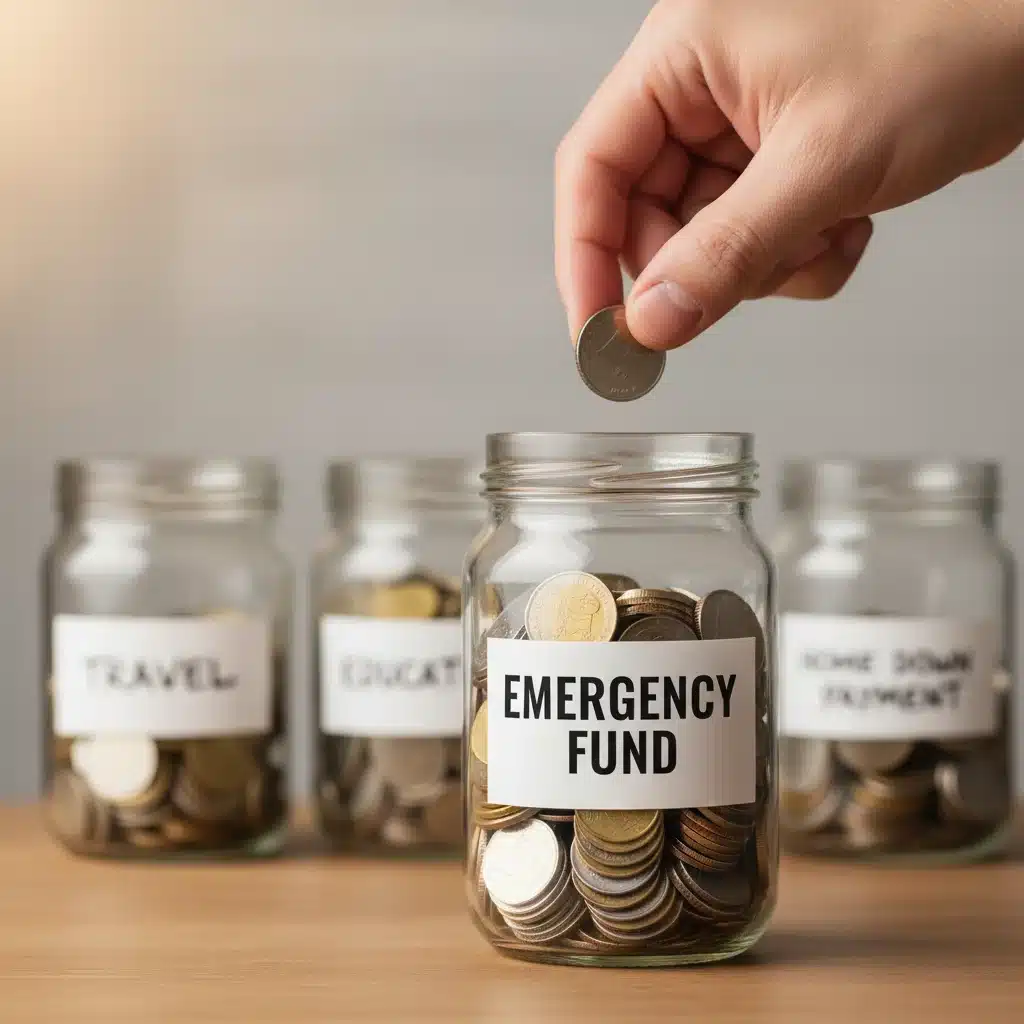
Celebrating small milestones – reaching $1,000, then $2,500, then $5,000 – can keep your spirits high and reinforce your commitment to your emergency fund plan.
B. Stay Flexible and Adjust as Needed
Life happens. There might be months where you can save more than your target, and others where you can save less. Don’t get discouraged by setbacks. If an unexpected expense arises and you have to dip into your fund, immediately recalibrate your budget and focus on rebuilding it. The plan is a guide, not a rigid prison. The important thing is to get back on track quickly.
Your financial situation can change. You might get a raise, or a new expense might pop up. Regularly revisit your budget and savings goals to ensure they remain realistic and aligned with your emergency fund plan.
C. Educate Yourself Further
Continuously learn about personal finance. Read books, listen to podcasts, and follow reputable financial blogs. The more knowledgeable you become, the more empowered you’ll feel to make smart financial decisions that support your emergency fund and overall financial health.
D. Consider the ‘Why’
Remind yourself constantly why you started this journey. Is it for peace of mind? To protect your family? To avoid debt? Keeping your ‘why’ front and center will fuel your motivation during challenging moments.
Beyond $10,000: What’s Next for Your Emergency Fund Plan?
Once you hit your $10,000 goal, congratulations! You’ve achieved a significant financial milestone. But the journey doesn’t necessarily end there. Depending on your personal circumstances, you might consider:
- Expanding Your Fund: If $10,000 only covers 2-3 months of expenses, consider increasing it to 6 months.
- Tackling High-Interest Debt: With your safety net in place, you can now aggressively pay down credit card debt or personal loans without fear of a new emergency derailing your efforts.
- Investing for the Future: Start contributing to a retirement account (401k, IRA) or a brokerage account to build long-term wealth.
- Saving for Specific Goals: A down payment on a house, a child’s education, or a dream vacation.
Your initial emergency fund plan of $10,000 is merely the first step on a lifelong path of financial responsibility and prosperity.
Common Pitfalls to Avoid While Building Your Emergency Fund
Even with the best intentions, certain obstacles can hinder your progress. Being aware of them can help you navigate around them:
- Lifestyle Creep: As your income increases, resist the urge to immediately upgrade your lifestyle. Instead, funnel that extra money into your emergency fund.
- Using the Fund for Non-Emergencies: This is a critical mistake. An emergency fund is for true emergencies only. A sale on a new gadget is not an emergency.
- Lack of Accountability: Share your goal with a trusted friend or family member, or join an online financial community for support and accountability.
- Getting Discouraged by Slow Progress: Building wealth takes time. Focus on consistency, and trust the process. Even small, consistent contributions add up significantly over 12 months.
- Not Reviewing Your Budget: Your budget isn’t static. Review and adjust it monthly or quarterly to ensure it still reflects your financial reality and goals.
By actively avoiding these pitfalls, you significantly increase your chances of successfully executing your emergency fund plan.
Conclusion: Your Path to Financial Resilience Starts Now
Building a $10,000 emergency fund in 12 months is an ambitious but entirely achievable goal for most Americans. It requires discipline, intentionality, and a clear emergency fund plan. By assessing your finances, creating a strict but realistic budget, automating your savings, exploring ways to boost your income, and consistently monitoring your progress, you can transform your financial landscape.
Imagine the peace of mind that comes with knowing you have a financial cushion to fall back on, protecting you from life’s inevitable curveballs. This isn’t just about money; it’s about freedom, security, and the ability to make choices without being dictated by financial stress. Start today, commit to these 5 steps, and in 12 short months, you’ll be celebrating a significant victory on your journey to financial resilience.
Take control of your financial future. Your $10,000 emergency fund is waiting to be built, one disciplined step at a time. This emergency fund plan is your blueprint for success.