Debt Consolidation 2026: Reduce Interest Up to 20% – Your Definitive Guide

The Definitive 2026 Guide to Personal Debt Consolidation: Reducing Interest by up to 20%
Are you feeling overwhelmed by multiple debt payments, each with its own high-interest rate and due date? In 2026, navigating the landscape of personal finance can be more complex than ever, but there’s a powerful strategy that continues to offer significant relief: debt consolidation guide. This comprehensive approach can simplify your financial life, reduce your monthly payments, and most importantly, potentially cut your interest rates by up to 20% or even more. This guide will walk you through everything you need to know about personal debt consolidation in 2026, from understanding its core principles to choosing the right strategy for your unique situation.
Understanding Personal Debt Consolidation: What It Is and How It Works
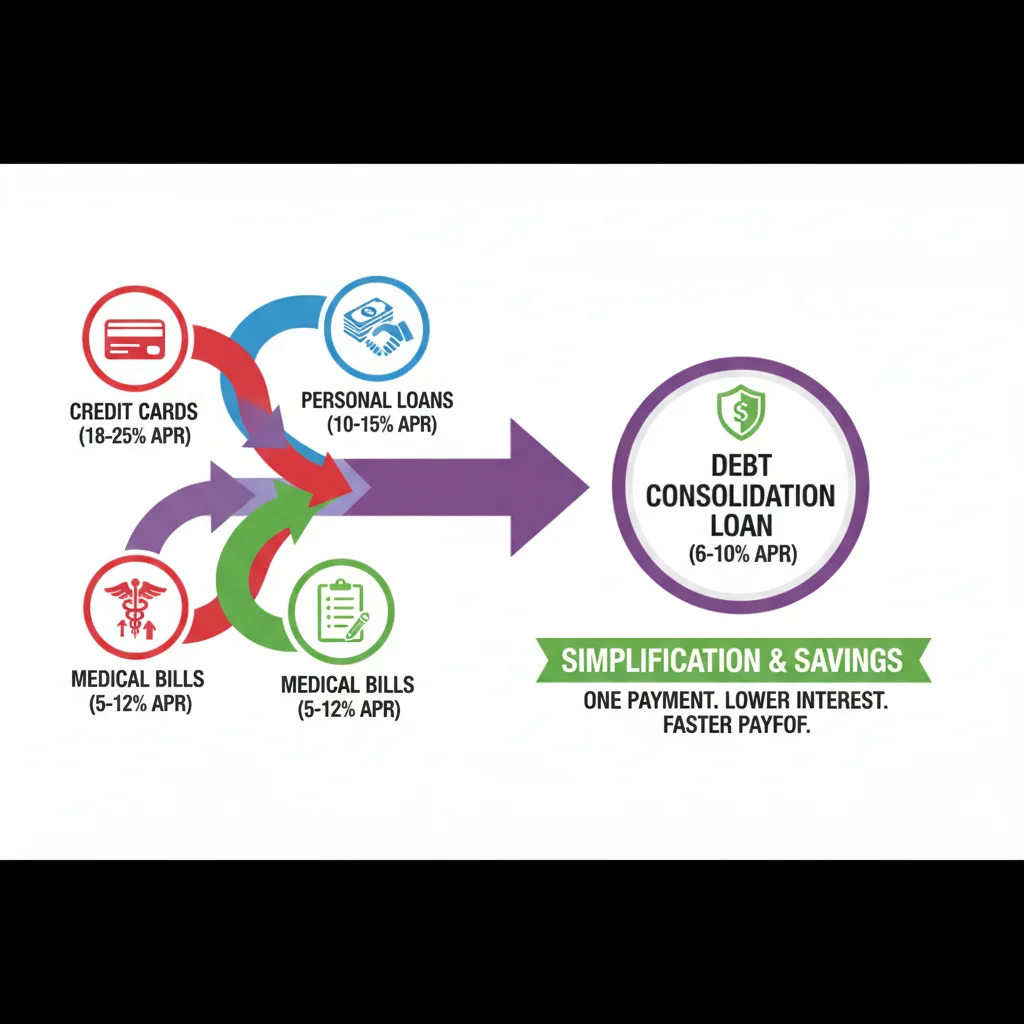
At its core, personal debt consolidation is the process of combining multiple debts into a single, new loan. Instead of making several payments to different creditors each month, you make one payment to a single lender. The primary goal of a debt consolidation guide is to secure a new loan with a lower interest rate than the average of your existing debts. This can lead to substantial savings over the life of the loan and make your monthly budget much more manageable.
Common Types of Debt to Consolidate
- Credit Card Debt: Often carries the highest interest rates, making it a prime candidate for consolidation.
- Personal Loans: Existing personal loans can sometimes be rolled into a new, lower-interest consolidation loan.
- Medical Bills: These can accumulate quickly and often come with less flexible payment terms than other debts.
- Payday Loans: Known for exorbitant interest rates, consolidating these can offer immediate relief.
- Other Unsecured Debts: Any debt not backed by collateral, such as store credit or certain installment loans.
It’s important to note that secured debts, like mortgages or car loans, are typically not included in personal debt consolidation, as they have different collateral and repayment structures.
Advertisements
The Benefits of a Smart Debt Consolidation Guide in 2026
Why should you consider debt consolidation? The advantages extend beyond just a lower interest rate:
1. Significant Interest Rate Reduction (Up to 20% or More)
This is arguably the biggest draw. By securing a new loan with a lower interest rate, you pay less money overall. Imagine having multiple credit cards with APRs ranging from 18% to 25%. A consolidation loan at 8-15% could dramatically reduce the total amount you pay back, freeing up hundreds or even thousands of dollars over time. This is a core tenet of any effective debt consolidation guide.
2. Simplified Payments
Instead of juggling multiple due dates, minimum payments, and different online portals, you’ll have just one payment to remember each month. This reduces the risk of missed payments, which can incur late fees and negatively impact your credit score.
3. Clearer Path to Debt Freedom
With a single, fixed payment and a clear end date for your loan, you gain a better understanding of when you’ll be debt-free. This clarity can be incredibly motivating and help you stick to your financial plan. A good debt consolidation guide empowers you with this foresight.
4. Potential for Improved Credit Score (Long-Term)
While the initial application for a new loan might cause a slight dip, successful debt consolidation can improve your credit score in the long run. By paying off high-interest revolving credit accounts (like credit cards), you reduce your credit utilization ratio, a major factor in credit scoring. Consistent, on-time payments on your new consolidation loan will also positively contribute to your payment history.
5. Reduced Financial Stress
The mental burden of managing multiple debts can be immense. Consolidating your debt can significantly reduce this stress, allowing you to focus on other financial goals and enjoy greater peace of mind.
Key Considerations Before Consolidating Your Debt
While the benefits are compelling, debt consolidation isn’t a one-size-fits-all solution. Before diving in, consider these crucial factors:
Your Credit Score
Your credit score plays a vital role in determining the interest rate you’ll qualify for on a new consolidation loan. Generally, the higher your score, the better the terms you’ll receive. If your credit score is low, you might still qualify, but the interest rate might not be as low as you’d hoped, potentially negating some of the benefits. This is a critical point in any debt consolidation guide.
The Total Amount of Debt
Consolidation is most effective for manageable amounts of unsecured debt. If your debt load is extremely high, you might need to explore other options like debt management plans or even bankruptcy.
Your Spending Habits
Debt consolidation provides a fresh start, but it doesn’t address the underlying spending habits that led to the debt in the first place. If you don’t adjust your spending, you risk accumulating new debt on top of your consolidated loan, putting you in an even worse financial position. A successful debt consolidation guide emphasizes behavioral change.
Fees and Terms of the New Loan
Always read the fine print. Some consolidation loans come with origination fees, balance transfer fees (for credit cards), or prepayment penalties. Factor these into your calculations to ensure the new loan is truly beneficial.
Different Avenues for Debt Consolidation in 2026
There are several popular methods for achieving debt consolidation. Each has its own advantages and ideal use cases:
1. Personal Loans
This is one of the most common and straightforward methods. You take out an unsecured personal loan from a bank, credit union, or online lender and use the funds to pay off your existing high-interest debts. The personal loan then becomes your single monthly payment. Interest rates vary based on your creditworthiness, but they are often significantly lower than credit card rates. This is a primary focus of any good debt consolidation guide.
2. Balance Transfer Credit Cards
Some credit card companies offer introductory 0% APR periods on balance transfers, typically lasting 12 to 21 months. If you have good credit, you can transfer your high-interest credit card balances to one of these cards. This gives you a period to pay down a significant portion of your debt without incurring any interest. However, be mindful of the balance transfer fee (usually 3-5% of the transferred amount) and ensure you can pay off the balance before the promotional period ends, as the APR will jump significantly afterward.
3. Home Equity Loan or HELOC (Home Equity Line of Credit)
If you own a home and have sufficient equity, you can use a home equity loan (a lump sum loan) or a HELOC (a revolving line of credit) to consolidate debt. These typically offer much lower interest rates than unsecured loans because your home serves as collateral. However, this also means your home is at risk if you fail to make payments. This option is best for those with stable income and a disciplined approach to finances.
4. Debt Management Plans (DMPs)
Offered by non-profit credit counseling agencies, DMPs involve the agency negotiating with your creditors on your behalf to reduce interest rates and monthly payments. You make one monthly payment to the agency, which then distributes the funds to your creditors. While not a loan, it’s a form of consolidation because it simplifies payments and can reduce interest. Your credit score might be impacted, but it’s often less severe than bankruptcy.
5. 401(k) Loan
Some employers allow you to borrow from your 401(k) retirement account. The interest you pay goes back into your own account, and the interest rates are often low. However, borrowing from your 401(k) has significant risks: if you leave your job, you may have to repay the loan quickly, and if you can’t, it becomes a taxable withdrawal plus a 10% penalty if you’re under 59½. It also means your retirement savings are not growing during the loan period. This is generally considered a last resort in a comprehensive debt consolidation guide.
How to Choose the Right Debt Consolidation Strategy for You
Selecting the best option depends on several factors:
Assess Your Financial Situation
Start by listing all your debts: creditor, current balance, interest rate, and minimum monthly payment. Calculate your total debt and the average interest rate. This clear picture is the first step in any effective debt consolidation guide.
Check Your Credit Score
Obtain a free copy of your credit report from AnnualCreditReport.com and check your credit score. This will give you an idea of what interest rates you might qualify for. Sites like Credit Karma or your bank might also offer free credit score access.
Calculate Potential Savings
Use online calculators to compare your current total monthly payments and interest costs with what they would be under various consolidation scenarios (personal loan, balance transfer, etc.). Aim for a strategy that offers at least a 5-10% reduction in your overall interest, with 20% being an excellent target for this debt consolidation guide.
Consider the Risks
Understand the downsides of each option. Are you comfortable using your home as collateral? Can you realistically pay off a balance transfer card before the 0% APR expires? Are you disciplined enough to avoid new debt?
Seek Professional Advice
If you’re unsure, consult with a non-profit credit counselor or a financial advisor. They can help you evaluate your options and create a personalized plan.
Step-by-Step Guide to Consolidating Your Debt in 2026
Step 1: Gather All Your Debt Information
Create a detailed spreadsheet or list of all your unsecured debts. Include the creditor’s name, current balance, interest rate (APR), minimum monthly payment, and due date. This clarity is paramount for any successful debt consolidation guide.
Step 2: Check Your Credit Report and Score
Access your free credit report from Experian, Equifax, and TransUnion. Review it for accuracy and identify any areas that might be impacting your score. Knowing your score will help you gauge eligibility and potential interest rates for consolidation products.
Step 3: Research and Compare Consolidation Options
Based on your credit score and debt amount, explore the best options:
- Personal Loans: Compare rates from multiple banks, credit unions, and online lenders. Look for competitive APRs and minimal fees.
- Balance Transfer Cards: If your credit is excellent and you can pay off the debt within the promotional period, research cards with the longest 0% APR offers and lowest balance transfer fees.
- Home Equity Options: If you’re a homeowner, consult with your mortgage lender or other financial institutions about home equity loans or HELOCs.
- Debt Management Plans: Contact a reputable non-profit credit counseling agency if you prefer a structured plan with professional guidance.
Step 4: Apply for Your Chosen Consolidation Method
Once you’ve selected the best option, complete the application process. Be prepared to provide financial documentation, such as proof of income, bank statements, and details of your existing debts. For a personal loan, the lender will likely perform a hard inquiry on your credit, which can temporarily lower your score by a few points.
Step 5: Pay Off Your Old Debts
If approved, the funds from your consolidation loan or balance transfer will be disbursed. Use these funds immediately to pay off your high-interest debts. It’s crucial to ensure all old accounts are fully closed or paid down to zero to prevent you from using them again and accumulating new debt. Confirm that the balances are indeed zero with your old creditors.
Step 6: Stick to Your New Payment Plan
This is where discipline comes in. Make sure you understand the terms of your new consolidation loan or credit card, including the due date and minimum payment. Set up automatic payments to avoid missing any deadlines. This final step is paramount for any successful debt consolidation guide.

Avoiding Common Pitfalls in Debt Consolidation
Even with the best intentions, some people fall into common traps after consolidating their debt:
1. Accumulating New Debt
The biggest mistake is to free up credit lines by paying off old debts and then immediately start using those cards again. This can lead to an even worse debt spiral. It’s vital to address the root causes of your spending and develop healthier financial habits.
2. Not Getting the Best Rate
Don’t settle for the first offer you receive. Shop around and compare rates from multiple lenders to ensure you’re getting the best possible terms. A true debt consolidation guide encourages thorough comparison.
3. Ignoring Fees
Always factor in any origination fees, balance transfer fees, or other charges. A loan with a slightly higher interest rate but no fees might sometimes be better than one with a lower rate but significant upfront costs.
4. Extending the Repayment Period Too Long
While a longer repayment period can mean lower monthly payments, it also means you’ll pay more in interest over the life of the loan. Try to find a balance between affordable payments and a reasonable repayment term.
5. Not Addressing Spending Habits
As mentioned, consolidation is a tool, not a cure. Without a change in financial behavior, you’re likely to find yourself in the same position again. Create a budget, track your spending, and build an emergency fund to prevent future reliance on high-interest debt.
Advanced Strategies and What to Expect in 2026
The financial landscape is always evolving. In 2026, expect continued innovation in financial technology, offering more streamlined application processes and personalized loan options. Artificial intelligence and machine learning may play a larger role in assessing creditworthiness, potentially leading to more tailored rates. However, the core principles of a solid debt consolidation guide remain timeless.
Financial Wellness Programs
Many lenders and credit counseling agencies are integrating financial wellness programs alongside consolidation services. These programs often include budgeting tools, educational resources, and personalized coaching to help you maintain long-term financial health.
Impact of Economic Conditions
Interest rates are influenced by broader economic conditions. Keep an eye on the Federal Reserve’s policies, as changes in the federal funds rate can impact the rates offered on personal loans and other credit products. This knowledge is key for anyone using a debt consolidation guide.
Building an Emergency Fund
Once your debts are consolidated and you have a more manageable payment, prioritize building an emergency fund. This fund acts as a financial safety net, preventing you from needing to rely on credit cards for unexpected expenses in the future.
Conclusion: Your Path to Financial Freedom with a Debt Consolidation Guide
Personal debt consolidation in 2026 offers a powerful pathway to financial relief, providing the opportunity to reduce interest rates by up to 20% or more, simplify your payments, and accelerate your journey to debt freedom. It’s not a magic bullet, but a strategic financial tool that, when used wisely, can transform your financial outlook. By understanding the different options, carefully assessing your situation, and committing to responsible financial habits, you can leverage a comprehensive debt consolidation guide to take control of your debt and build a more secure financial future.
Remember, the goal isn’t just to consolidate debt, but to eliminate it and prevent its return. With careful planning and disciplined execution, you can achieve significant savings and enjoy the peace of mind that comes with a healthier financial life. Start your journey today and unlock the potential for a brighter financial tomorrow.