Gun Control Debates: State Policies & Societal Outcomes in 2026
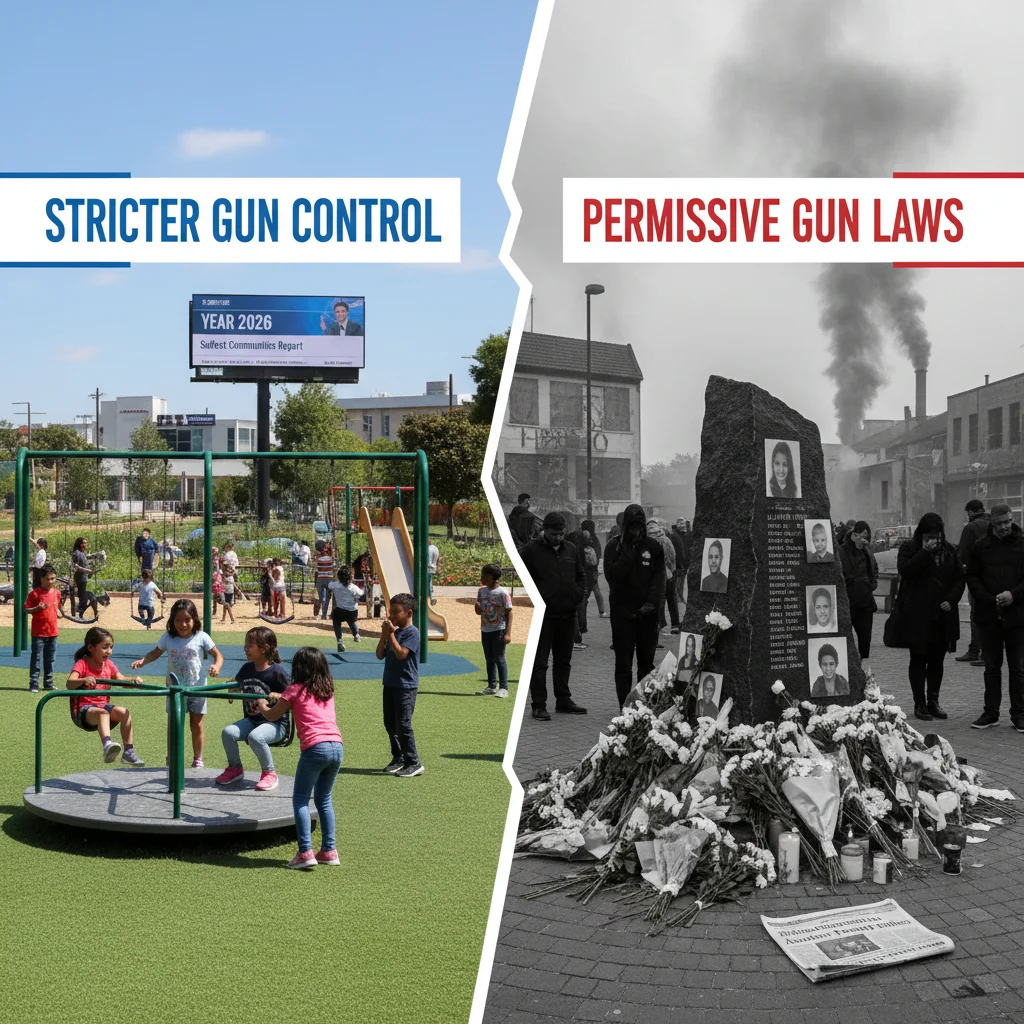
The landscape of gun control in the United States is a complex and often contentious terrain, shaped by deeply held beliefs, constitutional interpretations, and varying societal experiences. As we navigate through 2026, the debate surrounding state-level gun control policies and their societal outcomes remains as fervent as ever. This article delves into a comprehensive comparison of these policies, examining their evolution, implementation, and most importantly, their tangible effects on communities across the nation. Understanding the intricate relationship between different regulatory frameworks and public safety, crime rates, and individual liberties is crucial for informed discourse and future policy-making. Our focus here is to analyze the diverse approaches states have adopted and to discern patterns in their efficacy and consequences, providing a clearer picture of the real-world impact of gun control outcomes.
The Second Amendment of the U.S. Constitution guarantees the right to keep and bear arms, but its interpretation has been a battleground for centuries. This foundational right is continually balanced against the state’s interest in public safety, leading to a patchwork of laws that vary dramatically from one state to another. These variations are not merely academic; they have profound implications for the daily lives of millions of Americans and directly influence gun violence statistics, crime prevention strategies, and even the cultural identity of different regions. By focusing on gun control outcomes, we aim to move beyond rhetoric and explore the evidence-based realities of these policies.
The Evolving Landscape of State Gun Control in 2026
In 2026, the spectrum of gun control policies across the U.S. is broader than ever. Some states, often characterized by urban populations and liberal political leanings, have enacted stringent regulations. These typically include universal background checks for all firearm sales, bans on certain types of assault weapons and high-capacity magazines, red flag laws that allow temporary removal of firearms from individuals deemed a danger to themselves or others, and extensive permitting requirements for gun ownership and concealed carry. The rationale behind these measures is often rooted in public health approaches to violence prevention, aiming to reduce the availability of firearms to individuals who might misuse them and to mitigate the lethality of mass shooting events. The anticipated gun control outcomes in these states often include lower rates of gun violence and fewer accidental shootings.
Advertisements
Conversely, many states, particularly those with strong rural traditions and conservative political majorities, maintain more permissive gun laws. These states often uphold constitutional carry, allowing individuals to carry firearms (openly or concealed) without a permit, and may have minimal or no state-level background check requirements beyond federal mandates. They often resist bans on specific firearm types or magazine capacities, emphasizing individual self-defense rights and a distrust of government overreach. Proponents of these policies argue that they empower law-abiding citizens to protect themselves and that restricting gun ownership does not deter criminals, who will always find ways to acquire weapons. The desired gun control outcomes here are often framed in terms of individual liberty and the right to self-preservation, with the belief that an armed populace is a safer populace.
Between these two extremes lies a significant number of states with hybrid approaches, adopting some restrictive measures while maintaining other more lenient policies. This dynamic environment means that the study of gun control outcomes is not a simple binary comparison but a nuanced analysis of diverse legislative packages and their interactions with unique socioeconomic and cultural contexts.
Methodology for Assessing Societal Outcomes
Evaluating the societal outcomes of gun control policies requires a robust and multifaceted methodology. Our analysis considers several key metrics:
-
Gun Violence Rates: This includes homicides, suicides, and accidental deaths involving firearms. A crucial aspect is disaggregating these categories to understand specific impacts.
-
Mass Shooting Incidents: Tracking the frequency and lethality of mass shootings provides insight into the effectiveness of policies aimed at preventing large-scale violence.
-
Crime Rates (Overall and Violent Crime): While not solely attributable to gun control, understanding broader crime trends can offer context.
-
Public Health Data: This includes emergency room visits for firearm-related injuries and the overall burden of gun violence on healthcare systems.
-
Economic Impact: The costs associated with gun violence, including healthcare, law enforcement, and lost productivity, are significant.
-
Public Perception and Trust: How communities perceive their safety and the effectiveness of laws can influence societal cohesion and cooperation with law enforcement.
It’s important to acknowledge the challenges inherent in this type of analysis. Causation is notoriously difficult to prove definitively, as numerous confounding factors—socioeconomic status, mental health services, policing strategies, cultural norms, and even geographic proximity to states with different laws—can influence gun control outcomes. Therefore, our approach involves statistical modeling, longitudinal studies, and comparative analyses to identify strong correlations and plausible causal links, rather than simple associations.
Case Studies: Stricter Gun Control States and Their Outcomes
Let’s examine some states that have implemented more stringent gun control measures and observe their gun control outcomes. States like California, New York, and Massachusetts consistently rank among those with the strictest gun laws in the nation. These states often boast comprehensive background check systems, bans on assault weapons, and red flag laws.
For instance, California, with its extensive list of prohibited firearms and ammunition regulations, has historically shown lower rates of gun violence compared to the national average. Data from 2026 continues to suggest a correlation between these strict laws and reduced firearm-related fatalities, particularly in terms of mass shootings. The focus on preventing the sale of high-capacity magazines and certain semi-automatic rifles is often cited by proponents as a key factor in mitigating the lethality of such events. However, critics often point to the fact that criminals can still obtain illegal firearms, and that these laws primarily burden law-abiding citizens.
New York’s SAFE Act, enacted in response to the Sandy Hook tragedy, imposed new restrictions on assault weapons and high-capacity magazines, and strengthened mental health reporting requirements. While the immediate aftermath saw considerable debate and some challenges, long-term analyses in 2026 indicate a measurable impact on certain types of gun violence, particularly in urban centers. The effectiveness of red flag laws in these states, allowing temporary removal of firearms from individuals deemed a threat, is increasingly being studied, with preliminary data suggesting a role in preventing suicides and potential mass violence.
Massachusetts, another state with a long history of strict gun laws, including a discretionary licensing system, consistently reports some of the lowest rates of gun violence in the U.S. The comprehensive nature of its licensing process, which includes background checks, interviews, and safety training, is often highlighted as a significant contributor to these positive gun control outcomes. These states often invest heavily in public health initiatives alongside their legislative efforts, creating a multi-pronged approach to violence reduction.
Case Studies: Permissive Gun Control States and Their Outcomes
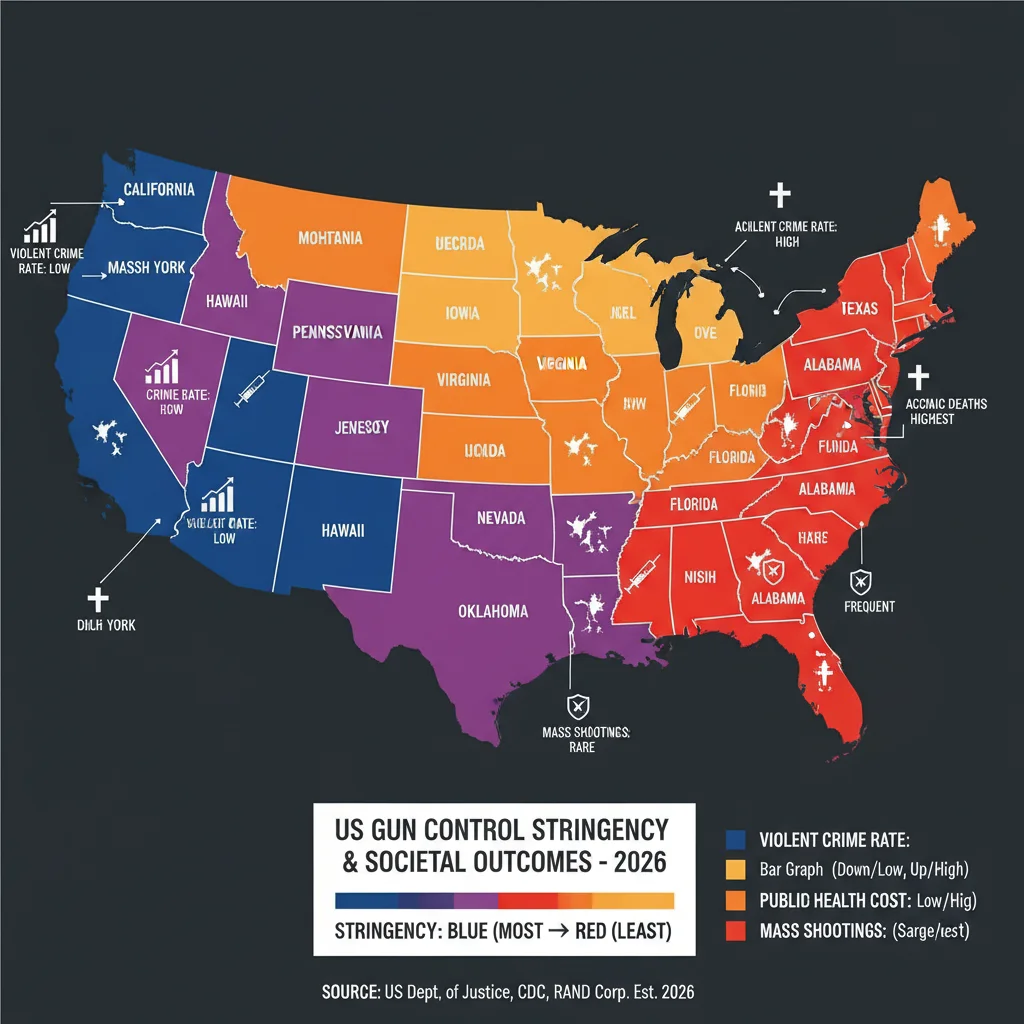
On the other end of the spectrum are states such as Texas, Arizona, and Wyoming, which are known for their more permissive gun laws. These states often prioritize the Second Amendment rights of citizens, allowing for constitutional carry and having fewer restrictions on firearm types or magazine capacities. Understanding the gun control outcomes in these regions is equally vital.
Texas, for example, has embraced constitutional carry in recent years, allowing eligible individuals to carry handguns without a permit. While proponents argue this empowers citizens for self-defense, critics express concerns about increased risks. Data from 2026 shows that while overall crime rates in Texas are influenced by a multitude of factors, the rates of certain firearm-related incidents, particularly accidental shootings and some forms of violent crime, remain a point of contention. The debate often centers on whether the increased presence of firearms acts as a deterrent or contributes to more violent encounters.
Arizona, another state with a strong tradition of gun ownership and relatively few restrictions, also offers a case study in permissive gun control. The state has high rates of gun ownership, and its laws reflect a strong emphasis on individual self-defense. While proponents point to a culture of responsible gun ownership, statistics often show higher rates of firearm suicides and accidental shootings compared to states with stricter regulations. The challenge in analyzing gun control outcomes here lies in disentangling the effects of gun laws from other cultural and demographic factors that influence violence.
Wyoming, a sparsely populated state with deeply ingrained hunting and shooting traditions, exemplifies the permissive end of the spectrum. With constitutional carry and minimal state-level regulations, gun ownership is widespread. While violent crime rates in Wyoming are generally low, often attributed to its rural nature and strong community ties, firearm suicide rates are a significant concern, aligning with national trends where states with higher gun ownership tend to have higher suicide rates. This highlights that gun control outcomes are not monolithic and can manifest differently across various forms of gun violence.
The Role of Cross-State Dynamics and "Iron Pipelines"
A critical factor in understanding gun control outcomes is the phenomenon of cross-state gun trafficking, often referred to as "iron pipelines." States with strict gun laws often find their efforts undermined by firearms illegally trafficked from neighboring states with more lenient regulations. For example, a significant percentage of guns used in crimes in New York or Chicago are traced back to states like Indiana or Virginia, where purchasing firearms is easier.
This inter-state flow complicates the assessment of individual state policies. A state may have robust background checks and assault weapon bans, but if firearms are readily available just across its border without such checks, its ability to reduce gun violence is significantly hampered. This highlights the need for a national approach or at least stronger regional cooperation to effectively address gun violence and improve gun control outcomes across the board. The debate over federal versus state control often clashes with the reality of porous state borders when it comes to illicit firearm movement.
Mental Health and Gun Control: An Intertwined Challenge
The discussion around gun control outcomes is incomplete without addressing the critical role of mental health. A significant portion of gun violence, particularly suicides, is linked to mental health crises. Many states, regardless of their stance on gun control, are increasingly recognizing the need for integrated approaches that combine firearm restrictions with expanded access to mental health services.
Red flag laws, for instance, are designed to temporarily remove firearms from individuals experiencing a mental health crisis who pose a danger. Their effectiveness hinges not only on their legal framework but also on the accessibility and quality of mental health assessments and interventions available to those individuals. States with robust mental health infrastructure alongside moderate gun control measures may see different gun control outcomes than those with similar gun laws but lacking mental health support.
Furthermore, the stigma surrounding mental illness can deter individuals from seeking help, potentially exacerbating risks. Policies that encourage early intervention, provide crisis support, and ensure safe storage options can contribute significantly to reducing firearm suicides and other forms of gun violence, irrespective of broader gun control debates.
Public Opinion and Political Polarization in 2026
Public opinion on gun control remains deeply divided in 2026, often reflecting the political and cultural divides within the country. Polling data consistently shows strong support for certain measures, such as universal background checks, even among gun owners. However, support for more restrictive policies, like assault weapon bans, tends to be more polarized. This polarization significantly impacts the ability of legislatures to enact comprehensive gun control reforms at both state and federal levels.
The discourse around gun control outcomes is heavily influenced by how these statistics are presented and interpreted by various advocacy groups and media outlets. Proponents of stricter laws often highlight reductions in gun violence in states that have adopted them, while opponents emphasize the lack of impact on determined criminals and the infringement on Second Amendment rights. This creates a challenging environment for objective policy analysis and consensus-building.
The role of grassroots activism, both for and against gun control, continues to shape the political landscape. High-profile incidents of gun violence often galvanize calls for action, leading to temporary shifts in public opinion and legislative pushes. However, the long-term trends in policy reform are often slow and incremental, reflecting the deep-seated nature of the debate and the power of various interest groups. The electoral cycles in 2026 will undoubtedly see gun control as a significant wedge issue, with candidates’ stances on gun control outcomes playing a crucial role in their campaigns.
Technological Advancements and Future Gun Control Outcomes

As we look to the future, technological advancements are poised to play an increasingly important role in shaping gun control outcomes. Innovations in firearm technology, such as "smart guns" that can only be fired by an authorized user, or advancements in tracing technologies, could offer new avenues for reducing gun violence without infringing on the rights of legal gun owners. However, the adoption of such technologies faces significant hurdles, including cost, reliability concerns, and resistance from segments of the gun-owning community.
Furthermore, the rise of 3D-printed firearms presents a new challenge for regulators. These "ghost guns," lacking serial numbers and often undetectable by metal detectors, bypass traditional background check systems and complicate law enforcement efforts. States are grappling with how to regulate these emerging technologies, and their success or failure will significantly impact future gun control outcomes.
Data analytics and artificial intelligence are also being leveraged to better understand patterns of gun violence, predict high-risk individuals, and inform targeted intervention strategies. While promising, these applications raise ethical concerns about privacy and potential biases, requiring careful implementation and oversight. The effective integration of technology into gun violence prevention efforts will be a defining feature of the debate in the coming years.
Economic and Social Costs of Gun Violence
Beyond the immediate human tragedy, gun violence imposes immense economic and social costs on society. The financial burden includes direct medical expenses for treating gunshot wounds, long-term care for survivors, mental health services for victims and communities, law enforcement costs, court proceedings, and incarceration. Indirect costs include lost wages, reduced productivity, and decreased property values in affected areas. These costs collectively run into hundreds of billions of dollars annually, diverting resources that could otherwise be used for education, infrastructure, or other public services.
The social costs are equally profound, though harder to quantify. They include the erosion of trust within communities, increased fear and anxiety, psychological trauma, and the disruption of social cohesion. Children exposed to gun violence often suffer from long-term developmental and educational setbacks. Understanding these comprehensive costs is crucial for a complete picture of gun control outcomes, as effective policies can significantly reduce these burdens.
Conclusion: Navigating the Future of Gun Control Outcomes
The comparison of state-level gun control policies and their societal outcomes in 2026 reveals a complex and often contradictory picture. While states with stricter gun laws generally exhibit lower rates of gun violence, the influence of cross-state trafficking, socioeconomic factors, and the availability of mental health services cannot be overlooked. Conversely, states with more permissive laws often champion individual liberties, but frequently contend with higher rates of certain types of firearm-related deaths, particularly suicides.
There is no single, universally effective solution to gun violence. Instead, a nuanced understanding of various legislative approaches, coupled with robust data analysis, is essential. Moving forward, a balanced approach that respects constitutional rights while prioritizing public safety will likely involve a combination of evidence-based gun control measures, expanded access to mental health care, community-based violence prevention programs, and potentially, innovative technological solutions. The ongoing debate over gun control outcomes requires continuous research, open dialogue, and a willingness to adapt policies based on their proven impact, rather than solely on ideological grounds. Only through such comprehensive efforts can the nation hope to mitigate the devastating toll of gun violence and foster safer communities for all its citizens.