The year is 2026, and the landscape of pop culture is buzzing with the hum of artificial intelligence. From chart-topping songs penned by algorithms to blockbuster movie scripts co-written with neural networks, AI’s presence in creative industries is undeniable and ever-expanding. This rapid integration, while promising unprecedented innovation and efficiency, has simultaneously ignited a series of profound ethical debates that are shaping the very future of how we consume, create, and value art. Understanding these ethical quandaries is paramount for anyone navigating the evolving world of entertainment. This article delves into the three most pressing ethical debates surrounding AI pop culture ethics that are dominating discussions in 2026.
The Copyright Conundrum: Who Owns AI-Generated Art?
One of the most contentious issues at the heart of AI pop culture ethics is the question of copyright. As AI models become increasingly sophisticated, capable of generating original music, visual art, literature, and even entire virtual worlds, the traditional notions of authorship and ownership are being severely tested. In 2026, we are witnessing a legal and philosophical battleground where creators, tech companies, and legal experts are grappling with fundamental questions:
The Source of Inspiration vs. Original Creation
AI models are trained on vast datasets of existing human-created content. This raises the critical question: when an AI generates a new piece of art, is it truly original, or is it merely a sophisticated pastiche of its training data? If an AI compiles a symphony in the style of Beethoven, drawing heavily from his existing works, should that new symphony be protected by copyright, and if so, who should hold that copyright? Is it the developer who created the AI, the individual who prompted the AI, or the original artists whose work formed the training data?
Defining Authorship in the Age of Algorithms
Current copyright law is largely predicated on the idea of a human author. The concept of an AI as an ‘author’ is a legal quagmire. Can an entity without consciousness or intent be considered an author? Some argue that the human who conceptualizes the AI’s task and provides the initial parameters should be considered the author, while others contend that the AI itself, as a tool, cannot hold copyright. This debate directly impacts the economic viability of AI-generated content and the incentives for both human creators and AI developers. Without clear guidelines, the market for AI-generated works remains in a state of uncertainty, hindering investment and widespread adoption.
Advertisements
The Blurring Lines of Infringement
The ability of AI to mimic styles and generate content strikingly similar to existing works poses a significant challenge to copyright enforcement. How can one prove infringement when an AI has synthesized countless sources to produce something new, yet familiar? The legal system is struggling to adapt, with ongoing lawsuits attempting to set precedents. These cases often involve artists claiming their unique style or specific works have been ‘sampled’ or ‘re-interpreted’ by AI without permission or attribution, leading to calls for new legal frameworks that address the unique challenges posed by AI’s creative capabilities. The sheer volume of AI-generated content also makes manual infringement detection increasingly difficult, necessitating the development of AI-powered tools to police other AIs, creating an interesting recursive problem.
The implications of this copyright conundrum are far-reaching. It affects not only the financial compensation for creators but also the cultural value we place on originality and human ingenuity. As AI becomes more autonomous in its creative processes, these debates will only intensify, demanding innovative legal and ethical solutions to protect both intellectual property and the spirit of artistic creation.
The Authenticity Crisis: What is Real Art Anymore?
Beyond copyright, the rise of AI in pop culture has triggered an existential crisis regarding authenticity. When an AI can flawlessly replicate a human voice, generate hyper-realistic images, or compose emotionally resonant music, the very definition of ‘art’ and ‘artist’ comes into question. This is a central pillar of the AI pop culture ethics discussion.
The Value of Human Touch
For centuries, the value of art has been intrinsically linked to the human experience – the emotion, intent, struggle, and unique perspective of the creator. AI-generated art, while technically impressive, often lacks this human narrative. Can a piece of music composed by an algorithm, devoid of personal pain or joy, convey the same depth of feeling as one born from a human heart? Audiences in 2026 are increasingly discerning, grappling with whether to value the technical prowess of AI or the inherent humanity of traditional art. This leads to a fascinating dichotomy: some embrace AI art for its novelty and perfection, while others actively seek out ‘human-made’ labels, valuing the perceived authenticity and soul.
Deepfakes and the Erosion of Trust
The proliferation of AI-generated deepfakes – realistic but fabricated images, audio, and video – has profound implications for authenticity, particularly in celebrity culture and media. The ability to create convincing but entirely false portrayals of public figures engaging in activities they never did, or saying things they never said, erodes public trust in visual and auditory evidence. This not only poses a threat to individual reputations but also to the very fabric of truth in an information-saturated world. The ethical imperative to clearly label AI-generated content is becoming a critical talking point, with calls for regulation and technological solutions to detect and flag deepfakes. The entertainment industry, in particular, faces the challenge of preventing malicious deepfakes while exploring the creative potential of AI in storytelling.
The Commodification of Creativity
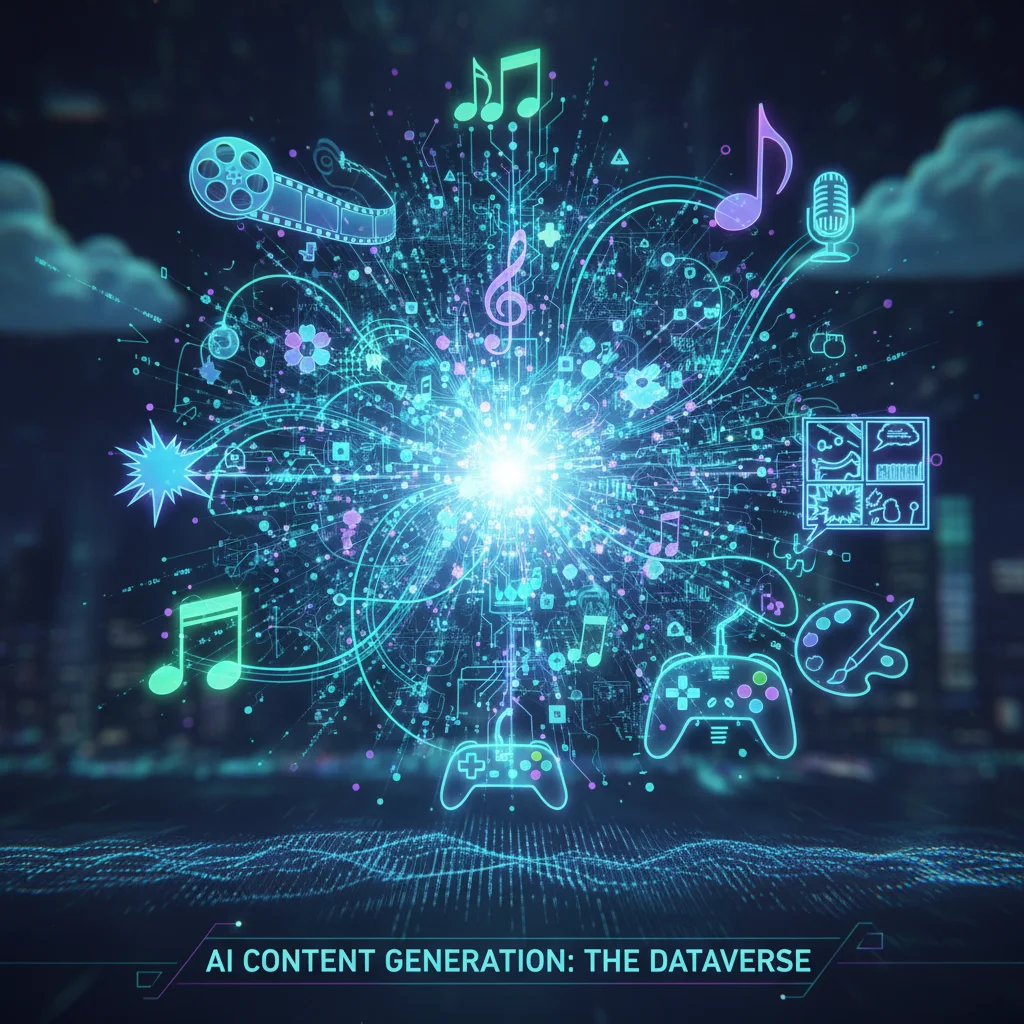
As AI tools become more accessible, the barrier to entry for content creation lowers significantly. While this democratizes creativity to some extent, it also risks commodifying it. When an AI can generate endless variations of a popular song or a trending visual style, does it devalue the original human innovation? The sheer volume of AI-generated content could flood the market, making it harder for human artists to stand out and command fair compensation. This shift could lead to a ‘race to the bottom’ in terms of creative value, where quantity might overshadow quality and genuine artistic expression. The debate here centers on whether AI should be seen as a collaborator that elevates human creativity or a competitor that diminishes it. The ethical response needs to consider how to maintain the value of human creative labor in a world saturated with AI-generated alternatives.
The authenticity crisis compels us to redefine our relationship with art and creativity. It challenges us to look beyond the surface and ask deeper questions about the origin, intent, and impact of the content we consume. Navigating this crisis requires a nuanced understanding of AI’s capabilities and a commitment to preserving the unique value of human artistic expression.
Labor Displacement and the Future of Creative Professions
Perhaps the most immediate and tangible ethical concern within AI pop culture ethics is the potential for widespread labor displacement in creative industries. As AI tools become more sophisticated and efficient, they are increasingly capable of performing tasks traditionally handled by human artists, writers, musicians, and designers.
Automation of Routine Creative Tasks
AI is already excelling at automating routine and repetitive creative tasks. This includes generating background music for videos, creating stock imagery, drafting initial script outlines, or even animating basic character movements. While this can free up human creatives to focus on higher-level conceptual work, it also means a reduced need for entry-level positions or roles focused solely on these automated tasks. This shift disproportionately affects emerging artists and freelancers who often rely on these foundational jobs to build their careers and gain experience. The ethical question then becomes: how do we support and retrain a creative workforce whose traditional roles are being redefined by technology?
The ‘Creative Class’ Under Threat
The fear is that AI won’t just automate routine tasks but will eventually challenge even highly skilled creative professions. If an AI can generate a compelling movie score, write a best-selling novel, or design a captivating video game world, what does that mean for human composers, authors, and game designers? The debate in 2026 isn’t just about job losses, but about the broader implications for the ‘creative class’ – individuals whose livelihoods depend on their unique artistic talents. There’s a growing concern about the economic viability of pursuing creative careers in an AI-dominated landscape, leading to discussions about universal basic income for artists, new models of artist-AI collaboration, and educational reforms to equip future generations with skills that complement, rather than compete with, AI.
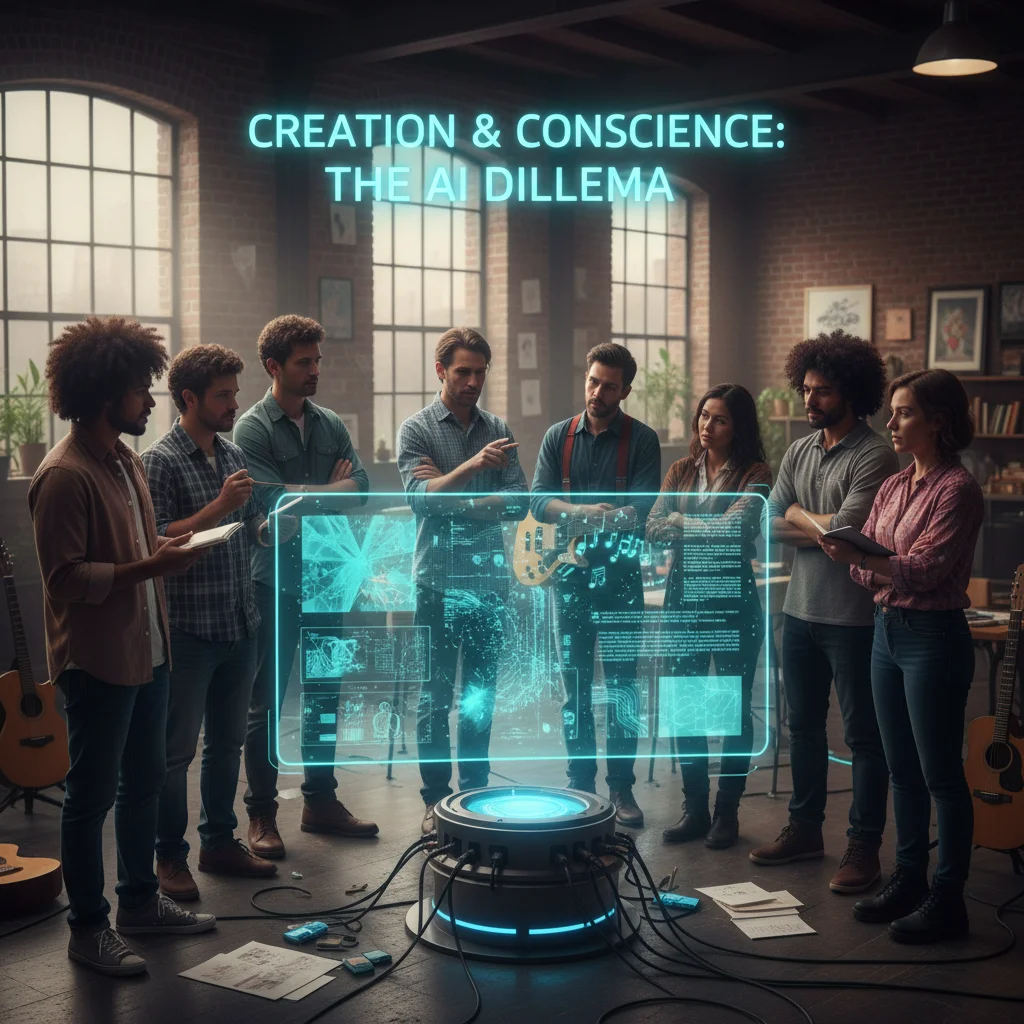
Ethical Guidelines for AI Deployment
To mitigate the negative impacts of labor displacement, there are strong calls for ethical guidelines regarding the deployment of AI in creative industries. These guidelines could include requirements for human oversight in AI-generated projects, mandates for fair compensation models when AI uses human-created data, and initiatives to invest in reskilling programs for artists. The goal is not to halt technological progress but to ensure that AI serves as a tool to augment human creativity, rather than replace it entirely. This involves fostering a collaborative ecosystem where AI and humans work in synergy, creating new forms of art and entertainment that were previously impossible, while simultaneously protecting the livelihoods and artistic integrity of human creators.
The future of creative professions hinges on our ability to thoughtfully integrate AI. This requires proactive measures from policymakers, industry leaders, and educational institutions to ensure a just transition for the creative workforce and to cultivate an environment where both human and artificial intelligence can thrive harmoniously.
Navigating the Future of AI in Pop Culture
As we stand in 2026, the ethical debates surrounding AI pop culture ethics are not merely academic exercises; they are urgent discussions with real-world implications for artists, consumers, and the very fabric of our cultural landscape. The copyright conundrum challenges our legal frameworks, forcing us to redefine ownership in a digital, algorithmic age. The authenticity crisis pushes us to question the essence of art and the irreplaceable value of the human touch. And the specter of labor displacement demands that we address the socio-economic impacts of technological advancement on creative professions.
Addressing these challenges requires a multi-faceted approach. Firstly, there is an urgent need for clear, adaptable legal frameworks that can keep pace with AI’s rapid evolution. This includes updating copyright laws to account for AI authorship, establishing guidelines for fair use of training data, and creating mechanisms for dispute resolution. International collaboration will be crucial, as pop culture and AI technologies transcend national borders.
Secondly, fostering a culture of transparency and education is paramount. Consumers need to be aware of when they are engaging with AI-generated content, and artists need to understand how AI tools can be ethically integrated into their workflows. This could involve standardized labeling for AI-assisted or AI-generated works, similar to how content warnings or disclaimers are used today. Educational institutions must also adapt their curricula to prepare future generations of creatives for a world where AI is an indispensable tool, teaching them not just how to use AI, but also how to critically engage with its ethical implications.
Finally, we must prioritize human-centric approaches to AI development and deployment. This means designing AI systems that augment human creativity rather than diminish it, ensuring that artists have agency and control over how AI interacts with their work, and exploring new economic models that support creative labor in an automated world. Initiatives such as artist-in-residence programs for AI developers, collaborative platforms that facilitate human-AI co-creation, and funding mechanisms that specifically support human-led artistic projects could play a vital role.
The journey of integrating AI into pop culture is still in its early stages. The decisions we make today, the ethical boundaries we establish, and the values we choose to uphold will determine whether AI becomes a force for unprecedented creative flourishing or a catalyst for profound cultural disruption. By engaging thoughtfully and proactively with these ethical debates, we can steer the future of pop culture towards a more equitable, authentic, and creatively rich destination for all.
The Role of Consumers in Shaping AI Pop Culture Ethics
It’s important to recognize that consumers also play a pivotal role in shaping the ethical landscape of AI in pop culture. Our choices about what content we consume, what we value, and what we are willing to support financially send clear signals to creators and tech companies. If audiences prioritize human-made art, demand transparency about AI involvement, and support artists who are navigating this new terrain, it can significantly influence how AI is developed and utilized in creative fields. Conversely, an uncritical acceptance of all AI-generated content, regardless of its ethical implications, could accelerate the very problems we are discussing. Therefore, informed consumerism, including the conscious decision to seek out and support human artists, to question the origins of content, and to engage in discussions about AI pop culture ethics, is a powerful force for positive change.
Furthermore, platforms and aggregators of pop culture content have a responsibility to implement clear policies regarding AI-generated material. This includes not only clear labeling but also potentially adjusting recommendation algorithms to ensure that human-created content isn’t unfairly disadvantaged by a flood of AI-generated alternatives. The ethical implications extend to how these platforms monetize content and whether human creators are adequately compensated when their styles or works are used as training data for AI models. The coming years will undoubtedly see increased pressure on these platforms to adopt more transparent and equitable practices.
The Long-Term Vision: AI as a Creative Partner
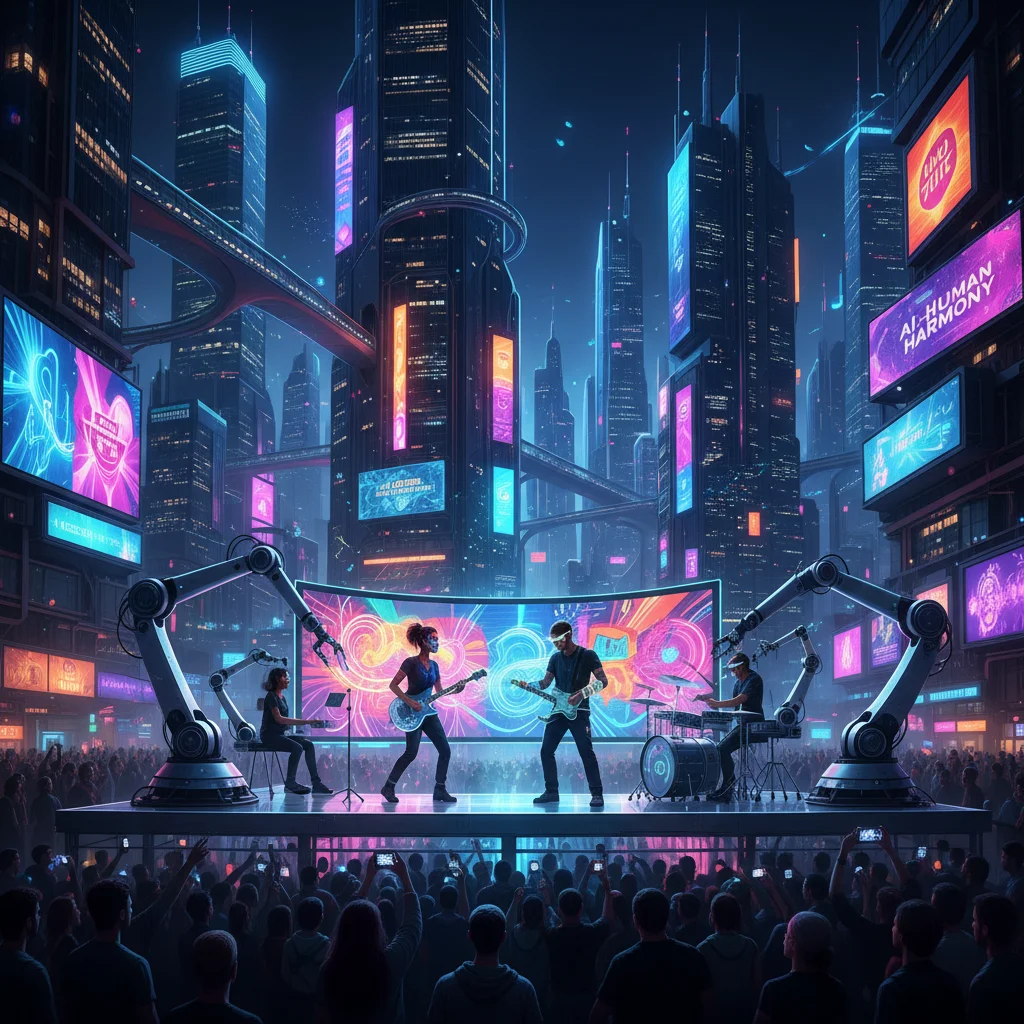
Ultimately, the long-term vision for AI in pop culture should be one of partnership and augmentation, not replacement. Imagine AI as a sophisticated tool that can help artists overcome creative blocks, explore new stylistic avenues, or handle the laborious aspects of production, allowing human creativity to soar to new heights. For example, an AI could analyze audience preferences to suggest compelling story arcs to a screenwriter, or generate complex orchestral arrangements for a composer, who then infuses it with their unique emotional depth. This collaborative paradigm requires a fundamental shift in how we perceive AI – moving away from viewing it solely as a competitor and towards embracing it as a powerful assistant.
Achieving this vision, however, is contingent on successfully navigating the ethical minefield of 2026. If we can establish robust copyright protections, maintain the value of human authenticity, and ensure a just transition for creative professionals, then AI has the potential to unlock an unprecedented era of artistic innovation. The discussions around AI pop culture ethics are not just about problems; they are about opportunities to shape a future where technology empowers humanity’s creative spirit in ways we are only just beginning to imagine.
The journey ahead will be complex, filled with challenges and breakthroughs. Yet, by approaching AI’s integration into pop culture with foresight, empathy, and a commitment to ethical principles, we can ensure that the future of entertainment remains vibrant, diverse, and deeply human, even as it becomes increasingly technologically advanced. The debates of 2026 are merely the beginning of a larger conversation that will define the creative landscape for decades to come, inviting all of us to participate in shaping this exciting, yet uncertain, future.