The Latest on Student Loan Forgiveness Programs: What United States Borrowers Need to Know for 2026
For millions of Americans, student loan debt represents a significant financial burden, impacting their ability to save, invest, and achieve major life milestones. The landscape of student loan forgiveness has been a dynamic one, with frequent changes and updates from federal agencies. As we look towards 2026, understanding the current and projected state of student loan forgiveness 2026 is paramount for United States borrowers. This comprehensive guide aims to demystify the various programs, eligibility requirements, and crucial steps you need to take to navigate this complex terrain effectively.
The conversation around student loan debt relief has intensified over recent years, driven by economic shifts, political discourse, and the sheer volume of outstanding debt. While large-scale, blanket forgiveness initiatives have faced legal and political hurdles, several targeted programs continue to offer pathways to relief. Staying informed about these programs, understanding their nuances, and preparing for potential future changes is key to maximizing your chances of reducing your student loan burden.
This article will delve into the existing federal student loan forgiveness programs, explore anticipated changes and policies for 2026, and provide actionable advice for borrowers. Whether you are a public servant, a teacher, a low-income earner, or someone struggling with a disability, there might be a student loan forgiveness 2026 option available to you. Let’s explore the critical information you need to know.
Advertisements
Understanding the Current Landscape of Student Loan Forgiveness Programs
Before we project into 2026, it’s essential to grasp the foundation of existing student loan forgiveness programs. These initiatives are primarily federal and designed to assist specific groups of borrowers or those facing particular financial hardships. Familiarity with these programs is the first step toward determining your eligibility for student loan forgiveness 2026.
Public Service Loan Forgiveness (PSLF) Program
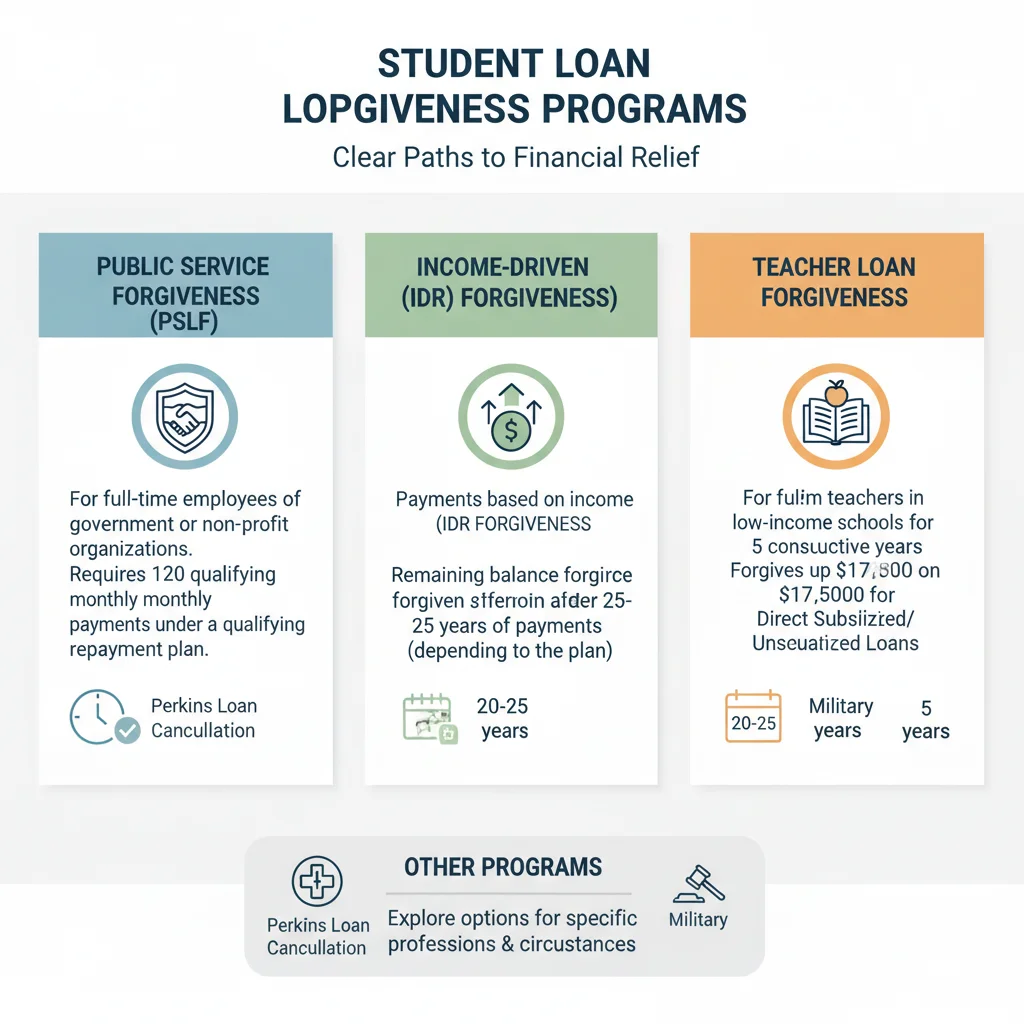
The Public Service Loan Forgiveness (PSLF) program remains one of the most significant avenues for federal student loan relief. Designed to encourage careers in public service, PSLF forgives the remaining balance on Direct Loans after you’ve made 120 qualifying monthly payments while working full-time for a qualifying employer. Qualifying employers include government organizations (federal, state, local, or tribal), non-profit organizations that are tax-exempt under Section 501(c)(3) of the Internal Revenue Code, and other non-profit organizations that provide certain public services.
To qualify for PSLF, you must meet several strict criteria:
- Loan Type: You must have Direct Loans. If you have Federal Family Education Loan (FFEL) Program loans or Federal Perkins Loans, you’ll need to consolidate them into a Direct Consolidation Loan to become eligible.
- Employment: You must be employed full-time by a qualifying employer. Full-time generally means working at least 30 hours per week or meeting your employer’s definition of full-time.
- Payments: You must make 120 qualifying monthly payments. These payments must be made under a qualifying income-driven repayment (IDR) plan, on time, for the full amount due, and while employed by a qualifying employer.
- Repayment Plan: You must be on an income-driven repayment (IDR) plan. These plans, such as PAYE, REPAYE, IBR, and ICR, adjust your monthly payment based on your income and family size.
The PSLF program has seen significant improvements and temporary waivers in recent years, making it more accessible to borrowers who previously faced difficulties. While these waivers may have specific end dates, the core program is expected to continue into 2026, making it a vital consideration for eligible public servants seeking student loan forgiveness 2026.
Income-Driven Repayment (IDR) Plan Forgiveness
Income-Driven Repayment (IDR) plans are designed to make student loan payments more manageable by capping them at a percentage of your discretionary income. While their primary purpose is to provide affordable monthly payments, a significant benefit is that any remaining loan balance is forgiven after 20 or 25 years of payments, depending on the specific plan and when you took out your loans. The four main IDR plans are:
- Revised Pay As You Earn (REPAYE)
- Pay As You Earn (PAYE)
- Income-Based Repayment (IBR)
- Income-Contingent Repayment (ICR)
Recent adjustments, particularly the IDR Account Adjustment (also known as the ‘IDR Waiver’), have been critical in helping many borrowers get closer to forgiveness. This adjustment counts more past periods of repayment, forbearance, and deferment towards the required 20 or 25 years. While the initial waves of this adjustment are concluding, its impact on borrowers’ timelines for student loan forgiveness 2026 will be long-lasting. Borrowers should regularly check their loan servicer accounts and the Department of Education’s updates to understand how these adjustments apply to them.
Teacher Loan Forgiveness (TLF)
Teachers who work in low-income schools or educational service agencies may be eligible for Teacher Loan Forgiveness. This program can forgive up to $17,500 of Direct Subsidized and Unsubsidized Loans, and certain Stafford Loans, after completing five consecutive, full-time years of teaching in an eligible school. The amount of forgiveness depends on the subject taught:
- Up to $17,500 for highly qualified math, science, or special education teachers.
- Up to $5,000 for other highly qualified teachers.
It’s important to note that the PSLF and TLF programs cannot be used simultaneously for the same period of service. Teachers must choose which program best suits their long-term goals for student loan forgiveness 2026.
Total and Permanent Disability (TPD) Discharge
Borrowers who are totally and permanently disabled may be eligible to have their federal student loans discharged. This discharge can be granted through documentation from the Department of Veterans Affairs (VA), the Social Security Administration (SSA), or a physician. Once approved, the borrower undergoes a three-year monitoring period, during which they must meet certain income requirements. This program offers a vital lifeline for those unable to work due to severe disability.
Other Targeted Forgiveness Programs
Beyond these major programs, several smaller, targeted initiatives exist:
- Perkins Loan Cancellation: Forgiveness for Perkins Loans is available to borrowers in specific professions, such as teachers, nurses, law enforcement officers, and early intervention specialists. The percentage of the loan forgiven increases with each year of qualifying service.
- Closed School Discharge: If your school closed while you were enrolled or shortly after you withdrew, you might be eligible for a discharge of your federal student loans.
- Borrower Defense to Repayment: This provides relief to students who were misled by their schools or whose schools engaged in misconduct in violation of state law.
Anticipated Changes and Policy Outlook for Student Loan Forgiveness in 2026
The landscape of student loan forgiveness is rarely static. Policy discussions, legislative efforts, and administrative actions continually shape the availability and terms of relief. As we move closer to 2026, several factors could influence the future of student loan forgiveness 2026.
The SAVE Plan: A Game Changer
The Biden administration’s Saving on a Valuable Education (SAVE) Plan, an enhanced Income-Driven Repayment (IDR) plan, is poised to be a significant player in student loan forgiveness for 2026 and beyond. The SAVE Plan offers several advantages over previous IDR plans:
- Lower Monthly Payments: For undergraduate loans, payments are set at 5% of discretionary income, down from 10% in other plans.
- Interest Subsidy: If your monthly payment doesn’t cover the accrued interest, the government covers the remaining interest, preventing your loan balance from growing.
- Shorter Forgiveness Timelines: Borrowers with original principal balances of $12,000 or less can receive forgiveness after as few as 10 years of payments. This is a significant reduction from the standard 20 or 25 years.
The full implementation of the SAVE Plan, with all its benefits, is expected to roll out in July 2024. This makes it a crucial program for borrowers to consider when strategizing for student loan forgiveness 2026. Borrowers currently on other IDR plans should evaluate whether switching to SAVE would be beneficial.
Potential for New Legislative Actions
While broad-based loan forgiveness faces political and legal challenges, targeted legislative efforts could emerge. These might focus on specific groups, such as low-income borrowers, those with long-standing debt, or individuals in critical professions. Keeping an eye on federal legislative developments will be important for understanding potential new avenues for student loan forgiveness 2026.
Economic Factors and Their Impact
The state of the economy can also influence student loan policies. Periods of economic downturn or high inflation often lead to increased calls for borrower relief. Conversely, a strong economy might shift policy focus away from broad forgiveness. The economic climate leading up to and during 2026 will undoubtedly play a role in any new or modified student loan policies.
Administrative Guidance and Updates
Beyond legislation, the Department of Education frequently issues administrative guidance, policy changes, and temporary waivers. These can significantly alter eligibility criteria, payment counting, and application processes for existing programs. Borrowers should make it a habit to regularly check official sources, such as StudentAid.gov, for the most up-to-date information regarding student loan forgiveness 2026.
Key Steps for United States Borrowers to Prepare for 2026
Given the evolving nature of student loan forgiveness, proactive preparation is crucial. Here are essential steps every United States borrower should take to position themselves for potential relief in 2026:
1. Understand Your Loan Types
The type of student loan you have (federal vs. private, Direct Loan vs. FFEL, etc.) dictates which forgiveness programs you are eligible for. Federal loans offer the most pathways to forgiveness. Private loans generally do not qualify for federal forgiveness programs, though some private lenders may offer their own hardship programs. Log into StudentAid.gov to view your federal loan history and consolidate if necessary to qualify for certain programs like PSLF or IDR forgiveness.
2. Know Your Repayment History
Accurate records of your payments, periods of deferment, and forbearance are vital, especially for programs like PSLF and IDR forgiveness that depend on years of qualifying payments. The Department of Education’s IDR Account Adjustment has already begun to address past discrepancies, but borrowers should still monitor their payment counts closely. Regularly check your loan servicer’s website and StudentAid.gov for updates on your qualifying payment count.
3. Certify Your Employment for PSLF
If you believe you qualify for PSLF, regularly certify your employment using the PSLF Help Tool on StudentAid.gov. Doing this annually, or whenever you change employers, ensures that your qualifying employment periods are accurately recorded. Waiting until you’ve made all 120 payments can lead to delays or issues if past employment records are hard to verify.
4. Enroll in an Income-Driven Repayment (IDR) Plan
Most federal forgiveness programs, including PSLF and IDR forgiveness, require you to be enrolled in an IDR plan. Evaluate which IDR plan (especially the new SAVE Plan) is best for your financial situation. Your payments will be adjusted based on your income and family size, making them more affordable and potentially leading to forgiveness sooner. Recertify your income and family size annually to ensure your payments remain accurate.
5. Stay Informed and Monitor Official Sources
The most critical step is to stay informed. Bookmark StudentAid.gov and regularly check for official announcements, policy changes, and deadlines. Avoid relying solely on news articles or social media for information, as these can sometimes be inaccurate or outdated. Sign up for email updates from the Department of Education and your loan servicer.
6. Beware of Scams
Unfortunately, the student loan landscape is ripe for scams. Be wary of any company or individual promising guaranteed or immediate Hello world! for a fee. The Department of Education and its servicers will never ask you to pay for federal loan forgiveness. All legitimate application processes are free. If something sounds too good to be true, it probably is.
7. Seek Professional Guidance If Needed
If your situation is particularly complex, or you’re unsure about your eligibility for specific programs, consider consulting a reputable, non-profit student loan counselor. Organizations like the National Foundation for Credit Counseling (NFCC) offer certified counselors who can provide personalized advice.
The Future of Student Loan Forgiveness Beyond 2026
While our focus is on student loan forgiveness 2026, it’s worth considering the broader trajectory of student loan policy. The debate over the cost of higher education and the burden of student debt is ongoing and deeply embedded in national discourse. It is likely that future administrations, regardless of political affiliation, will continue to grapple with these issues, potentially leading to further reforms, new programs, or adjustments to existing ones.
One area of continuous discussion revolves around simplifying the repayment and forgiveness processes. The complexity of current programs can be a significant barrier for borrowers, leading to confusion and missed opportunities for relief. There’s a strong push from advocates for a more streamlined, transparent system that automatically enrolls eligible borrowers or simplifies the application process.
Another potential development could be an increased focus on preventing future debt crises. This might involve reforms to higher education funding, tuition caps, or expanded grant programs designed to reduce the need for extensive borrowing. While these are long-term considerations, they could indirectly impact the need for and scope of student loan forgiveness 2026 and beyond.
Addressing Common Misconceptions About Student Loan Forgiveness
The topic of student loan forgiveness is often surrounded by misinformation. Clarifying these points is crucial for borrowers to make informed decisions for student loan forgiveness 2026.
Misconception 1: All Student Loans Are Eligible for Forgiveness
Reality: Only federal student loans are eligible for federal forgiveness programs. Private student loans, issued by banks or credit unions, generally do not qualify for these programs. Borrowers with private loans must explore options directly with their lenders, such as refinancing or hardship programs, which are typically less robust than federal options.
Misconception 2: Forgiveness is Automatic
Reality: With very few exceptions (like the IDR Account Adjustment which automatically applies to eligible accounts), forgiveness is rarely automatic. Most programs require active participation, including applying, certifying employment, and annually recertifying income. Failing to complete these steps can delay or prevent forgiveness.
Misconception 3: Forgiven Debt is Always Tax-Free
Reality: While some types of forgiven debt are currently tax-free (e.g., PSLF, TPD discharge, and most IDR forgiveness until the end of 2025 due to the American Rescue Plan Act), this is not universally true. Historically, forgiven debt under IDR plans after 20 or 25 years has been considered taxable income. It’s crucial to understand the tax implications of any forgiveness you receive and consult with a tax professional, especially as we approach and move beyond 2025 for IDR forgiveness. This is a key consideration for student loan forgiveness 2026.
Misconception 4: Loan Forgiveness Means You Don’t Have to Pay Anything
Reality: Most forgiveness programs, particularly PSLF and IDR forgiveness, require you to make many years of qualifying payments before the remaining balance is forgiven. These programs are designed to provide relief after a significant period of responsible repayment, not to eliminate all payments from the outset.
Misconception 5: There’s a Single, Universal Application for All Forgiveness Programs
Reality: Each forgiveness program has its own specific application process and eligibility criteria. For example, PSLF requires the PSLF Form, while IDR plans are applied for through StudentAid.gov. It’s essential to identify the correct program for your situation and follow its specific application guidelines.
Conclusion: Navigating Student Loan Forgiveness in 2026
The prospect of student loan forgiveness 2026 offers hope for many United States borrowers burdened by education debt. While the environment is complex and subject to change, existing programs like PSLF, IDR plans (especially the SAVE Plan), and Teacher Loan Forgiveness provide tangible pathways to relief. Proactive engagement, diligent record-keeping, and continuous monitoring of official updates are your strongest tools in navigating this landscape.
Remember that knowledge is power. By understanding your loan types, tracking your repayment history, certifying your employment, and enrolling in appropriate repayment plans, you can significantly improve your chances of qualifying for forgiveness. Do not fall prey to scams, and always verify information through official government channels.
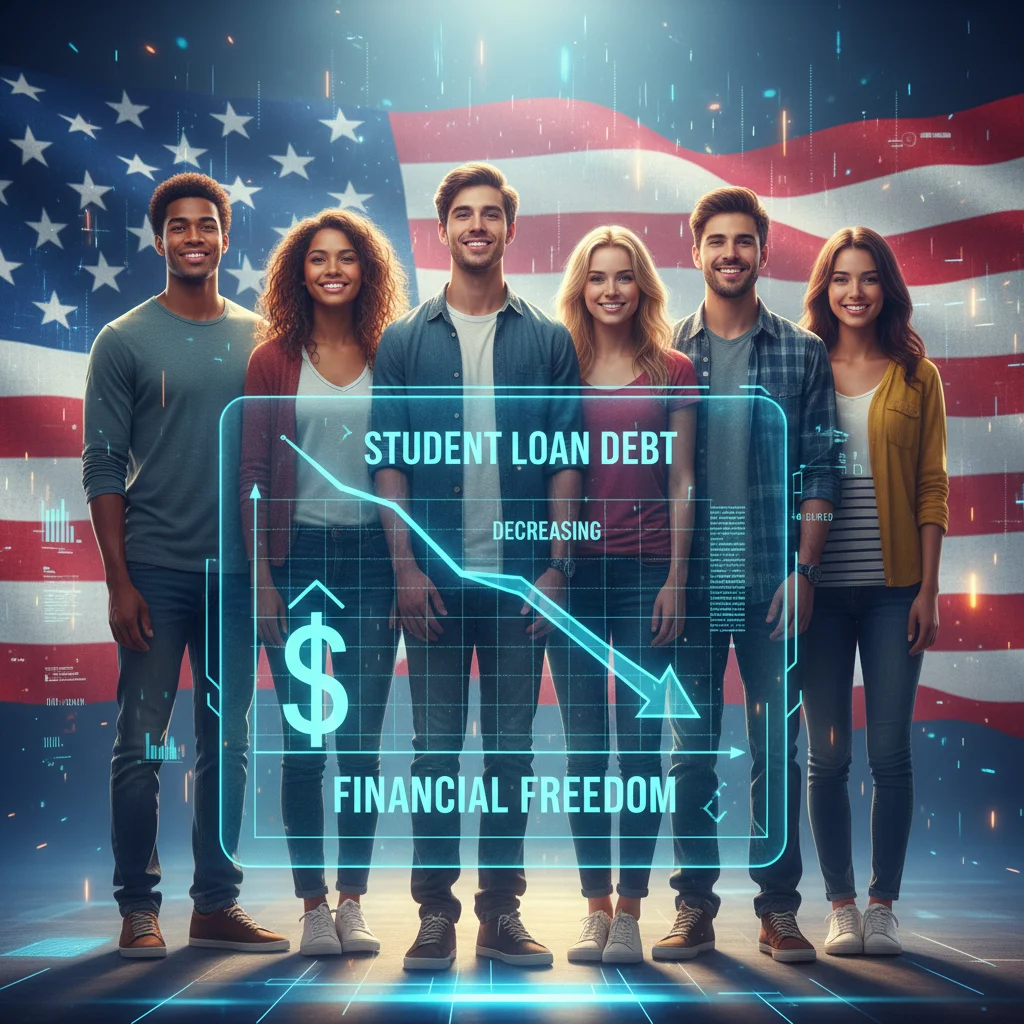
As we approach 2026, stay vigilant, stay informed, and take concrete steps to manage your student loan debt. The goal of financial freedom from student loans is achievable, and by leveraging the available programs and preparing for future developments, you can move closer to that reality.
For the most accurate and up-to-date information, always refer to the official U.S. Department of Education website, StudentAid.gov, and consult with your federal loan servicer. Your financial future depends on staying informed and taking decisive action.