The Future of Work: Insider Knowledge on How Automation Will Affect 20% of U.S. Jobs by 2030
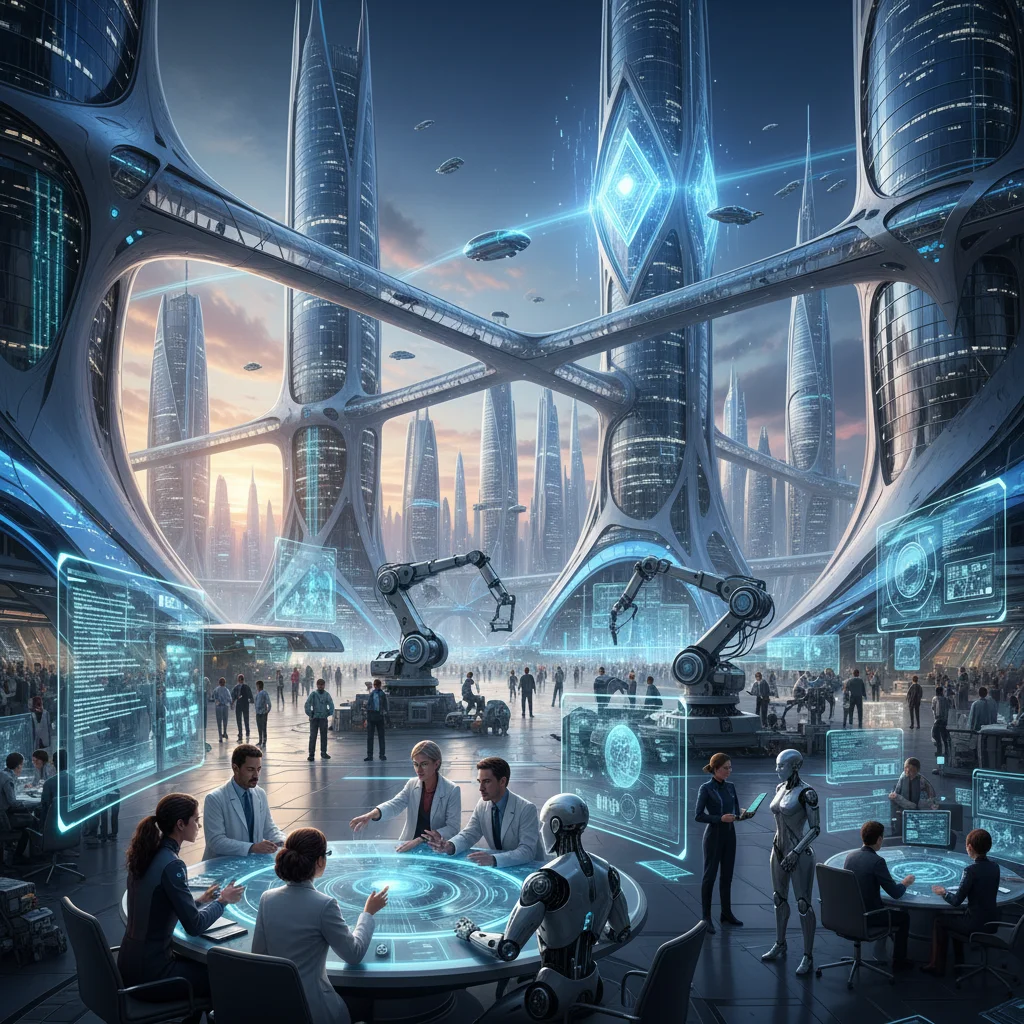
The landscape of work is undergoing a profound transformation, driven largely by the relentless march of technological innovation. Among the most significant forces at play is automation, a term that often conjures images of robots replacing human workers. While such scenarios are part of the equation, the reality is far more nuanced and complex. As we peer into the next decade, insider knowledge suggests that automation will significantly affect approximately 20% of U.S. jobs by 2030. This isn’t merely about job displacement; it’s about job evolution, creation, and the urgent need for a proactive approach to workforce development.
Understanding this impending shift is crucial for individuals, businesses, and policymakers alike. The impact of automation on the job market is not a distant future concern; it is a present reality that is accelerating. This comprehensive article delves into the specifics of this transformation, offering insights into which sectors are most vulnerable, what new opportunities will emerge, and the essential strategies for navigating this brave new world of work. Our focus here is on providing an insider’s perspective, grounded in data and expert analysis, to help you prepare for the changes ahead. The key to thriving in this evolving environment lies in foresight and adaptability, making ‘automation job impact’ a critical topic for everyone invested in their professional future.
The Automation Tsunami: Beyond Simple Job Replacement
When we discuss the ‘automation job impact,’ it’s easy to fall into the trap of thinking solely about jobs being eradicated. While some roles will undoubtedly become obsolete, the more pervasive effect will be job transformation. Automation, powered by artificial intelligence, machine learning, and robotics, is not just about doing tasks faster; it’s about fundamentally altering how work is performed. Repetitive, predictable tasks are prime candidates for automation, freeing human workers to focus on activities that require creativity, critical thinking, emotional intelligence, and complex problem-solving.
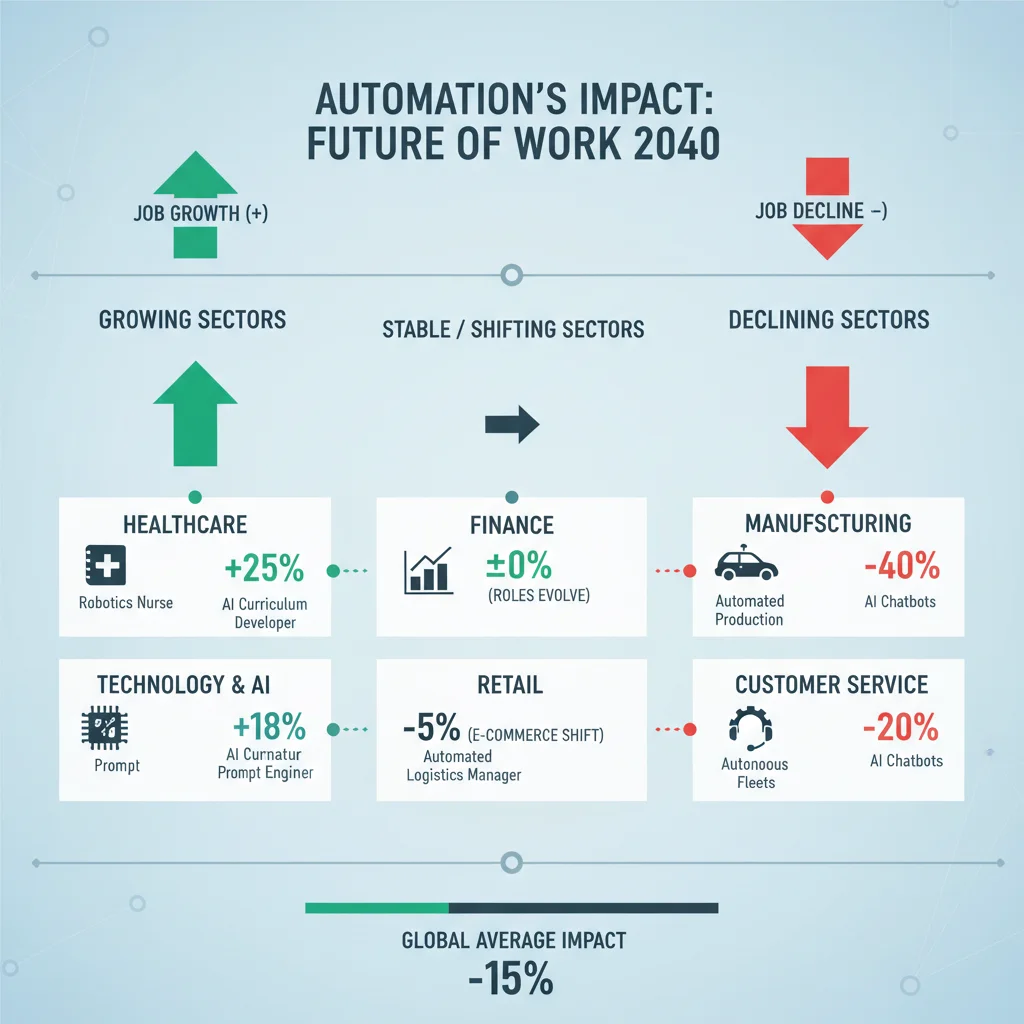
Consider the manufacturing sector, historically a bellwether for automation trends. While assembly line jobs have seen significant automation, the demand for robotics engineers, data analysts, and maintenance technicians for automated systems has surged. Similarly, in customer service, chatbots handle routine inquiries, allowing human agents to address more complex, emotionally charged issues. This shift underscores a critical point: automation often augments human capabilities rather than simply replacing them. The ‘automation job impact’ is thus a story of augmentation and evolution.
Advertisements
The 20% figure for U.S. jobs affected by 2030 is a significant one, representing millions of individuals. This impact will not be evenly distributed across all industries or demographics. Certain sectors, such as transportation, administrative support, and some areas of food service, are expected to experience a higher degree of disruption due to the nature of their tasks. Conversely, fields requiring high levels of human interaction, abstract reasoning, and creativity, such as healthcare, education, and artistic professions, may see less direct displacement but will still undergo significant changes in how technology assists their work.
This nuanced understanding is vital. It moves us beyond alarmist predictions to a more pragmatic view of the future. The challenge, therefore, is not to halt automation—an impossible and undesirable endeavor given its potential to boost productivity and improve living standards—but to strategically manage its integration into the economy and society. Addressing the ‘automation job impact’ requires foresight and proactive measures.
Industries on the Cusp: Where Automation Will Hit Hardest
To truly grasp the ‘automation job impact’ by 2030, we must look at specific industries. While no sector is entirely immune, some are more exposed to the winds of change than others. Understanding these vulnerabilities allows for targeted interventions and preparation.
Manufacturing and Logistics
These sectors have been at the forefront of automation for decades, and the pace is only accelerating. Advanced robotics, AI-driven predictive maintenance, and autonomous vehicles are set to revolutionize everything from factory floors to supply chain management. Truck drivers, warehouse workers, and assembly line operators are among the roles most likely to see significant transformation. The demand will shift towards roles that manage, maintain, and innovate these automated systems.
Administrative and Office Support
Routine clerical tasks, data entry, and scheduling are increasingly being handled by intelligent software and AI. Virtual assistants, automated bookkeeping, and robotic process automation (RPA) are streamlining back-office operations. This means roles like administrative assistants, data entry clerks, and even some paralegal positions will evolve, requiring skills in managing AI tools and analyzing automated outputs rather than performing the manual tasks themselves.
Retail and Customer Service
While human interaction remains crucial, automation is rapidly changing the face of retail. Self-checkout kiosks, inventory management robots, and AI-powered customer service chatbots are becoming commonplace. The shift here is towards roles that focus on personalized customer experiences, strategic sales, and managing omnichannel retail platforms. The ‘automation job impact’ in retail is less about complete replacement and more about elevating the human role.
Transportation
The advent of autonomous vehicles, from self-driving cars to delivery drones, poses a significant long-term threat to jobs in commercial transportation. Trucking, taxi services, and delivery roles are all facing potential disruption. While regulatory and ethical hurdles remain, the technological trajectory is clear. This sector will require massive reskilling initiatives for its workforce.
Food Service and Hospitality
Kitchen automation, robotic baristas, and automated hotel check-ins are emerging trends. While the human element of hospitality is highly valued, repetitive tasks in food preparation and service are ripe for automation. This will necessitate a greater focus on unique guest experiences and complex problem-solving from human employees.
It’s important to reiterate that ‘affected’ does not always mean ‘eliminated.’ It often means a fundamental change in job responsibilities, requiring new skills and a different approach to work. The ‘automation job impact’ is about adaptation.
The Rise of New Roles: Opportunities in an Automated World
While the discussion often centers on job displacement, automation is also a powerful engine for job creation. As technology advances, new roles emerge to design, develop, deploy, and manage these sophisticated systems. The ‘automation job impact’ is a double-edged sword, cutting away old roles while forging new ones.
AI and Machine Learning Specialists
The demand for professionals who can build, train, and maintain AI algorithms is skyrocketing. This includes AI engineers, machine learning scientists, data scientists, and ethical AI specialists. These roles are critical for driving innovation and ensuring responsible development.
Robotics Engineers and Technicians
As robots become more prevalent in manufacturing, logistics, and even service industries, the need for experts to design, program, install, and repair them will grow exponentially. These are hands-on roles that bridge the gap between hardware and software.
Data Analysts and Scientists
Automation generates vast amounts of data. Professionals who can collect, analyze, and interpret this data to derive actionable insights will be invaluable. This includes understanding customer behavior, optimizing operational efficiency, and identifying new market opportunities.
Human-Robot Interaction Designers
As humans and machines collaborate more closely, there’s a growing need for designers who can create intuitive and effective interfaces for this interaction. These roles focus on user experience (UX) and user interface (UI) design specifically for automated systems.
Cybersecurity Experts
Increased automation means more interconnected systems, which in turn means a larger attack surface for cyber threats. Cybersecurity professionals will be in extremely high demand to protect these complex networks and data from malicious actors.
Digital Transformation Consultants
Businesses grappling with integrating automation need expert guidance. Consultants who can strategize, implement, and manage digital transformation initiatives will play a crucial role in helping organizations adapt to the new technological landscape.
These emerging roles highlight a fundamental shift in the skills economy. The ‘automation job impact’ isn’t just about technical proficiency; it’s also about adaptability, continuous learning, and interdisciplinary collaboration.

The Imperative of Reskilling and Upskilling
Given the significant ‘automation job impact’ projected for 2030, reskilling and upskilling the existing workforce is not merely an option but an economic and societal imperative. Governments, educational institutions, and businesses must collaborate to create robust pathways for workers to acquire the skills needed for the future.
Lifelong Learning Ecosystems
The traditional model of education—a fixed period of learning followed by a career—is no longer viable. We need to foster a culture of lifelong learning where individuals continuously update their skills. This includes accessible online courses, vocational training programs, and employer-sponsored learning initiatives. The focus should be on transferable skills and digital literacy.
Government Initiatives and Policy Support
Governments have a critical role to play in mitigating the negative ‘automation job impact.’ This includes investing in educational infrastructure, providing financial incentives for reskilling programs, and exploring social safety nets that can support workers during transitions. Policies that encourage businesses to invest in their workforce’s development will also be crucial.
Employer Responsibility
Businesses cannot afford to simply replace workers when new technologies emerge. Investing in the current workforce through internal training programs, apprenticeships, and partnerships with educational providers is a strategic move. It retains institutional knowledge, fosters employee loyalty, and ensures a smoother transition to automated processes. Companies that prioritize human capital development will gain a competitive edge.
Individual Agency and Adaptability
Ultimately, individuals bear a significant responsibility for their own career trajectory. Cultivating a growth mindset, embracing new technologies, and actively seeking opportunities for skill development will be paramount. This includes developing ‘soft skills’ such as critical thinking, communication, collaboration, and emotional intelligence, which are inherently difficult for machines to replicate.
The challenge of reskilling is immense, but the potential rewards—a resilient, adaptable, and innovative workforce—are even greater. Addressing the ‘automation job impact’ effectively hinges on our collective ability to invest in human potential.
Navigating the Ethical and Societal Implications
Beyond the economic ramifications, the ‘automation job impact’ also raises profound ethical and societal questions that demand careful consideration as we approach 2030. How do we ensure that the benefits of automation are broadly shared and do not exacerbate existing inequalities?
The Widening Skills Gap
If reskilling efforts lag, the gap between those with in-demand skills and those without could widen, leading to increased social stratification. This could create a bifurcated workforce: a highly skilled elite managing advanced systems and a larger segment struggling to find meaningful employment. Addressing this requires equitable access to education and training opportunities.
Income Inequality and Social Safety Nets
As productivity rises due to automation, questions about wealth distribution become more pressing. Discussions around universal basic income (UBI), strengthened social safety nets, and new forms of worker ownership are gaining traction as potential ways to ensure economic security in an increasingly automated world. These are complex policy debates that will define how we manage the ‘automation job impact’ on society.
The Nature of Work and Human Purpose
If machines take over more routine tasks, what does that mean for human purpose and identity, which are often tied to work? This philosophical question requires us to rethink the value of work beyond mere economic output. It opens up opportunities for humans to engage in more creative, meaningful, and community-oriented activities, but also poses challenges if not managed thoughtfully.
Ethical AI and Algorithmic Bias
As AI systems make more decisions, ensuring they are fair, transparent, and free from bias is critical. Biased data used to train AI can perpetuate and even amplify societal inequalities. Developing ethical guidelines, regulatory frameworks, and diverse teams to design and monitor AI systems is essential to prevent unintended negative consequences from the ‘automation job impact.’
These are not easy questions, and there are no simple answers. However, ignoring them would be a grave mistake. Proactive dialogue and collaborative problem-solving across sectors will be necessary to shape a future where automation serves humanity, rather than the other way around.
Strategies for Businesses: Thriving in an Automated Future
For businesses, the ‘automation job impact’ presents both formidable challenges and unparalleled opportunities. Companies that strategically embrace automation, rather than resisting it, will be better positioned to thrive in the coming decade.
Strategic Automation Implementation
Automation should not be implemented for its own sake. Businesses need to identify specific processes where automation can deliver the greatest value, whether through increased efficiency, improved accuracy, or enhanced customer experience. A clear strategy, rather than piecemeal adoption, is key.
Investing in Workforce Transformation
As mentioned, reskilling and upskilling are crucial. Businesses should invest in their employees’ development, offering training in new technologies, data literacy, and soft skills. This not only prepares the workforce for future roles but also fosters a culture of innovation and adaptability within the organization.
Fostering Human-AI Collaboration
The most successful businesses will be those that master the art of human-AI collaboration. This means designing workflows where humans and machines complement each other’s strengths. AI can handle data processing and repetitive tasks, while humans provide creativity, emotional intelligence, and strategic oversight.
Agile Organizational Structures
The pace of technological change demands agile organizational structures. Businesses need to be able to adapt quickly, experiment with new technologies, and pivot strategies when necessary. Hierarchical, rigid structures will struggle to keep pace with the rapid evolution driven by automation.
Ethical Considerations in AI Deployment
Companies must prioritize ethical considerations in their use of AI and automation. This includes ensuring data privacy, preventing algorithmic bias, and being transparent about how automation impacts employees and customers. A strong ethical framework builds trust and ensures long-term sustainability.
By adopting these strategies, businesses can not only mitigate the negative ‘automation job impact’ but also leverage automation as a powerful tool for growth, innovation, and competitive advantage.
Conclusion: Preparing for the Automated Horizon of 2030
The ‘automation job impact’ by 2030 is a reality that demands our attention and proactive engagement. While the projection that 20% of U.S. jobs will be significantly affected might seem daunting, it is equally an invitation to reimagine the future of work with optimism and strategic intent. This isn’t just a technological revolution; it’s a societal evolution that will redefine our relationship with work, learning, and economic participation.
The insider knowledge shared here underscores several critical takeaways: automation is not solely about replacement but about profound transformation; certain industries face greater disruption but also new opportunities; reskilling and upskilling are non-negotiable for workforce resilience; and ethical considerations must guide our path forward. For individuals, this means embracing lifelong learning and developing uniquely human skills. For businesses, it means strategic adoption of technology coupled with a deep investment in human capital. For policymakers, it means creating supportive ecosystems that foster innovation while ensuring equitable outcomes.
The future is not predetermined. It is shaped by the choices we make today. By understanding the multifaceted ‘automation job impact’ and working collaboratively, we can navigate this era of unprecedented change, ensuring that the automated horizon of 2030 is one of progress, prosperity, and purpose for all.